Self-Improvement
Beginners
How to Choose a Good Website for Piano Sight Reading Exercises
July 3, 2026

Sight reading is a foundational skill for pianists, yet finding online resources that genuinely support learning can be challenging. Many websites provide exercises, but not all help learners develop true fluency. Understanding the criteria for effective sight reading practice allows pianists to select platforms that truly enhance skill development.
In practical learning environments, sight reading improvement is rarely linear. Adult learners often report progress appearing in short bursts rather than steady increases, especially when transitioning between difficulty levels. Observations from independent piano instructors and self-directed learners consistently show that regular exposure to unfamiliar but manageable material is more effective than repeating the same patterns for extended periods. This highlights the importance of platforms that support gradual progression while accounting for individual pacing differences.

Effective sight reading platforms adjust exercises according to the learner’s skill and performance. Adaptive systems consider accuracy, timing, and consistency, ensuring challenges remain achievable yet stimulating.
Research in music education shows that appropriately scaled challenges improve retention and motivation, while a fixed, one-size-fits-all approach can frustrate learners.. Platforms that track performance and adapt difficulty allow learners to progress efficiently without repeating exercises that are too easy or overwhelming.
For example, MuseFlow uses performance tracking to adjust lesson difficulty dynamically, illustrating how adaptive learning principles can be applied in practice.
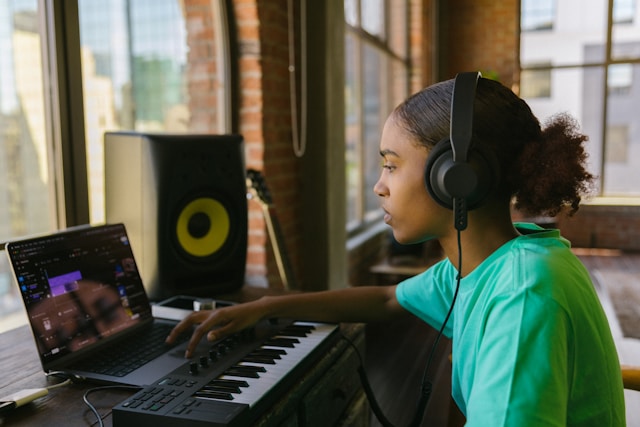
Immediate feedback is critical for sight reading development. When learners receive guidance on mistakes—whether in rhythm, pitch, or timing—they can correct errors immediately instead of reinforcing them over multiple sessions.
This feature is especially helpful for beginners, who may struggle to self-assess while playing. Visual or auditory cues provide clear direction, supporting proper technique and boosting confidence.
Platforms such as MuseFlow demonstrate how real-time feedback can guide independent practice, but the principle applies across any effective learning system.
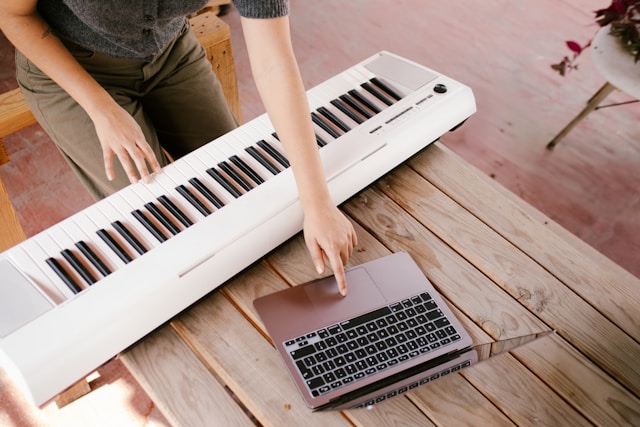
Sustained practice depends on maintaining focus and motivation. Engagement doesn’t require excessive gamification; rather, progress indicators, clear goals, and structured challenges help learners stay consistent.
Adult learners particularly benefit from visible improvement and structured routines. These cues reinforce consistency while keeping attention on musical fundamentals rather than novelty.
Some modern platforms include light gamified elements—such as skill milestones or completion tracking—to encourage regular practice while keeping the emphasis on learning rather than entertainment.
A strong sight reading platform balances structured progression with variety. Curated exercises ensure systematic skill development, while diverse repertoire challenges learners musically and reinforces reading fluency.
Variety helps prevent memorization of patterns and promotes true sight reading ability, including rhythm, pitch, and dynamic accuracy. Platforms that integrate both structured exercises and musical application allow learners to practice in a way that feels both educational and rewarding.
MuseFlow, for instance, combines targeted skill exercises with a rotating repertoire library to illustrate this principle.
Consistency is more important than session length. Platforms that support short, flexible practice sessions allow learners to engage daily without scheduling conflicts or rigid routines.
Research in adult learning emphasizes that self-paced control and visible progress improve persistence and retention. Platforms that allow learners to resume exactly where they left off help maintain momentum and reduce frustration.

Another often overlooked factor is how clearly a platform communicates why specific exercises are assigned. Sight reading improves most effectively when learners understand the purpose behind rhythmic drills, interval jumps, or key changes rather than practicing them mechanically.
Educational research on adult learning consistently shows that transparency in instructional design increases engagement and long-term retention. Websites that briefly explain the skill focus of each exercise help learners practice more intentionally, avoid mindless repetition, and develop transferable reading skills that apply across new musical material.
When evaluating websites for piano sight reading exercises, consider these five criteria:
Platforms implement these features differently. MuseFlow is cited here as an example of a system that aligns with these principles, but the framework itself applies broadly across modern sight reading tools.

For beginners, piano sight reading often feels intimidating. Looking at a page of unfamiliar notes and playing them accurately in real time can seem like an advanced skill reserved for trained musicians. In reality, sight reading is not a talent—it is a trainable ability that improves with the right type of daily practice.
This guide outlines a practical, beginner-friendly approach to piano sight reading, focusing on short daily exercises that build real reading ability rather than memorization. The goal is not perfection, but steady improvement through consistent exposure and feedback.
Sight reading is the ability to interpret written music and play it accurately on the first attempt. It relies on three core skills working together:
What sight reading is not is memorizing pieces through repetition. While memorization can feel productive, it does little to improve reading ability. True sight reading develops when the brain repeatedly processes new material under manageable difficulty.
Music education research consistently shows that varied, unfamiliar material leads to stronger reading skills than repeating the same exercises until perfect.

Consistency matters more than duration. A focused daily session is far more effective than long, infrequent practice. The structure below is designed for beginners and adult learners.

Move to music that is slightly challenging but still readable. Mistakes should happen occasionally, but not constantly. During this phase:
Learning science shows that immediate correction strengthens neural pathways more effectively than delayed feedback, especially in motor-based skills like music reading.
Tools that provide instant visual or auditory feedback, including modern digital trainers, can support this process when used intentionally. They are most effective when they encourage reading rather than repetition.

End your session with something enjoyable—either easier reading material or a simple piece you like. This reinforces positive associations with practice and improves long-term consistency.

This routine is grounded in well-established principles of skill acquisition:
Psychological research on flow states shows that learners progress faster when tasks are neither too easy nor too difficult. This balance is especially important for adult beginners, who often quit due to frustration rather than lack of ability.
Many beginners slow their progress unintentionally by:
Sight reading improves fastest when learners accept small imperfections and prioritize continuity over correctness.
Digital tools and apps can support sight reading when they reinforce good habits—especially reading unfamiliar music, providing immediate feedback, and encouraging short daily sessions. Platforms like MuseFlow are designed around these principles, but no tool replaces consistent, thoughtful practice.
The method matters more than the medium.
.png)
Sight reading is one of the most valuable skills a pianist can develop. It opens the door to learning new music independently and confidently. Progress may feel slow at first, but with daily, structured practice, improvement is inevitable.
Focus on consistency, accept imperfection, and trust the process. Over time, reading music will feel less like decoding and more like understanding a familiar language.
Learning piano without a private teacher is a goal many people share, especially those balancing work, family, or limited access to in-person lessons. While traditional instruction has long been considered essential, modern learning tools and research into skill acquisition suggest that self-directed piano learning is possible—when approached correctly.
The challenge is not whether you can learn piano on your own, but how to avoid the common pitfalls that cause many self-learners to stall or quit. Below, we separate long-standing myths from what current music education research and practice actually show.
The reality:
Historically, this was true. Without feedback, learners often reinforced incorrect notes, rhythms, or fingerings—what educators call “negative practice.” Once habits form, they are difficult to undo.
Today, real-time feedback systems have changed this dynamic. Research on motor learning and music education consistently shows that immediate corrective input improves accuracy, retention, and long-term skill development. Digital tools that listen to performance and respond instantly allow learners to correct errors at the moment they occur, rather than days later.
This feedback loop does not replace musical judgment or interpretation, but it significantly reduces technical drift during independent practice.

The reality:
A teacher remains the gold standard for posture and injury prevention. However, structured visual guidance and progressive exercises can establish a solid technical foundation for beginners.
Educational research shows that consistent fingering patterns, gradual complexity, and early note recognition are more important than repertoire memorization in the early stages. Tools that emphasize sight reading and coordinated hand movement help train both cognition and motor control together—an approach widely supported in music pedagogy literature.
Self-learners who follow a structured path are far less likely to develop inefficient habits than those jumping randomly between songs or tutorials.

The reality:
Motivation is one of the biggest challenges for independent learners. Long, repetitive practice sessions without visible progress often lead to burnout.
Studies on learning psychology show that short, focused sessions with clear goals and measurable progress are far more effective. Gamified learning systems apply these principles by balancing difficulty with ability, helping learners remain in a “flow state”—a condition linked to sustained engagement and enjoyment.
When progress is visible and attainable, consistency improves naturally.
The reality:
Lack of structure is a major reason self-teaching fails. Jumping between scales, theory videos, and songs creates confusion and uneven skill development.
Successful self-learners follow progressive curricula that introduce concepts in a logical order while allowing flexibility. A structured sequence ensures foundational skills—timing, note recognition, coordination—are reinforced before complexity increases. At the same time, optional exploration keeps learning personally meaningful.
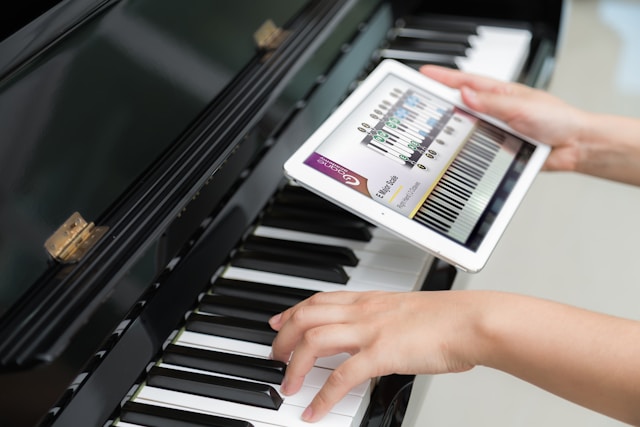
Modern piano apps that provide real-time feedback, structured progression, and adaptive difficulty can address many traditional self-learning gaps. Platforms like MuseFlow are examples of tools designed around these principles, particularly with an emphasis on sight reading and immediate correction.
However, technology is not a substitute for musical expression, stylistic nuance, or long-term artistic mentorship. Learners who combine disciplined self-practice with occasional external feedback—whether from teachers, peers, or recordings—tend to progress the fastest.

Yes—with realistic expectations and the right structure.
Self-teaching works best when learners:
Learning without a teacher requires more responsibility, but modern tools have lowered the barriers significantly. For motivated learners, it is no longer a compromise—it is a viable, effective path into music.
Learning piano chords is one of the fastest ways to move from playing single notes to making real music. Chords form the harmonic foundation of nearly every song, and the good news is that beginners don’t need hundreds of them. By learning 12 essential piano chords, you can play or accompany thousands of songs across pop, rock, blues, folk, and classical music.
This guide focuses on practical, high-frequency chords that appear again and again in real music—not obscure theory that rarely gets used.

Western music is built around predictable harmonic relationships. The chords below appear so often because they serve clear musical purposes:
Once these sounds become familiar, you’ll start recognizing them by ear, not just by name. More importantly, these chords provide a foundation for understanding harmony, chord progressions, and improvisation later on.

One of the simplest and most important chords on the piano. C Major functions as the tonal center in the key of C and is often the first reference point for learning harmony.
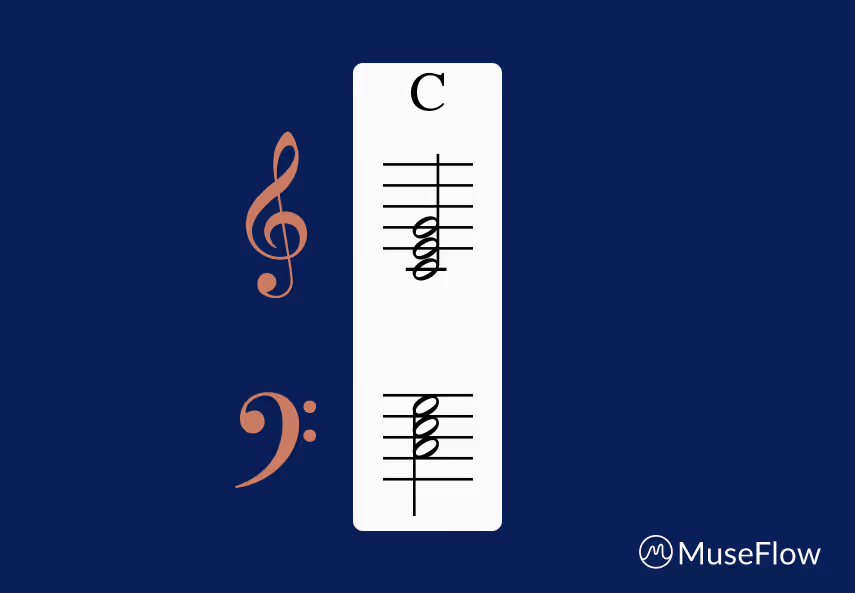
Bright and stable, G Major commonly resolves back to C Major. This relationship introduces beginners to the concept of harmonic movement.
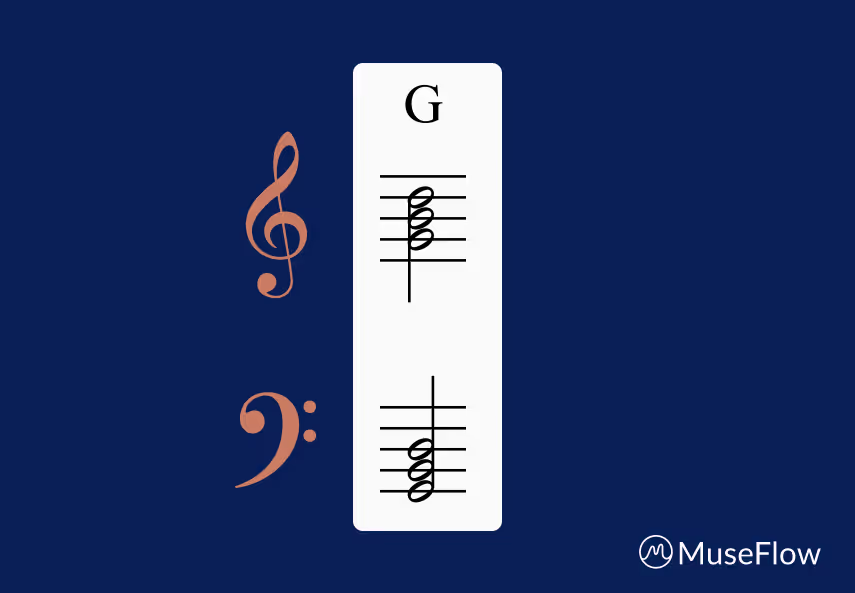
Your first encounter with sharps. D Major is widely used in pop and rock and helps solidify how black keys function within major chords.
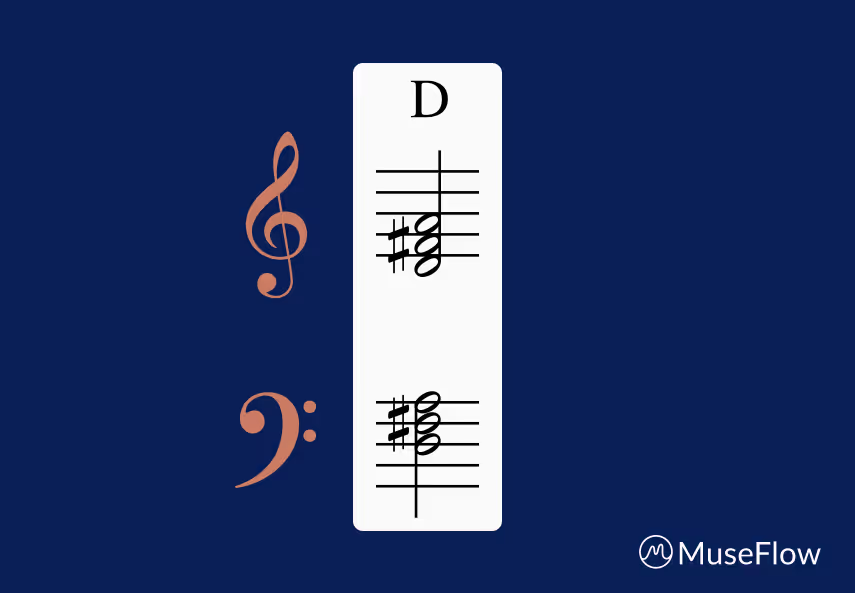
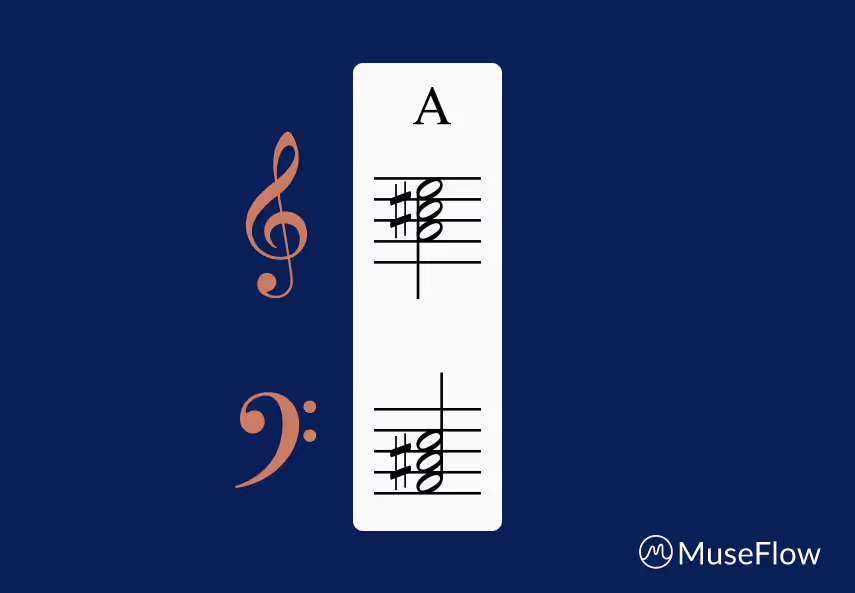
Warm and resonant, A Major appears frequently in folk, country, and rock music. It reinforces how chord shapes remain consistent across keys.
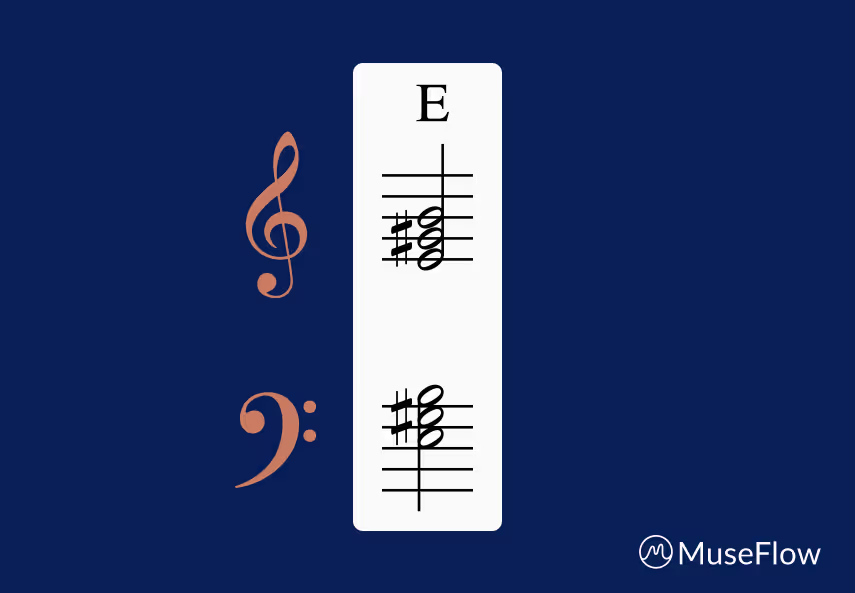
E Major is bold and assertive. It's commonly used in blues and rock progressions. This chord is essential for playing in the key of E and A.
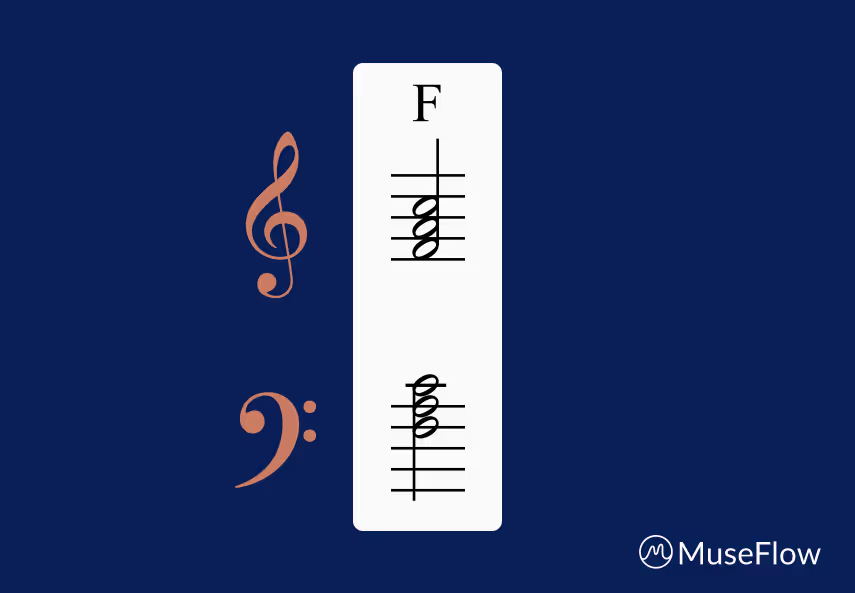
F Major is slightly more challenging because it often requires a different hand position, but it's incredibly common. It has a smooth, mellow sound and is vital for playing in the key of C.
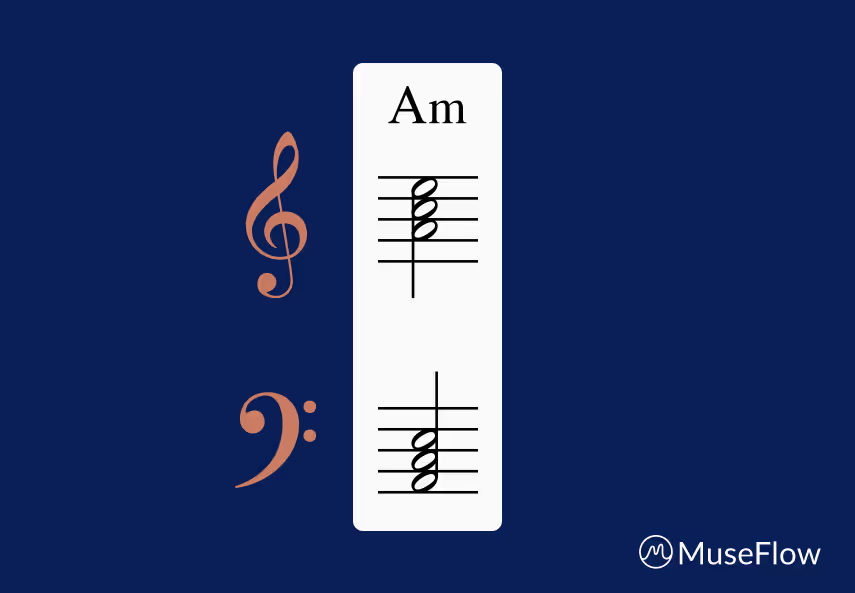
Now we enter the minor chords, which have a sadder, more introspective sound. A Minor is the relative minor of C Major, meaning they share the same notes but have a different tonal center. It's one of the most used minor chords.
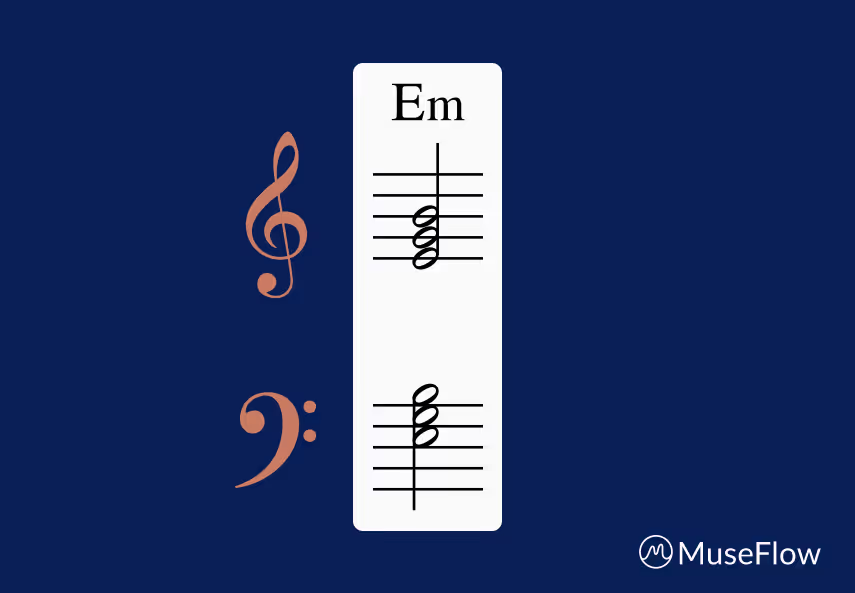
E Minor is hauntingly beautiful. It's all white keys, making it easy to play, and it's used extensively in ballads and emotional pieces.
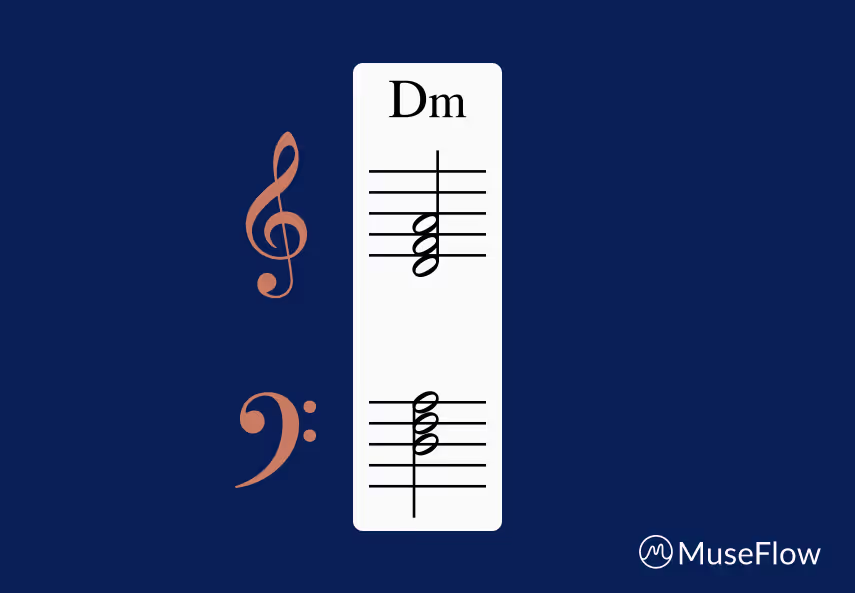
D Minor has a melancholic, dramatic quality. It's often used in classical music and adds depth to chord progressions.
This is a special chord. Diminished chords have a tense, unresolved sound that creates movement in music. B Diminished is the most common diminished chord for beginners and is essential for understanding how chords function.
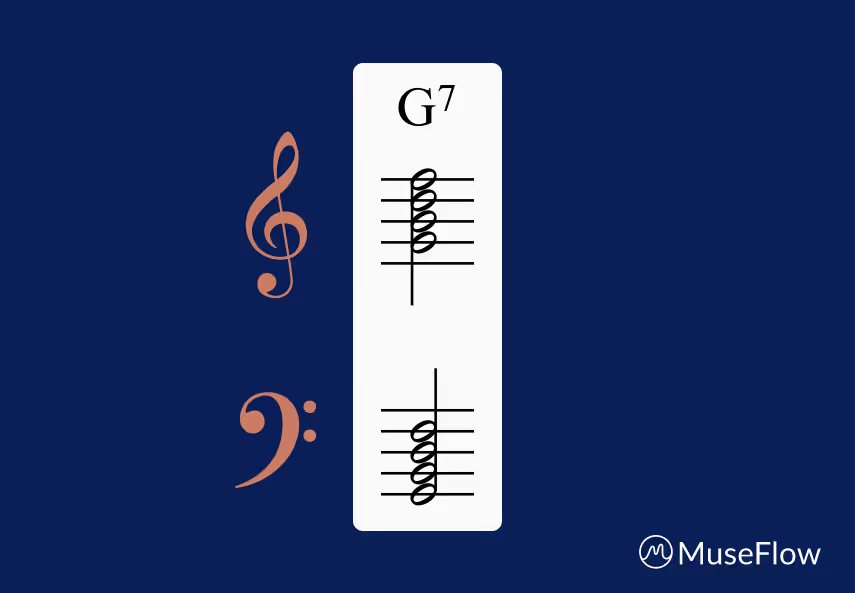
This is a dominant seventh chord, which means it has four notes instead of three. G7 has a strong pull towards C Major, making it perfect for creating tension and resolution. It's used in jazz, blues, and classical music.
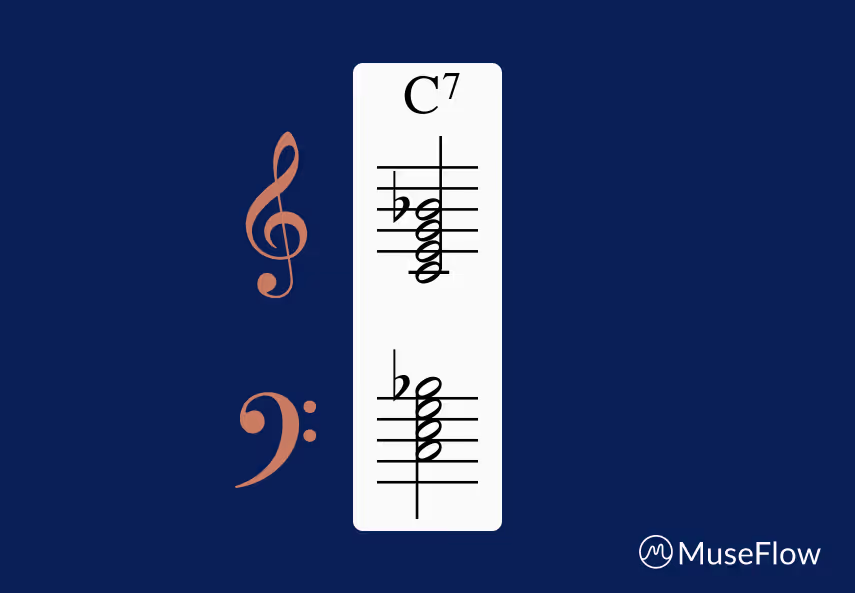
C7 is another dominant seventh chord. It creates a bluesy, jazzy sound and is used to transition to F Major. Learning seventh chords opens up a whole new world of harmonic possibilities.
Memorizing finger positions is one thing. Understanding how these chords function in music is another. This is where MuseFlow's approach shines. Instead of drilling isolated chords, you learn them in the context of real music through our sight reading exercises and repertoire library.
As you progress through MuseFlow's levels, you'll encounter these chords naturally. You'll see how they connect, how they resolve, and how they create the emotional landscape of a piece. This contextual learning is far more effective than rote memorization. Research on music learning shows that understanding the "why" behind the "what" leads to deeper, more lasting skills.

Here's the truth: knowing piano chords to play any song isn't just about memorizing shapes. It's about training your ear to hear them and your fingers to find them automatically. This comes from consistent, varied practice.
MuseFlow's never-repeating music generation ensures you're always encountering these chords in new contexts. You're not just playing C Major in one song; you're playing it in hundreds of different musical situations. This builds true fluency.
The benefits of learning piano extend far beyond the technical. It enhances cognitive function, emotional intelligence, and creative expression. And it all starts with mastering these foundational chords.
Ready to put these chords into action? Try MuseFlow for free and start learning piano chords for beginners the right way.. in context, with real music, and with instant feedback that makes every practice session count.
Millions of people play the piano around the world. That’s millions of people at different skill levels, learning and improving at totally different stages of their piano journeys. That’s why we at MuseFlow are fascinated by trying to create a system for all levels and experiences.
But how do pianists judge their skill level? And do different countries use different methods?
This is where piano grading systems come in. These are exams that test things like song performance, scales, and knowledge of music theory. When you pass one of these exams, you can move on to the next grade and your piano-learning journey continues!
Let’s break down the most popular grading systems around the world and dig into which one might be perfect for you.
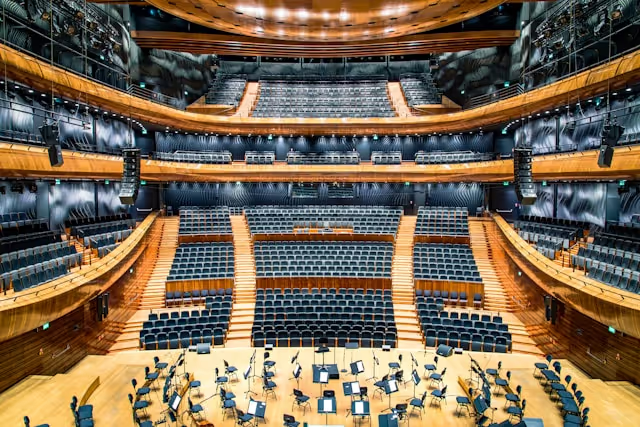
The ABRSM is a British music examination board that has been around since 1889. It offers in-person and digital exams and is one of the most commonly used and recognized grading systems worldwide. It is commonly considered a global standard for music education.
The grades start at Initial Grade for beginners, followed by Grades 1-8 of ascending difficulty. There’s no entry requirement for exams for Initial Grade through Grade 5, but exams for Grades 6-8 come with a prerequisite of passing Grade 5 or above in either Music Theory, Practical Musicianship, or Jazz Practical Grade. Beyond Grade 8, ABRSM offers three levels of advanced diplomas: ARSM, LRSM, and FRSM.
The exams focus on comprehensive musical knowledge, skills, and performance. You will be tested on:
Because their exams have a strong classical and traditional focus, ABRSM is perfect for students interested in classical piano training. And because ABRSM is the most well-known examination board, the grades you earn from them will be recognized around the world.
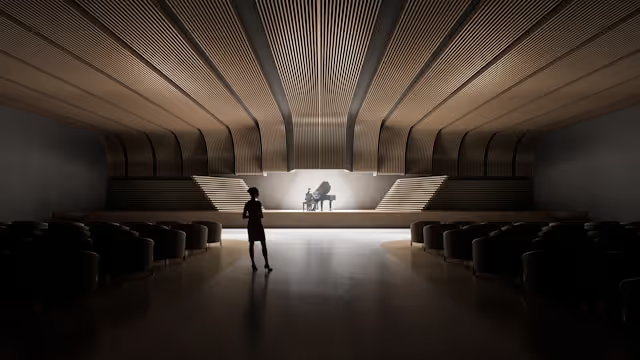
Trinity College London (was established in 1872 with more than 600,000 candidates per year in over 60 countries worldwide. While not quite as popular globally as ABRSM, Trinity College is still widely recognized and respected.
One of the big differences with ABRSM is that Trinity offers a separate pop and rock exam structure as well as their more classical-focused exam. Their exams also offer more flexibility and assessment options to choose from.
TCL has similar grades to ABRSM, with Initial Grade, Grades 1-8, and advanced diplomas ATCL, LTCL, and FTCL. Their exams are performance-focused and have face-to-face and digital options.
Here, you will tested on:
Because of their pop/rock grade track, Trinity College is perfect for someone with a more modern musical focus and sensibility.
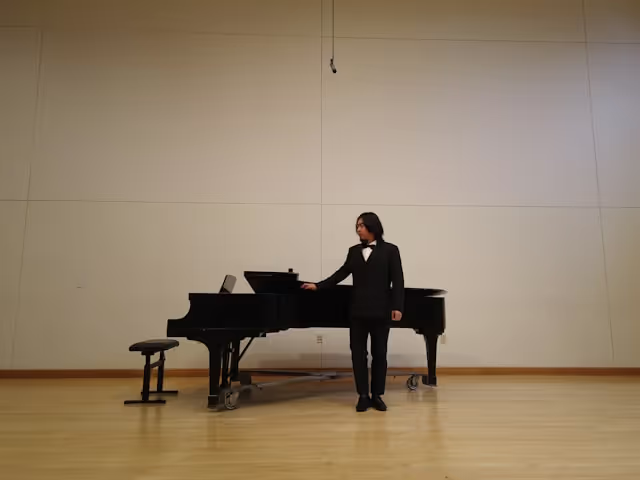
The RCM is a Canadian school based in Toronto and was founded in 1886. Its system is also recognized internationally and is popular in North America, used by 500,000 North American students today.
The RCM system starts with Prep A and Prep B, and then moves on to Grades 1-10. This means that RCM has spread its system into more exams than ABRSM and TCL.
Exams are more focused around classical and jazz, but there is an option to substitute some songs from the pop syllabus as well. From Grades 5-10 you must pass a music theory exam before taking that grade’s performance exam.
In an RCM exam, you will be tested on:
RCM is a popular option for North American pianists who still want internationally recognized certifications. This is one of the more theory-focused systems, so it’s great for those looking to include more theory in their piano education. With more grades, it’s also good for musicians who want a more incremental approach to their musical education.
This is far from an exhaustive list of the piano grading systems, but ABRSM, TCL, and RCM are three of the most popular and widely recognized. The systems may come with different styles of exams, but all can help you set standardized goals, track progress, and offer certifications that can be useful for college applications and ensemble auditions. If you’re looking for a way to structure your piano learning progress, these piano grading systems can help you do just that.
We here at MuseFlow know that there are as many different journeys to the piano bench as there are players - and just as many away from it, too. Below, we discuss the common reasons why people have trouble sticking with traditional music lessons and how the revolutionary app for learning piano MuseFlow challenges each one to help you learn to play, once and for all.
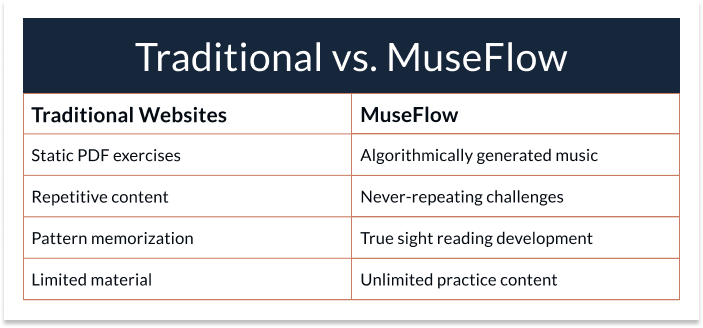
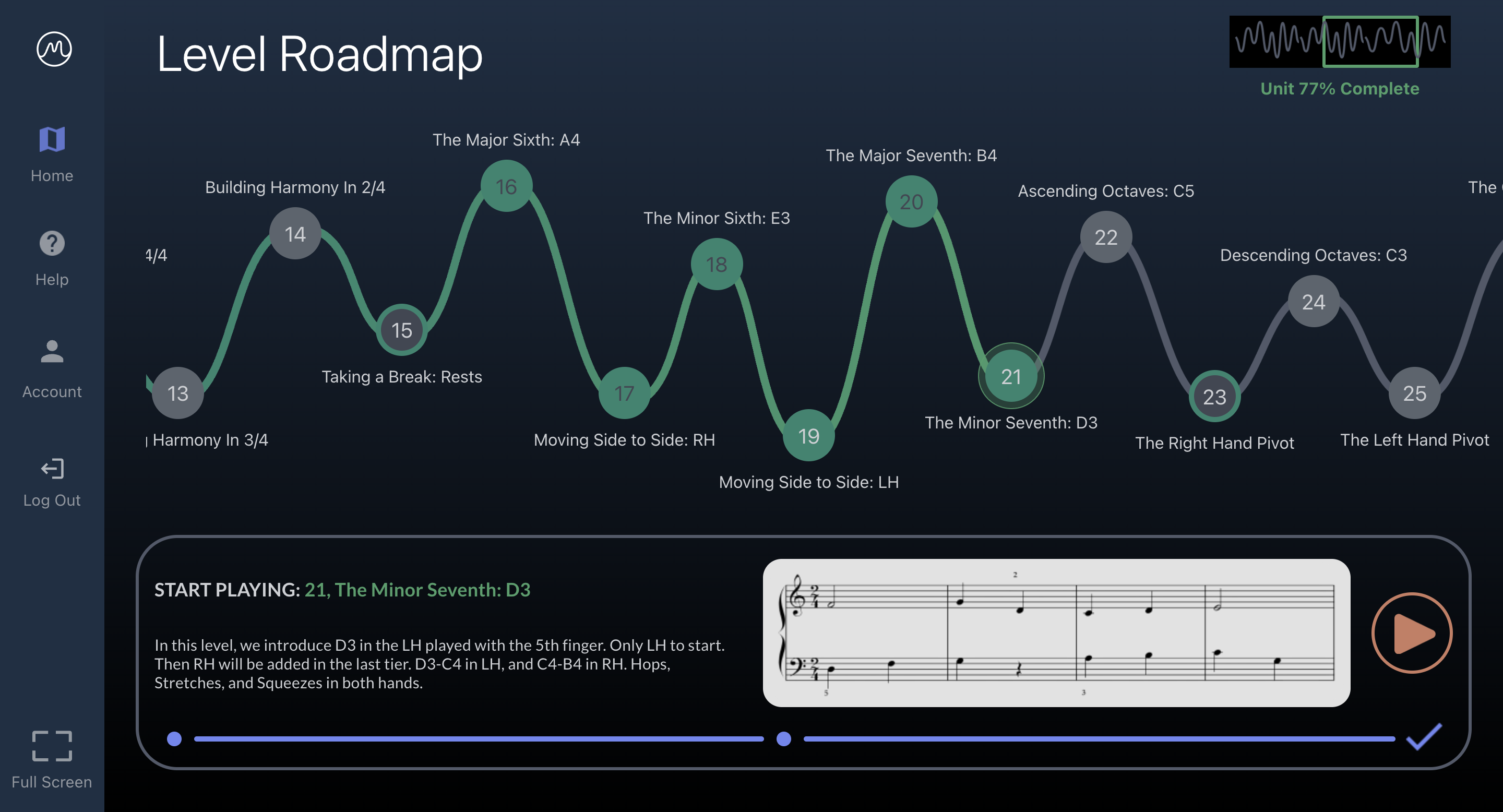
Traditionally, music is taught by a model of rote repetition with limited sight reading development. In fact, many other music apps teach you using this method. While it is entirely possible to learn this way, it takes much longer and can lead to burnout from boredom - especially in fast, intelligent learners. This can also lead to poor retention, slowing progress.
MuseFlow’s ingenious gamified interface makes learning feel like play, introducing music that never repeats to keep your brain engaged. Our adaptive learning adjusts to your skill level, allowing you to get into a Flow State while learning, promoting deep understanding in the quickest, most fun way possible. Studies show that fun is one of the most important factors for sticking with learning music.
The average music lesson in the United States in 2026 ranged from $280-$400 per month, not including access to music rooms throughout the week or purchasing books.
MuseFlow is a much more accessible piano learning option at $24.99 a month - including a free 14-day trial.

Especially if you initially played as a child, shifting priorities as we get older splits our focus and our time. Many little virtuosos had to choose between music and other extracurriculars.
MuseFlow helps you learn to play piano in your own time, even if that’s only 15 minutes a day; in your own space, even if that’s the kitchen table. The MIDI integration allows for support of various keyboard sizes.
Anyone who has ever lived in an apartment, or with someone picking up the recorder, understands the limits of learning a new instrument in almost any home environment.
MuseFlow’s MIDI keyboard interface allows you to not only learn to play anywhere you can set up the app, but with a pair of headphones, you can play in any environment.

When alone, it can be frustrating to practice repetitively without any indication whether you’re doing anything correctly or incorrectly. Especially when people are beginning to learn on their own, they can drop the practice due to this frustration. Even in classical piano training, with taking lessons once a week, practicing alone six days a week incorrectly reinforces bad habits.
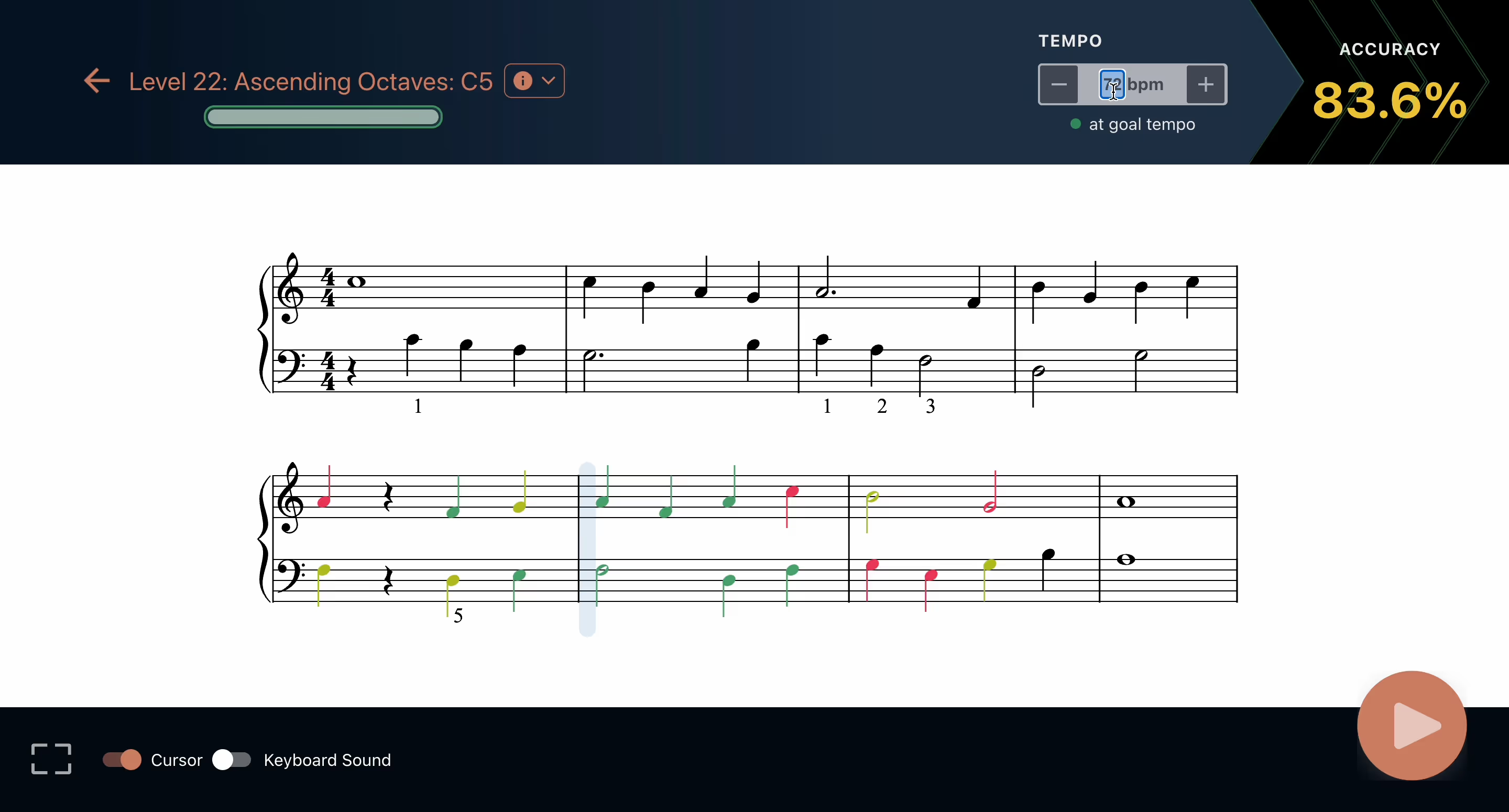
MuseFlow provides instant, precise feedback to gently help you correct mistakes in real-time, and instant audio and visual confirmation when you get it right. This is especially useful for complete beginners and self-taught pianists, so you can build confidence and a solid foundation. Seeing the fruits of your labor and success as you go is likely to increase self-confidence and empower you to keep up with your practice.
I get it - you want to get right to playing your favorite songs ASAP! The traditional method of rote memorization of the basics definitely has its value, but it does put a damper on your Elton John dreams. Progress can feel like a slog through inefficient exercises through traditional exercises.
MuseFlow’s sight reading first approach teaches you to read your favorite music fluently; not just the ones you’ve memorized, so you can get started once you’ve mastered each lesson. MuseFlow’s adaptive structure also allows you to progress at your own pace.
MuseFlow empowers you, no matter where you are in your music learning journey, to reach your music goals by using revolutionary, research and experience backed design to help you overcome common pitfalls.
Sight reading is one of the most important skills for pianists, especially for beginners. It enables musicians to interpret sheet music in real time instead of relying on memorization, opening the door to a broader repertoire and greater musical independence. Many adult learners struggle with sight reading because of limited practice time, inconsistent routines, or a lack of structured material. Even a few minutes of focused, high-quality practice can significantly improve fluency and confidence over time.
The “2-Minute Sight Reading Challenge” from MuseFlow demonstrates an approach designed to address these issues. By combining short, structured sessions with immediate feedback and varied exercises, this method provides an efficient pathway to developing sight reading skills.
This method is simple and practical for beginners, particularly adults with limited time.
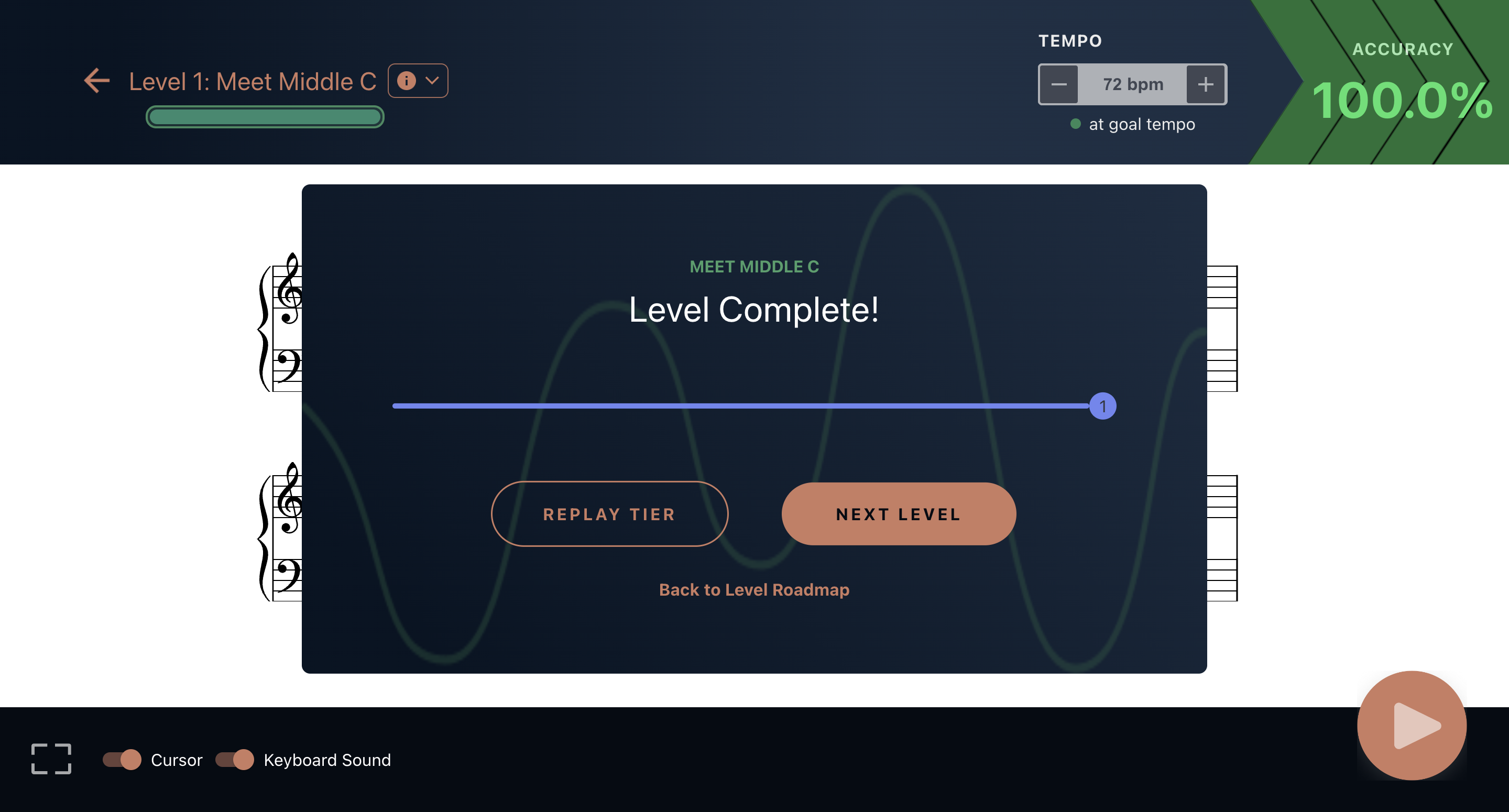
Begin by connecting a MIDI keyboard to the MuseFlow app. Real-time feedback is central to this approach. Immediate correction allows learners to identify mistakes as they occur, reinforcing accurate patterns and reducing the chance of ingrained errors. Studies on learning show that instant feedback accelerates skill acquisition by strengthening neural pathways and supporting automatic recognition.
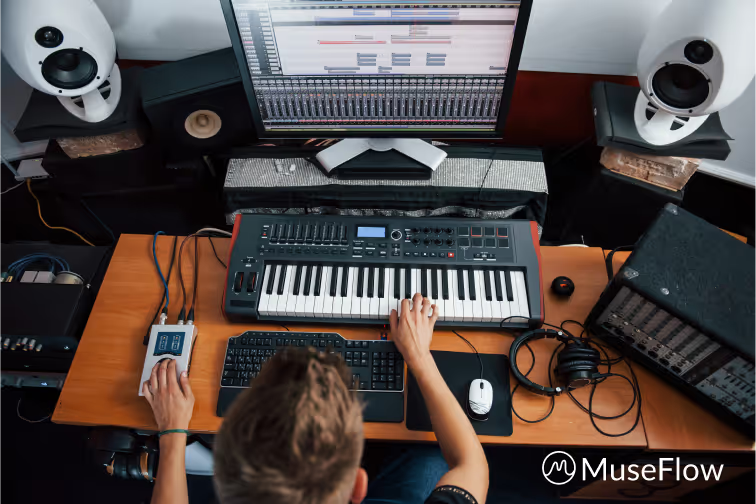
Unlike traditional sheet music or fixed libraries, the Sight Reading Trainer generates an ongoing sequence of new exercises. This ensures that learners practice true sight reading rather than memorization. By encountering novel material at the right difficulty level, learners develop anticipation skills, pattern recognition, and adaptability—core components of fluent sight reading.
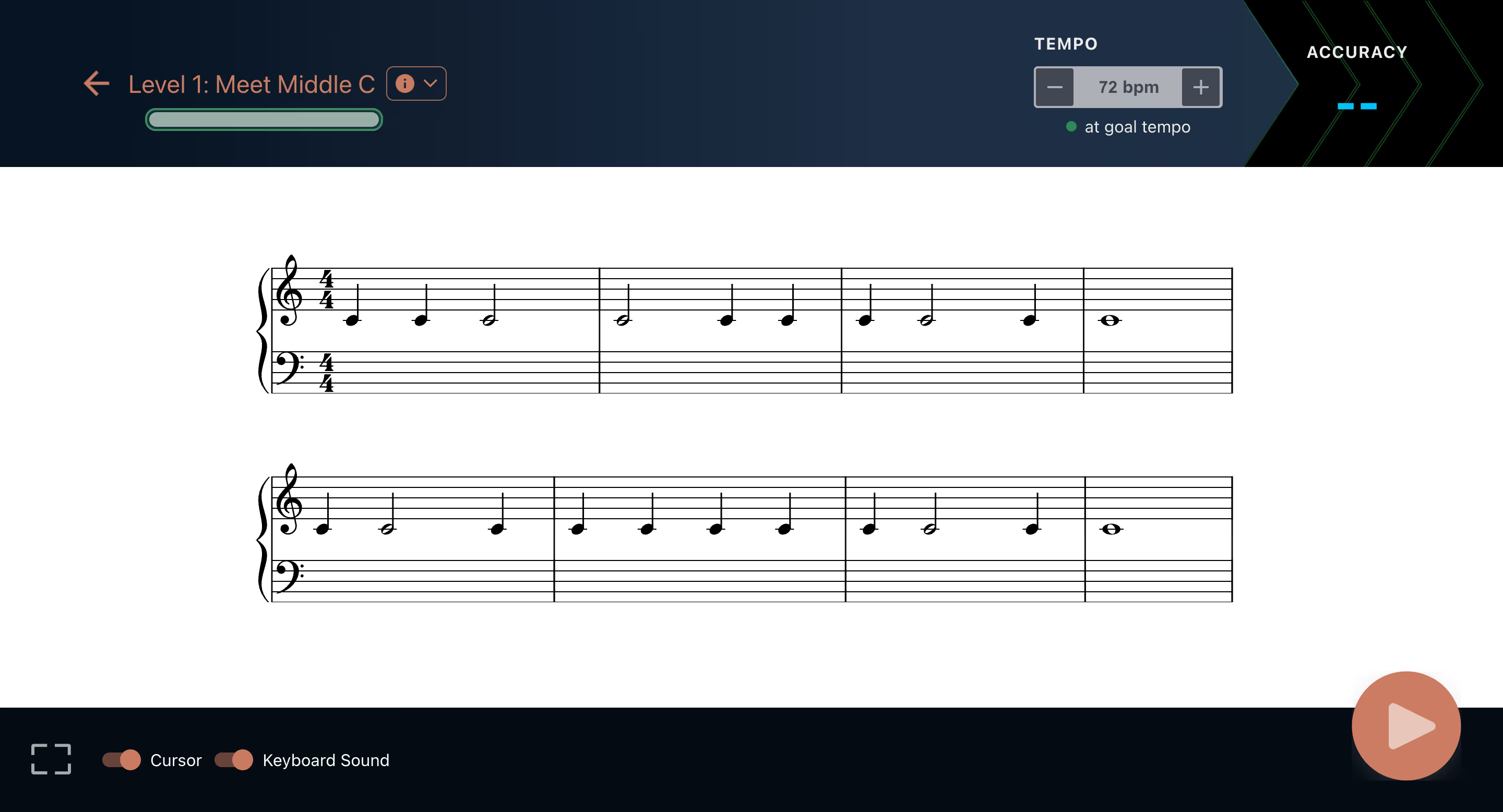
Short, concentrated sessions are surprisingly effective. A two-minute commitment removes the mental friction of starting practice while encouraging full attention. Research indicates that brief, highly focused practice often produces better retention than longer, distracted sessions. Adults benefit from micro-practice sessions that fit into busy schedules, allowing consistent progress without feeling overwhelmed.
Color-coded feedback—green for correct notes, yellow for timing adjustments, and red for errors—guides learners immediately. This enables rapid correction and reinforces proper technique. Immediate visual cues help learners internalize patterns more effectively than delayed feedback, which can slow progress and reduce engagement.
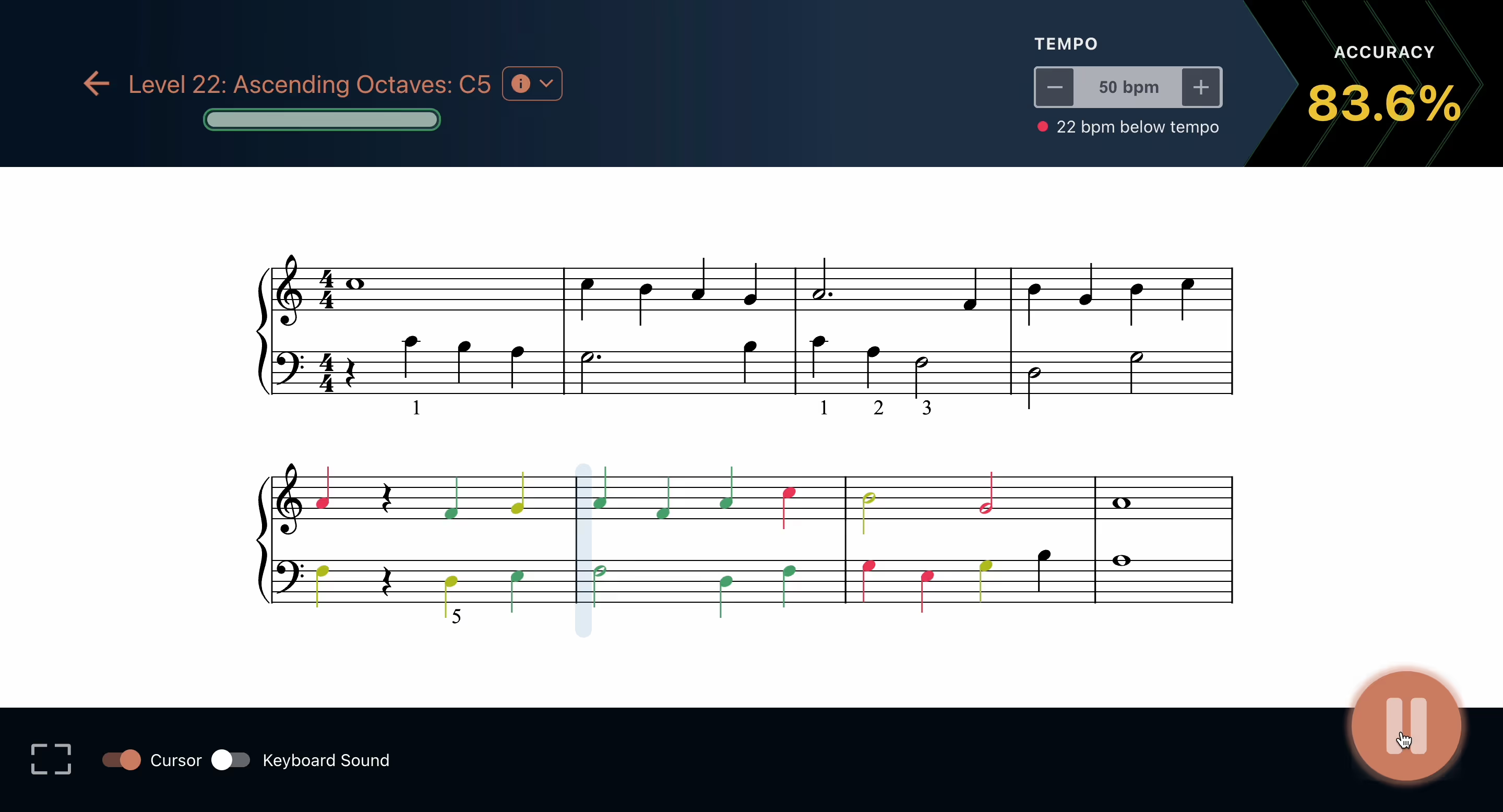
Ending practice at the point of peak engagement prevents fatigue and promotes a positive association with piano practice. Cognitive psychology research supports this strategy, showing that learners are more likely to sustain consistent routines when sessions end before exhaustion.
Several factors make the 2-minute approach effective for building sight reading skills:
The combination of these elements allows adult learners to steadily increase their sight reading fluency without overwhelming practice demands.
Sight reading practice offers benefits beyond simply playing new music. Consistent exposure to varied musical material strengthens memory, attention, and pattern recognition. It also enhances broader cognitive abilities such as problem-solving, auditory discrimination, and executive functioning. By developing musical literacy through structured practice, learners gain skills that contribute to overall cognitive flexibility and creative thinking.
Many apps focus primarily on memorization or gamification. While engaging, these approaches often fail to build genuine sight reading skills. A truly effective tool prioritizes structured progression, immediate feedback, and adaptive exercises that match the learner’s level. The 2-Minute Sight Reading Challenge demonstrates how short, well-designed sessions can produce measurable progress, even for busy adults.
Adopting short, repeatable practice sessions that gradually increase in complexity can help learners develop a foundation of sight reading skills that continues to grow over time. Combining focus, feedback, and varied material ensures that learners are not simply repeating the same exercises but are building real musical independence.
Evidence shows that short, structured practice sessions accelerate skill acquisition for beginners when combined with immediate feedback and clear progress tracking, an idea supported by research on microlearning and mastering skills in short time spans. By making practice approachable and rewarding, learners can steadily improve their sight reading and overall musicianship.
For practical guidance on integrating these principles into daily practice, see the MuseFlow blog for tips and example routines. By aligning piano practice with research-based learning strategies, beginners can build confidence, fluency, and long-term musical growth.

Keep up to date on our progress as we continue to add new features!