Adult Learning
Curriculum
Engineering
Technology
Why MuseFlow Is a Strong Alternative to Skoove for Sight-Reading-Focused Piano Learners
July 5, 2026

Choosing a piano learning app is no longer just about finding songs to play—it’s about choosing a learning method that aligns with your long-term goals. Apps like Skoove have helped many beginners get started, especially those interested in guided song-based learning. However, a growing group of learners is now looking for tools that prioritize independent music reading skills rather than song memorization alone.
This is where MuseFlow enters the conversation—not as a replacement for traditional piano apps, but as a focused alternative for learners who want to build sight-reading fluency as a core skill.

Skoove offers a structured, lesson-based approach that combines popular songs, classical repertoire, and foundational music theory. For learners who enjoy guided tutorials and playing recognizable pieces early on, this model can be motivating and accessible.
Like many traditional digital piano platforms, Skoove’s progression is largely song-centric. Learners often work through individual pieces step by step, repeating them until they are comfortable. This approach can be effective for repertoire building, but some educators note that extended reliance on guided play can slow the development of independent note-reading skills if sight reading is not consistently emphasized alongside repertoire practice.
MuseFlow takes a different educational position by centering its entire curriculum around sight-reading development. Rather than treating sight reading as a supporting skill, it becomes the main learning objective.
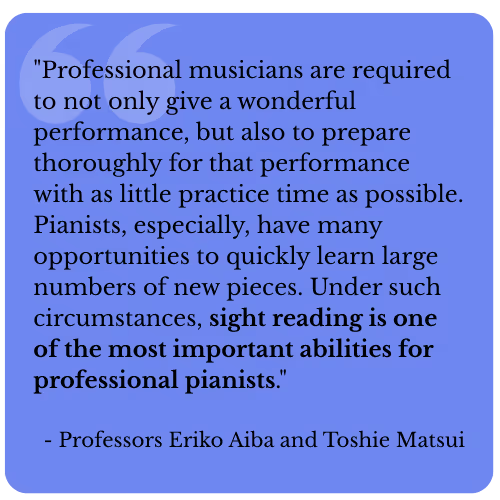
Instead of replaying the same pieces, learners are exposed to a continuous stream of short, structured musical material designed to reinforce:
This design encourages learners to process notation in real time—an ability closely associated with long-term musical independence.
Rather than relying on static lessons, MuseFlow uses adaptive difficulty scaling. Exercises adjust based on timing accuracy, pitch accuracy, and reading speed, keeping the material challenging but achievable.
This balance is critical. Educational psychology research consistently shows that skills develop most efficiently when task difficulty closely matches the learner’s current ability—challenging enough to require focus, but not so difficult that it leads to frustration.
MuseFlow’s real-time feedback loop reinforces this process by immediately connecting:
This tight feedback cycle is particularly effective for sight reading, where delayed correction can lead to ingrained errors.
A practical distinction between platforms like Skoove and MuseFlow is learning outcomes:
MuseFlow emphasizes the second outcome. By constantly presenting new material rather than fixed songs, learners are trained to decode notation rather than rely on memory. Over time, this supports faster learning of new repertoire—both inside and outside the app.
Gamification itself isn’t new, and not all implementations are effective. Its value depends on whether game mechanics support learning objectives rather than distract from them.
When applied correctly, gamified learning environments have been shown to:
MuseFlow uses gamification primarily to reinforce reading accuracy and timing, not as a reward system disconnected from musical outcomes. Progress indicators, adaptive pacing, and short achievement cycles are tied directly to measurable reading improvements.
.png)
There is no single “best” piano app—only tools that align better with specific goals.
Understanding this distinction helps learners choose tools intentionally rather than switching apps out of frustration later.
MuseFlow stands out not because it replaces traditional piano apps, but because it solves a specific, well-documented learning gap: fluent sight-reading. For learners who want to read music with confidence rather than rely on memorized pieces, it represents a focused and methodologically sound alternative.

For much of its history, piano education has followed a familiar structure: weekly lessons, fixed curricula, and long periods of unguided practice. While this model has produced accomplished musicians, it has also created barriers for many learners—slow progress, inconsistent motivation, and limited access to high-quality instruction. Today, advances in artificial intelligence (AI), data science, and learning design are reshaping how people approach piano study, opening new possibilities for more adaptive and engaging education.
Rather than replacing traditional teaching, modern technology is changing how learning happens between lessons and how practice time is used.
One of the most meaningful shifts in piano learning is personalization. AI-enabled learning systems can analyze a student’s playing in real time and adjust difficulty, pacing, and content accordingly. This allows learners to work at an appropriate level of challenge rather than following a rigid, pre-set sequence.
Key benefits of adaptive systems include:
Educational research consistently shows that timely feedback and appropriately matched challenges accelerate skill acquisition, particularly in complex motor tasks like playing an instrument.

Learning piano is not only a technical process—it is also a motivational one. Many learners abandon lessons not because of lack of ability, but because practice feels unrewarding or disconnected from progress.
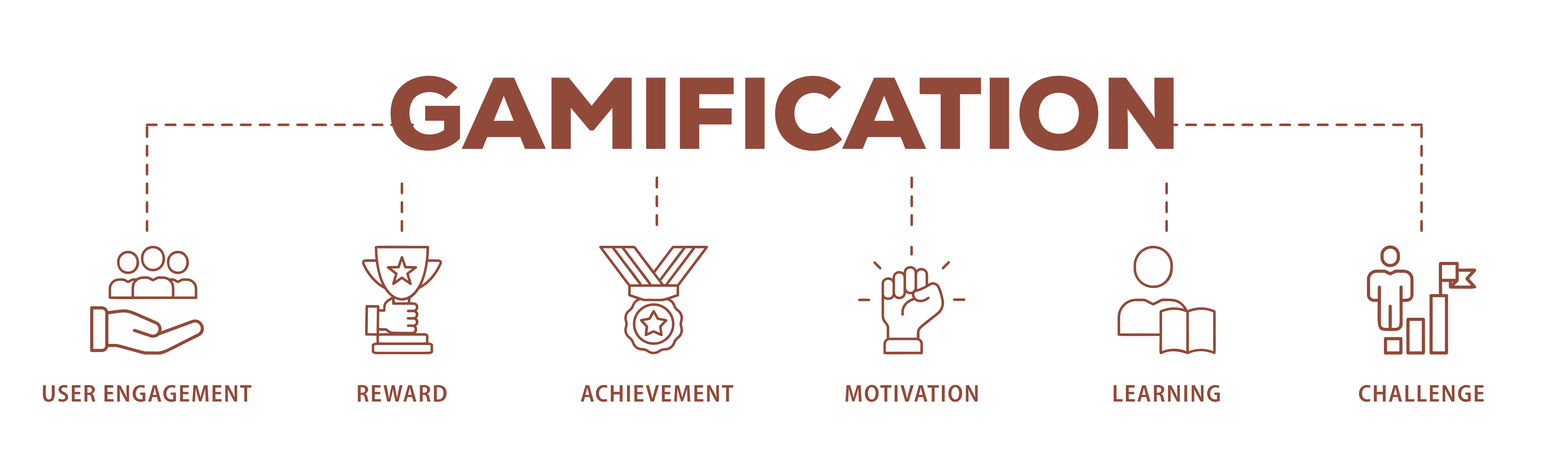
This is where gamification plays an important role. Gamification applies structured challenges, progress tracking, and clear goals to learning environments. When used thoughtfully, it helps learners maintain consistency and focus over long periods.
Effective gamified learning systems emphasize:
Rather than trivializing music education, well-designed gamification supports the cognitive conditions needed for deep learning.
AI in piano education does not mean automation for its own sake. At its best, technology supports learners in areas where consistency and precision matter most. Tasks such as monitoring timing, pitch accuracy, and repetition benefit from software that can respond instantly and patiently.
Modern piano learning platforms—including systems like MuseFlow—use these capabilities to support structured practice outside of lessons. This allows students to arrive better prepared and more confident, having already addressed technical fundamentals during independent practice.
A common misconception is that AI-driven learning tools aim to replace teachers. In practice, the opposite is true. When technology handles repetitive technical feedback, teachers can focus on higher-level musical skills that require human insight.
Human instructors excel at:
The most effective learning environments combine intelligent practice tools with experienced educators who help students develop musical identity and expression.

Technology is also reducing long-standing barriers to music education. High costs, inflexible schedules, and geographic limitations have historically restricted access to piano instruction. Digital tools make it possible for more learners to practice consistently, regardless of location or background.
This broader access does not dilute musical standards; instead, it allows more students to build solid foundations before pursuing advanced study, whether independently or with a teacher.
Learners navigating today’s educational landscape can benefit from a few core principles:
By aligning practice with how people actually learn, modern piano education becomes more sustainable, motivating, and effective.
The future of piano education is not defined by AI or gamification alone. It lies in thoughtful integration—using technology to enhance learning while preserving the human elements that make music meaningful. When applied with care, these tools help learners progress efficiently, stay motivated, and develop lasting musical skills.
Choosing a piano practice app can significantly influence how efficiently a learner develops technical skills and maintains a consistent routine. Many piano students—especially independent learners—struggle with issues such as unfocused practice, limited feedback, and difficulty tracking long-term progress. In response, modern digital practice tools increasingly rely on adaptive technology, real-time analysis, and engagement design to support structured learning outside traditional lessons.
This review examines how MuseFlow approaches piano practice through adaptive learning, feedback systems, and engagement mechanics, while aligning its design with widely recognized principles from music education and learning science.
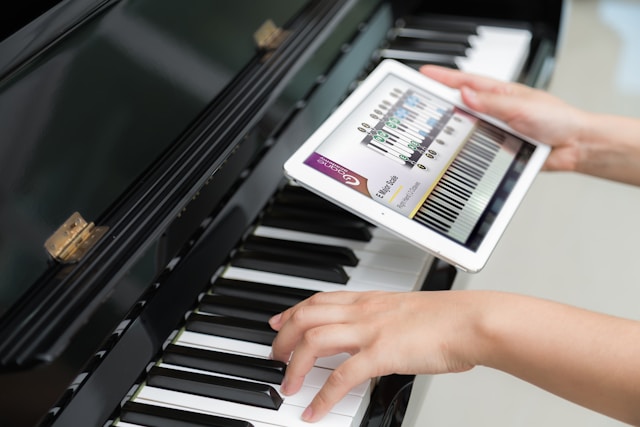
MuseFlow uses artificial intelligence to tailor practice sessions based on a learner’s ongoing performance. Rather than following a fixed sequence of lessons, the app evaluates factors such as note accuracy, timing stability, and tempo consistency to adjust exercises dynamically.
Adaptive learning systems are commonly associated with improved learning efficiency because they help learners focus on areas that require the most attention instead of repeating material they have already mastered. In music practice, this can mean isolating rhythmic inconsistencies, addressing fingering challenges, or reinforcing coordination between hands before introducing more complex material.
For example, a beginner experiencing difficulty with hand independence may receive targeted coordination exercises, while a more advanced learner may encounter material that emphasizes sight reading or expressive control. This approach reflects principles of deliberate practice, which emphasize focused, goal-oriented repetition rather than generalized rehearsal.
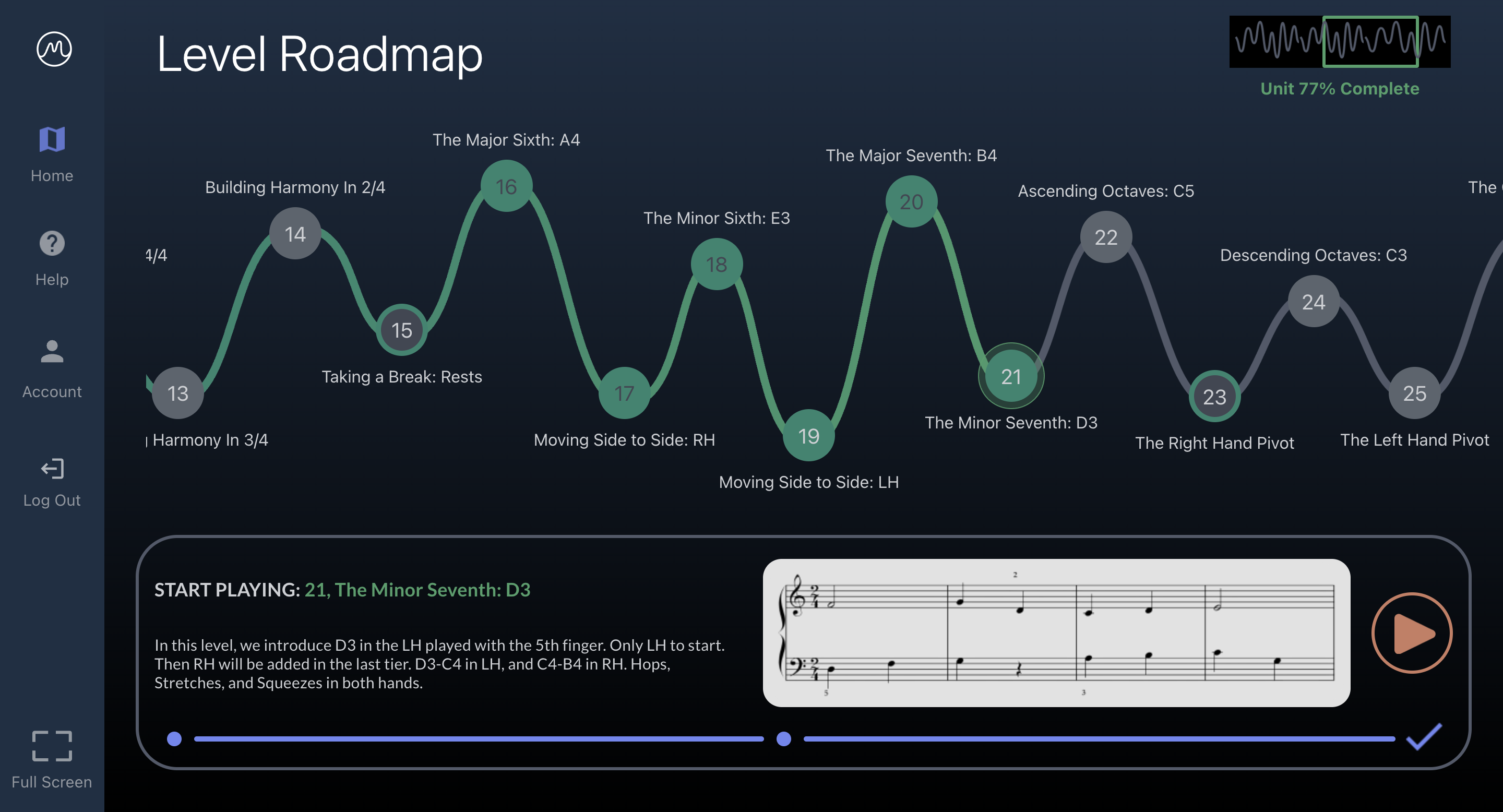
Immediate, actionable feedback plays a central role in skill acquisition, particularly for instruments that require precise motor coordination. MuseFlow analyzes a learner’s playing in real time and provides feedback related to accuracy, rhythm, and articulation during practice sessions.
Correcting mistakes at the moment they occur helps prevent inefficient repetition and reduces the likelihood of reinforcing incorrect techniques. Beyond live feedback, MuseFlow also records performance data across sessions, allowing learners to review progress over time.
Tracked metrics may include:
By visualizing improvement and highlighting recurring problem areas, the app supports more intentional practice planning. Research on expert skill development consistently shows that learners benefit from feedback systems that make performance gaps visible and measurable, particularly when practicing independently.
Maintaining regular practice habits is one of the most persistent challenges in learning an instrument. MuseFlow incorporates gamified elements such as progress indicators, structured challenges, and achievement milestones to support consistency.
Educational research suggests that gamification can increase learner engagement when rewards are tied to meaningful learning outcomes rather than superficial interaction. In the context of music education, structured milestones can help learners break long-term goals into manageable steps, reinforcing persistence rather than replacing discipline.
Within MuseFlow, gamified elements are used to encourage routine formation by providing short-term goals, such as completing accuracy-focused exercises or maintaining tempo stability across repetitions. These features are designed to complement, rather than distract from, core practice objectives.
MuseFlow’s overall design reflects an emphasis on common challenges faced by independent piano learners, including unclear progress benchmarks, inconsistent feedback, and loss of motivation over time. Instead of presenting exercises as isolated tasks, the app structures practice sessions around observable performance outcomes.
The interface prioritizes clarity and ease of use, allowing learners to focus attention on the instrument rather than navigation or setup. Exercises are introduced based on demonstrated readiness, aligning with instructional design principles commonly applied in skill-based learning environments.
Rather than positioning itself as a replacement for traditional instruction, MuseFlow functions as a structured practice companion. It can be used alongside lessons or as a self-guided option for learners seeking data-informed practice support.
Effective piano practice depends on focused repetition, timely feedback, and sustained engagement. MuseFlow integrates adaptive learning technology, real-time performance analysis, and structured engagement features to support these core requirements.
By grounding its design in principles associated with deliberate practice, adaptive learning, and instructional clarity, the platform reflects broader trends in modern music education. For learners exploring technology-supported practice methods, understanding how such tools structure feedback and progression can help inform better practice decisions and long-term skill development.

Can you learn piano without a teacher? It’s a common question among adults who are interested in music but constrained by time, cost, or scheduling limitations. Traditional piano instruction has long relied on weekly lessons with an instructor, yet many learners practice alone for most of the week. This gap between lessons often determines whether progress continues or stalls.
Learning piano independently is possible, but it is not effortless. Success depends on how practice is structured, how mistakes are corrected, and whether the learner receives feedback at the right time. Understanding these factors helps clarify when self-directed learning can be effective and where technology can play a supportive role.

Qualified piano teachers provide structure, accountability, and expert feedback. They help learners correct posture, timing, and musical interpretation—elements that are difficult to self-diagnose. However, even with instruction, most learning happens during individual practice sessions.
Independent learners often struggle during this phase. Without feedback, mistakes in rhythm or note accuracy can become habits. Adult learners, in particular, report uncertainty about whether they are improving, which can lead to frustration or inconsistent practice. This is where self-learning methods frequently break down—not because instruction is unnecessary, but because guidance is absent when it is most needed.
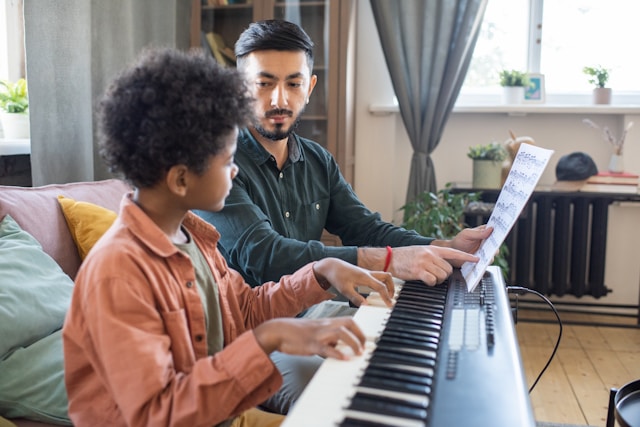
Educational research on skill acquisition consistently emphasizes the importance of immediate feedback. When learners receive timely correction, they adjust technique more effectively and avoid reinforcing errors. In music learning, this applies directly to pitch accuracy, rhythm, and coordination.
Digital learning tools attempt to address this gap by providing real-time feedback during practice. When software can detect played notes and timing, learners gain clarity about what went wrong and where. This does not replace the musical insight of a teacher, but it can support independent sessions by offering consistent, objective feedback.
MuseFlow is one example of a platform that applies this principle by using MIDI input to visualize accuracy during practice. The broader concept—feedback during practice rather than after—is what matters most.

Many beginner approaches emphasize memorizing songs early, which can feel rewarding but often limits long-term growth. Sight reading, by contrast, develops the ability to interpret unfamiliar music in real time. Research in music education has shown that stronger sight reading skills are associated with broader repertoire access and higher overall musical proficiency.
Effective self-learning platforms place sight reading at the center of instruction rather than treating it as an optional skill. Regular exposure to unfamiliar but manageable material helps learners develop fluency instead of pattern memorization. This approach supports independence by allowing musicians to learn new music without relying on demonstrations or recordings.

Consistency matters more than intensity when learning piano. Adult learners often benefit from short, focused sessions rather than long practice blocks. Engagement helps sustain these habits, but excessive gamification can distract from musical fundamentals.
Psychological research on flow states—a condition where challenge and skill are well balanced—suggests that learners are more likely to remain engaged and stay motivated when tasks are neither too easy nor too difficult. Some learning platforms incorporate progress indicators or adaptive difficulty to help maintain this balance. When applied carefully, these features can encourage regular practice without turning learning into a distraction-driven experience.
For many self-directed learners, maintaining motivation over time is just as important as choosing the right practice tools, especially when progress feels slow or uneven. Strategies for staying motivated when learning piano gets tough can help learners remain consistent through challenging phases.
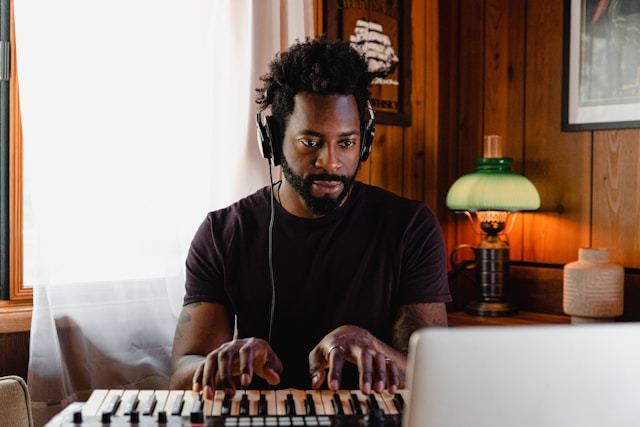
Self-directed learners vary widely in background, goals, and available time. Rigid lesson sequences can discourage persistence, while completely unstructured practice often lacks direction. Adaptive learning systems attempt to balance these extremes by offering guided progression alongside flexibility.
Platforms such as MuseFlow illustrate how structured curricula and optional exploration can coexist. Learners can follow a defined path or revisit earlier material as needed. This type of design aligns with adult learning research, which shows that autonomy and visible progress improve long-term retention
Learning piano without a teacher is possible, but it requires more than access to exercises. Effective self-learning depends on feedback, structured progression, sight reading development, and consistent practice habits. Teachers remain invaluable for musical depth and interpretation, yet technology can support learners during independent practice by addressing common gaps.
Digital platforms are not replacements for instructors, but when designed around established learning principles, they can make self-directed piano learning more accessible, structured, and sustainable over time.
The rise of artificial intelligence has sparked curiosity about its potential in music education. Many learners ask: Can AI help you learn piano faster? The idea is appealing — adaptive systems that respond to your skill level, provide instant feedback, and accelerate progress. However, not all AI-assisted tools are equally effective. Understanding what actually drives improvement can help you separate marketing claims from genuine learning strategies.
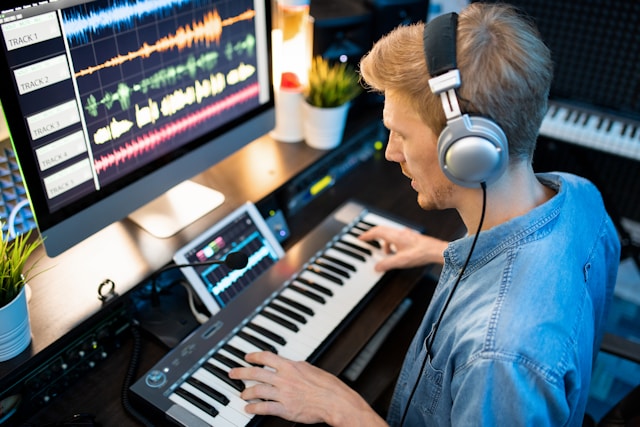
When people ask about AI in piano learning, they often refer to systems that:
Research on skill acquisition and adult learning consistently shows that consistent, structured practice combined with timely feedback leads to better outcomes than occasional, error-free practice alone. The same principles apply whether the system uses algorithms, AI, or traditional instruction methods.
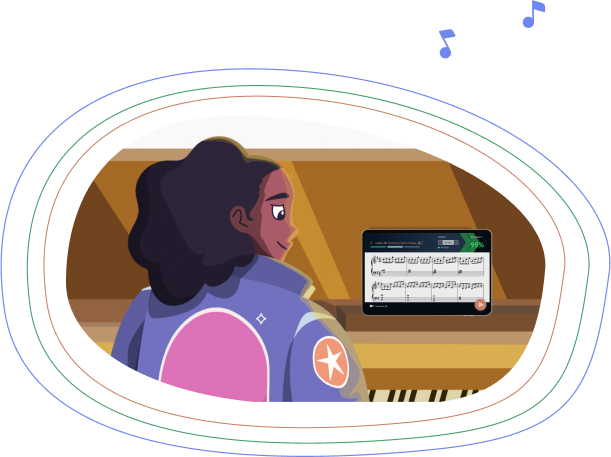
Many so-called AI piano apps simply track whether you hit the right notes. While useful, this approach primarily supports memorization rather than transferable musical skills. Effective learning requires sight reading fluency — the ability to interpret and perform new music quickly. According to music education research, sight reading proficiency is the strongest predictor of long term musical success.
Fixed song libraries or repetitive exercises can inadvertently reinforce dependence on the software rather than independent skill development. In contrast, tools that generate non-repeating exercises and adapt in real-time encourage learners to read, interpret, and play music more flexibly.
Regardless of AI involvement, several educational principles are consistently linked to faster skill acquisition:

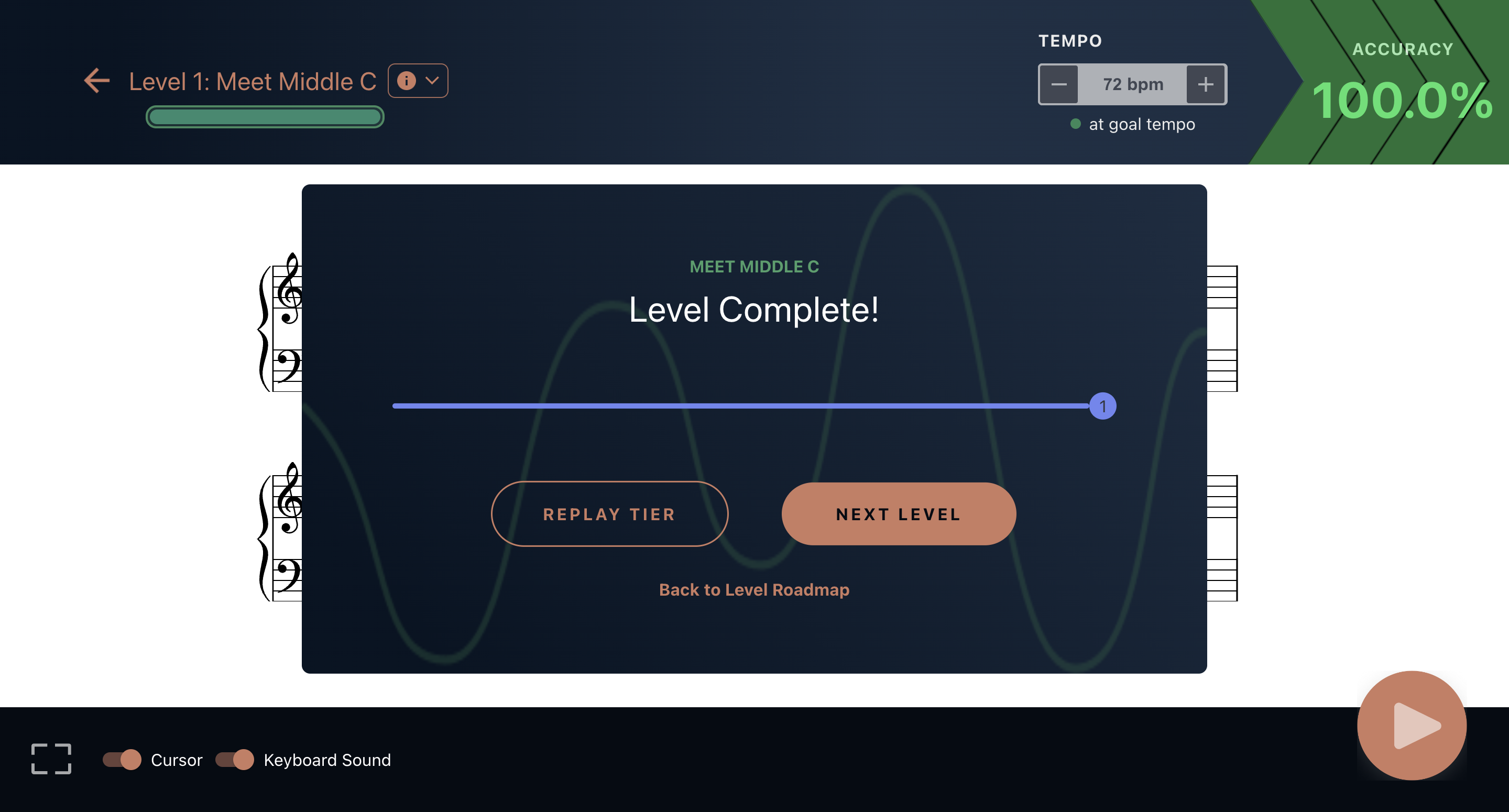
MuseFlow offers an approach aligned with these principles. Its real-time feedback system provides color-coded notes for instant correction, and its adaptive exercises generate new music sequences continuously, reinforcing sight reading skills rather than memorization. Users progress through levels and challenges that match their individual skill, keeping them in the optimal learning zone.
While this is one example, the underlying takeaway is that AI is not a magic shortcut. Success depends on consistent engagement, adaptive challenges, immediate feedback, and meaningful progression.
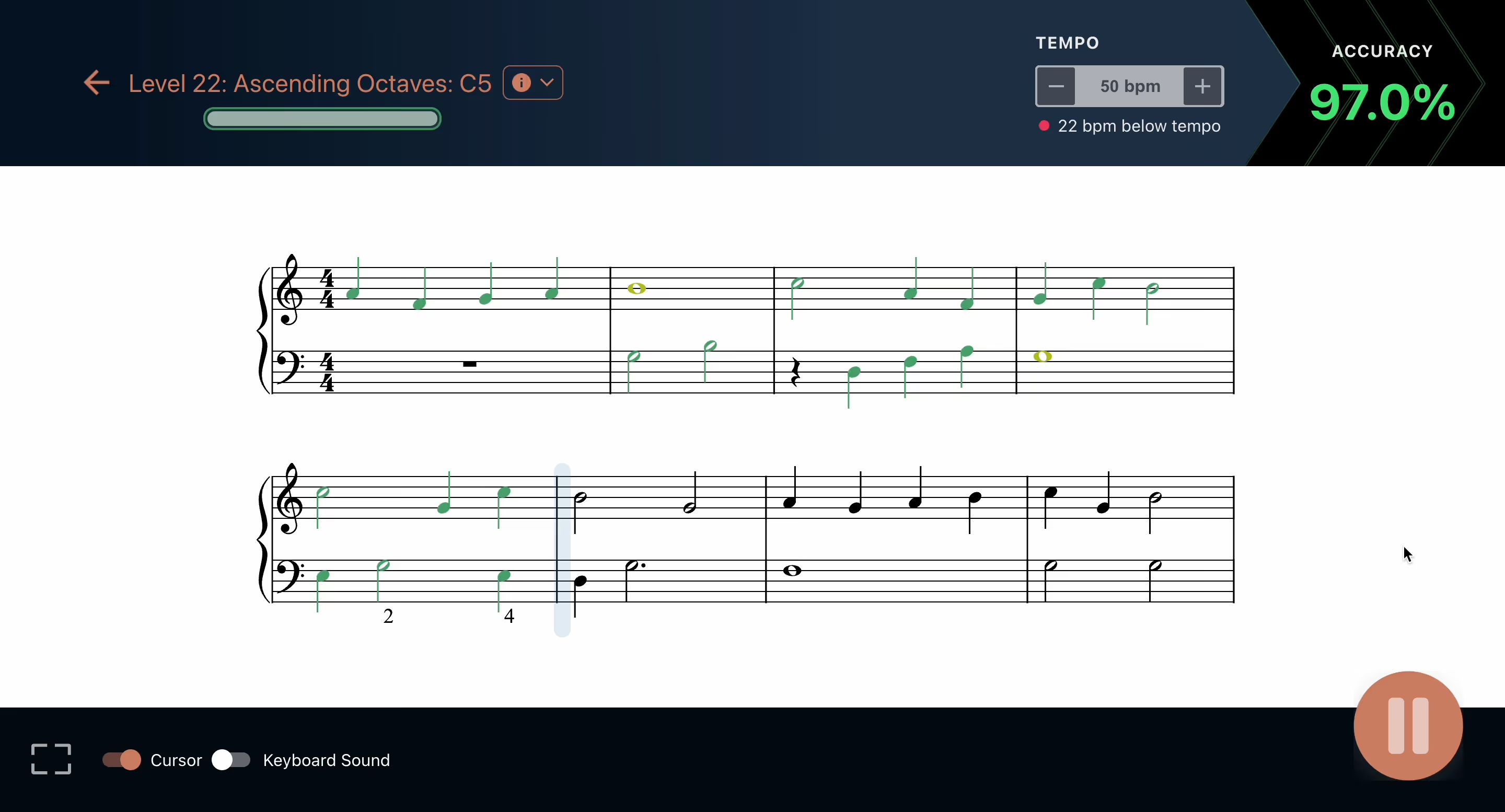
Ultimately, whether using AI, algorithms, or traditional methods, the goal is to develop transferable skills, maintain motivation, and reinforce consistent learning habits. Learners who focus on these core principles will see measurable progress, gain musical independence, and enjoy a more fulfilling piano practice experience.
When it comes to the digital music education space, finding the right app will make all the difference in your learning journey. Yousician is a well-known choice, but it might not be the perfect fit for everyone... If you’re searching for the best Yousician alternative, congrats, you have found it! Look no further than MuseFlow. Keep reading to find out why MuseFlow stands out as the best Yousician competitor and also how it will enhance your unique piano learning experience.
Start using MuseFlow today - It's free!
MuseFlow flips the traditional model by making sight reading the core skill... not an afterthought. This approach builds versatile, fluent musicians who can confidently approach any piece of music, not just the few they’ve memorized. Unlike apps that focus on rote repetition or mimicry, MuseFlow trains your brain to understand music in real time, note by note, phrase by phrase.
Why does that matter? Studies show that sight reading correlates strongly with overall musicianship, including better pitch accuracy, rhythmic stability, and musical expression. According to a study published by the International Journal of Music Education, students with strong sight reading skills tend to perform better in all aspects of music learning.
When sight reading is at the heart of the learning process, students engage with a much larger variety of material—boosting fluency, flexibility, and long-term motivation. As noted in this article published on educause.edu, exposure to diverse material and adaptive practice leads to stronger retention and more meaningful learning outcomes.
By mastering sight reading, you’re not just learning songs—you’re learning the language of music.

Wouldn't you love a real-time feedback mechanism? Like a professional expert looking at what you do and nicely giving you advice? Well it's now possible! As you play, the app listens to your performance and then provides instant corrections on notes, timing, and technique, much like a personal tutor! You could even say better than a personal tutor, because it stays friendly and is always available.
Why it matters? Real-time feedback is super critical to correct mistakes right as they happen. This prevents the formation of bad habits and makes sure that you develop the perfect playing techniques. It will save you time in the long run. This feature is especially LOVED by beginners, because they need constant guidance to progress effectively. This immediate feedback is something that sets MuseFlow apart from many Yousician competitors!
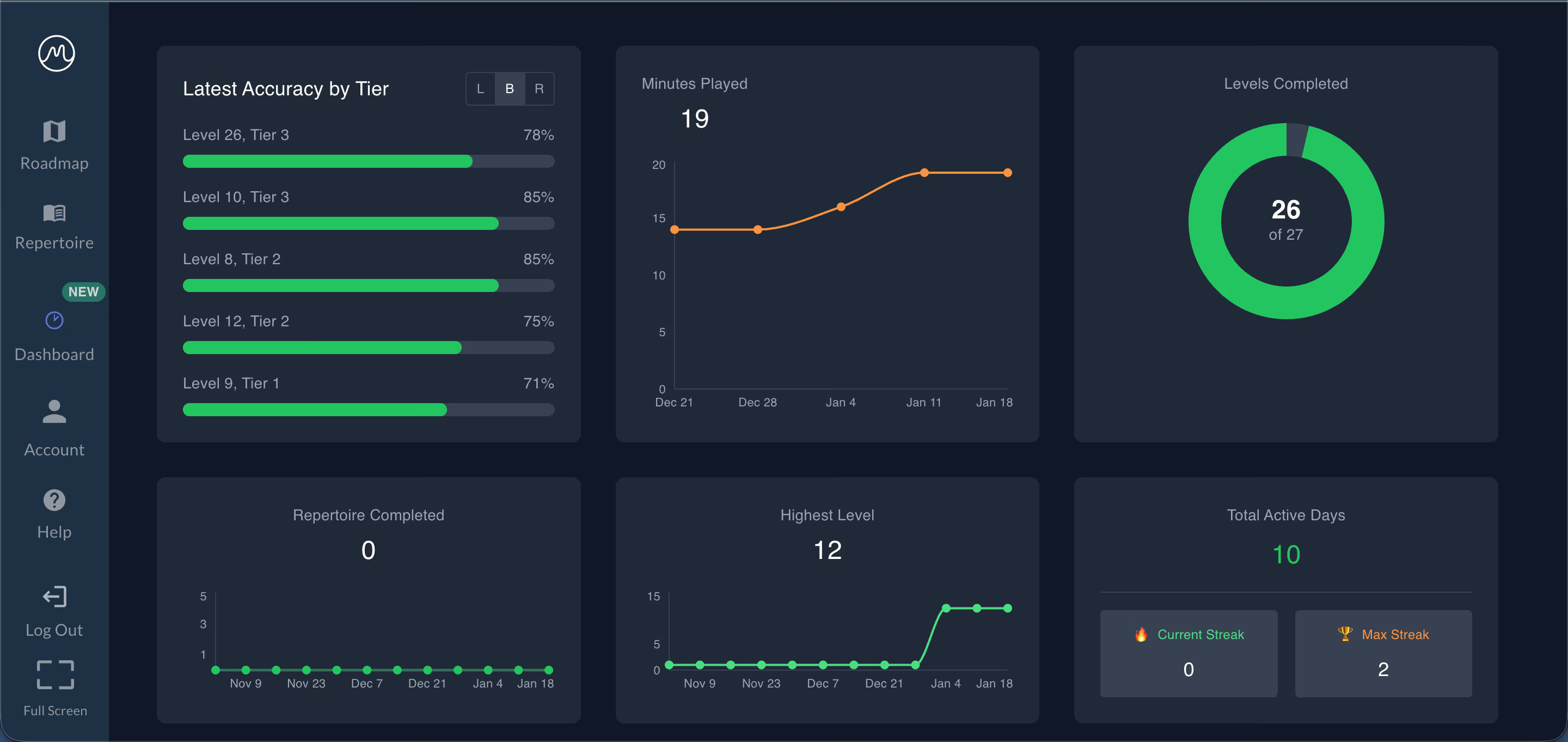
It's the best piano teaching app because it turns learning into an amazing game that you will love playing. This is done through its engaging gamification features. While Yousician offers some vague gamification elements, MuseFlow takes it a lot further. Just look at the pictures below and see. The app makes it a lot more rewarding to practice your skill and provides you with positive reinforcement.
Why it matters? A lot of apps abuse it, but in the correct use-case gamification keeps you motivated & makes learning more enjoyable! The sense of accomplishment from learning a new skill and completing levels boosts your confidence and encourages you to maintain a consistent practice routine. This gamified approach will help you stay committed to your learning journey.
When people look for appl like yousician, MuseFlow always comes up! It offers an all-encompassing learning program that covers all aspects of piano education. From basic techniques to advanced music theory. The app’s extensive curriculum helps you become a more versatile & confident pianist.
Why it matters? A comprehensive educational framework provides a solid foundation for your musical journey! Whether you’re a rookie that just wants to start piano or a pro looking to refine your skills...this innovative new app's thorough curriculum really makes sure that you have access to all the resources you need to succeed!
This is really important for the success of any edtech app. It was developed by professional musicians and educators who deeply understand the challenges of learning piano. They have been through every challenge of learning the instrument. Some of the founders even started as self-taught pianists themselves. This gives them a unique and accurate perspective on the needs and wants of learners like yourself.
Why it matters? You want to learn from people who have done it themselves. They know all your pain points. Learning from this similar app to yousician is designed by experts means you’re getting high-quality instruction. The founders have pride in teaching you to play the piano in the best way possible. It really makes it fun! Additionally with the free trial, it makes it a free alternative.
When trying to find the best Yousician competitor, MuseFlow stands out as the #1. They are loved by their customers and known for their sight reading adaptive learning experience, real-time feedback, unique gamified approach, and expert design. These features make MuseFlow the best choice for ANYONE serious about learning piano.
Join thousands of happy learners who have discovered the benefits of MuseFlow -- see how the app will transform your piano learning journey. We promise you will have fun with this style of learning and also keep staying motivated! This alternative to yousician is the newest and most innovative way to learn and actually ENJOY the learning process.
Digital music education has expanded rapidly, and MIDI keyboards have become a common entry point for adult piano learners. With so many learning platforms available, choosing the right software can significantly shape early progress, motivation, and long-term consistency. Rather than focusing on any single “best” option, it’s more useful to understand what features actually matter when learning piano with a MIDI keyboard.
Most modern piano learning platforms share similar goals but implement key features—such as feedback, pacing, and content structure—quite differently. The sections below outline the core criteria that experienced educators and adult learners typically look for. One platform, MuseFlow, is referenced as a practical example of how these ideas can be applied in real software.
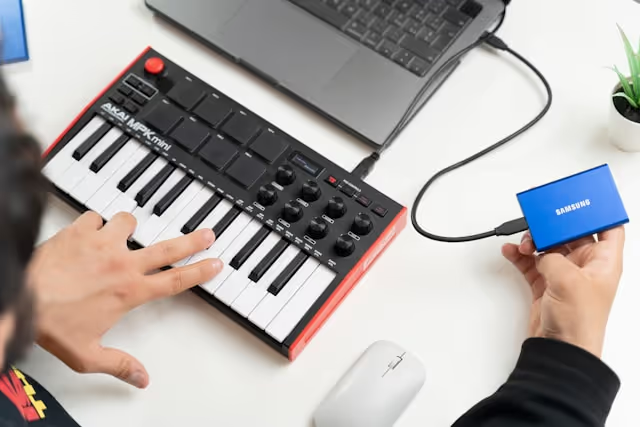
Effective piano learning software should respond to how a learner actually plays, not just follow a fixed syllabus. Adaptive systems adjust difficulty based on accuracy, timing, and consistency, helping learners stay challenged without becoming overwhelmed.
Educational research on skill acquisition shows that appropriately scaled challenges and clear goals improve retention and motivation, and this principle is supported by studies on adult learning dynamics and instructional design. In practice, this means exercises should become easier or harder depending on recent performance, rather than advancing on a preset schedule.
Some platforms, including MuseFlow, apply performance tracking to adjust lesson difficulty dynamically, which can help learners stay within an effective learning range instead of repeating material that is either too easy or too demanding.
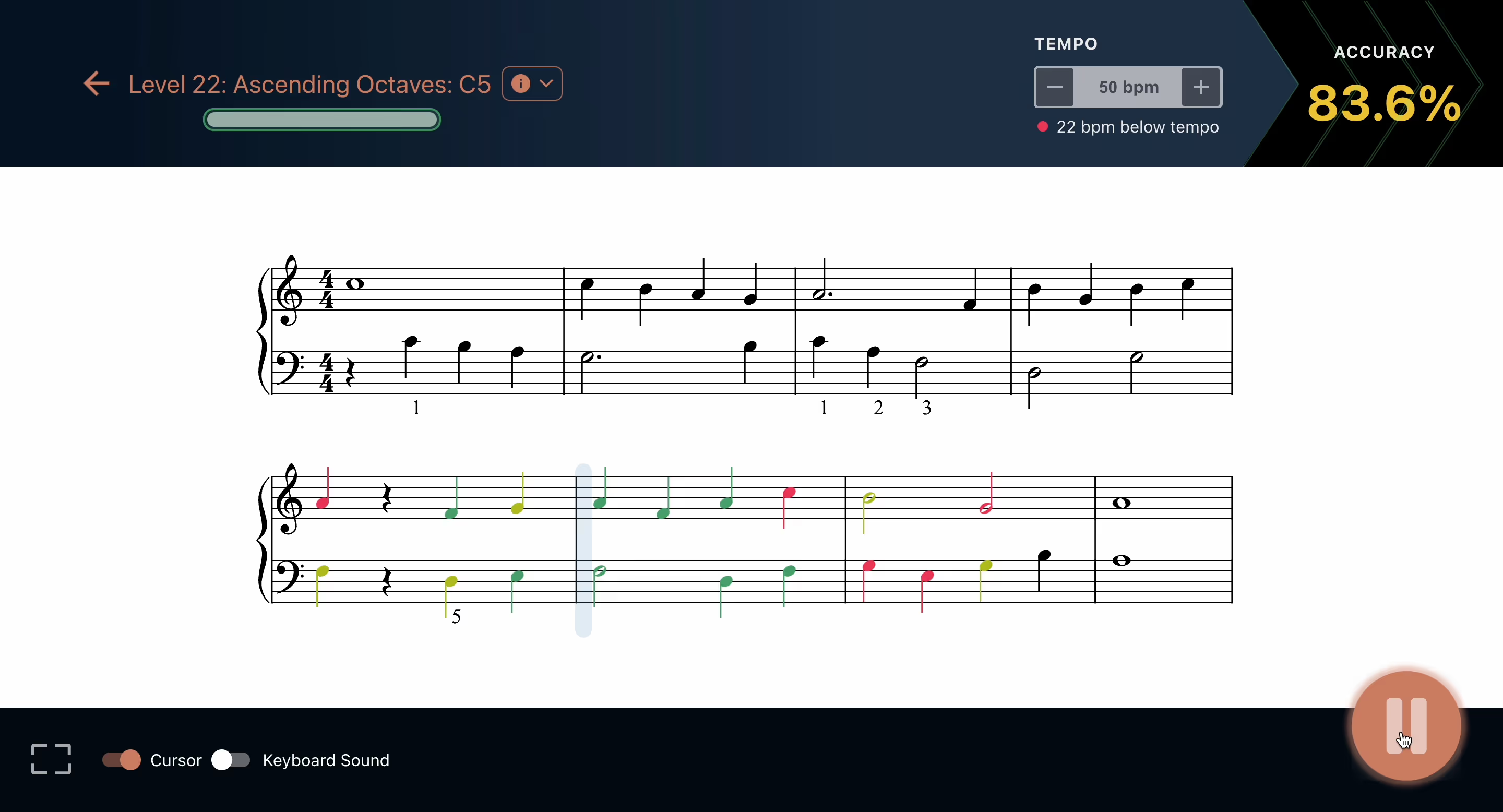
Immediate feedback is one of the most valuable features a MIDI-based learning system can offer. When software detects pitch, timing, and rhythmic accuracy in real time, learners can correct mistakes as they happen rather than reinforcing errors over multiple sessions.
This type of feedback is particularly helpful for beginners, who often struggle to self-diagnose issues while playing. Clear visual or auditory indicators allow learners to understand what went wrong and where, without interrupting practice flow.
Platforms like MuseFlow visualize note accuracy and timing during exercises, illustrating how real-time feedback can function as a continuous guidance mechanism during independent practice sessions.
Sustained practice depends on engagement, but engagement doesn’t require excessive gamification. Effective learning tools use simple progress indicators—such as completion tracking or gradual difficulty increases—to maintain motivation without turning practice into a distraction.
Adult learners, in particular, tend to respond better to clear progress signals than to novelty alone. Structured challenges and visible improvement can reinforce consistency while keeping attention focused on musical fundamentals.
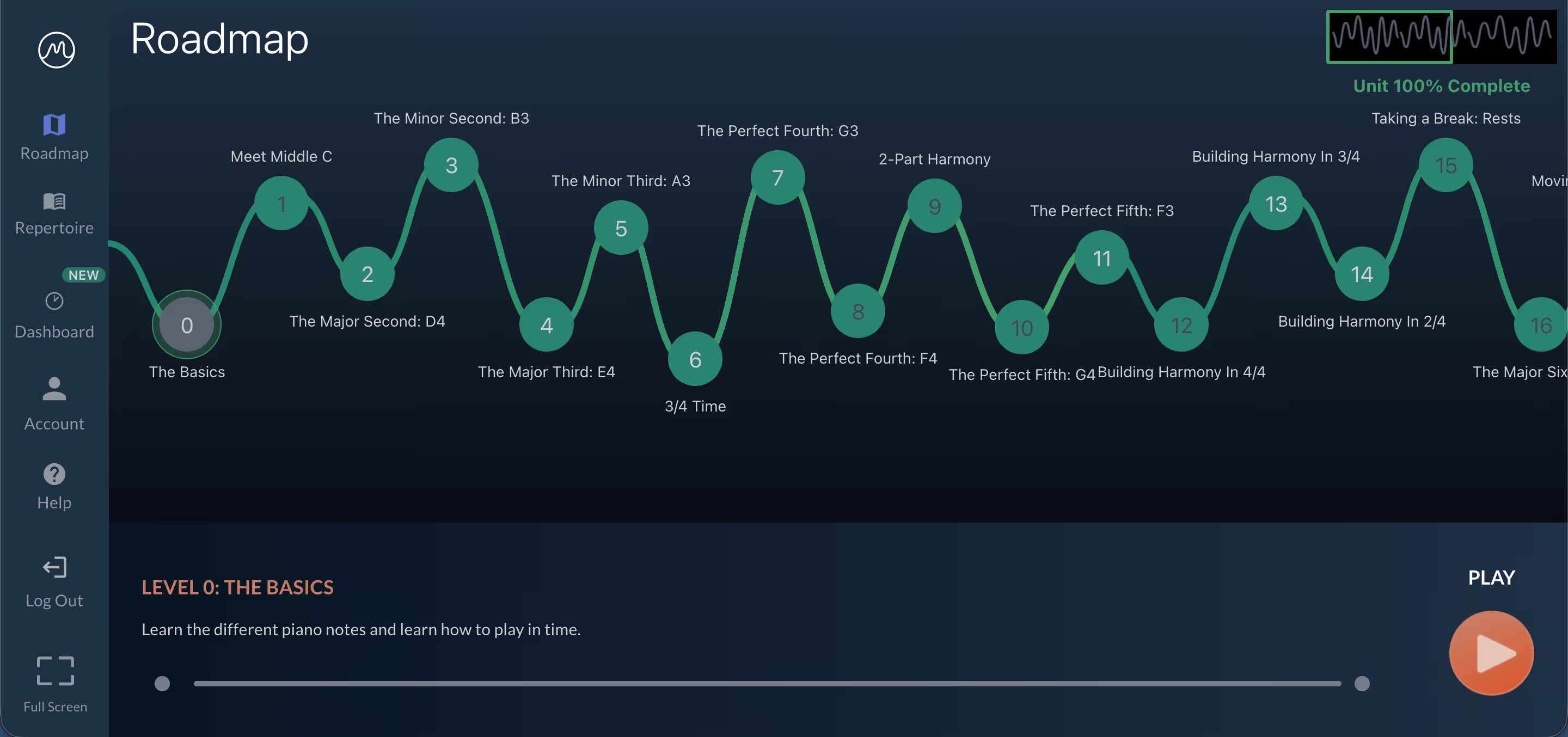
Some modern piano learning platforms incorporate light gamified elements—such as progress markers or skill milestones—to encourage regular practice while keeping the emphasis on musical development and who knows, maybe you'll discover a fun piano learning method in the process!
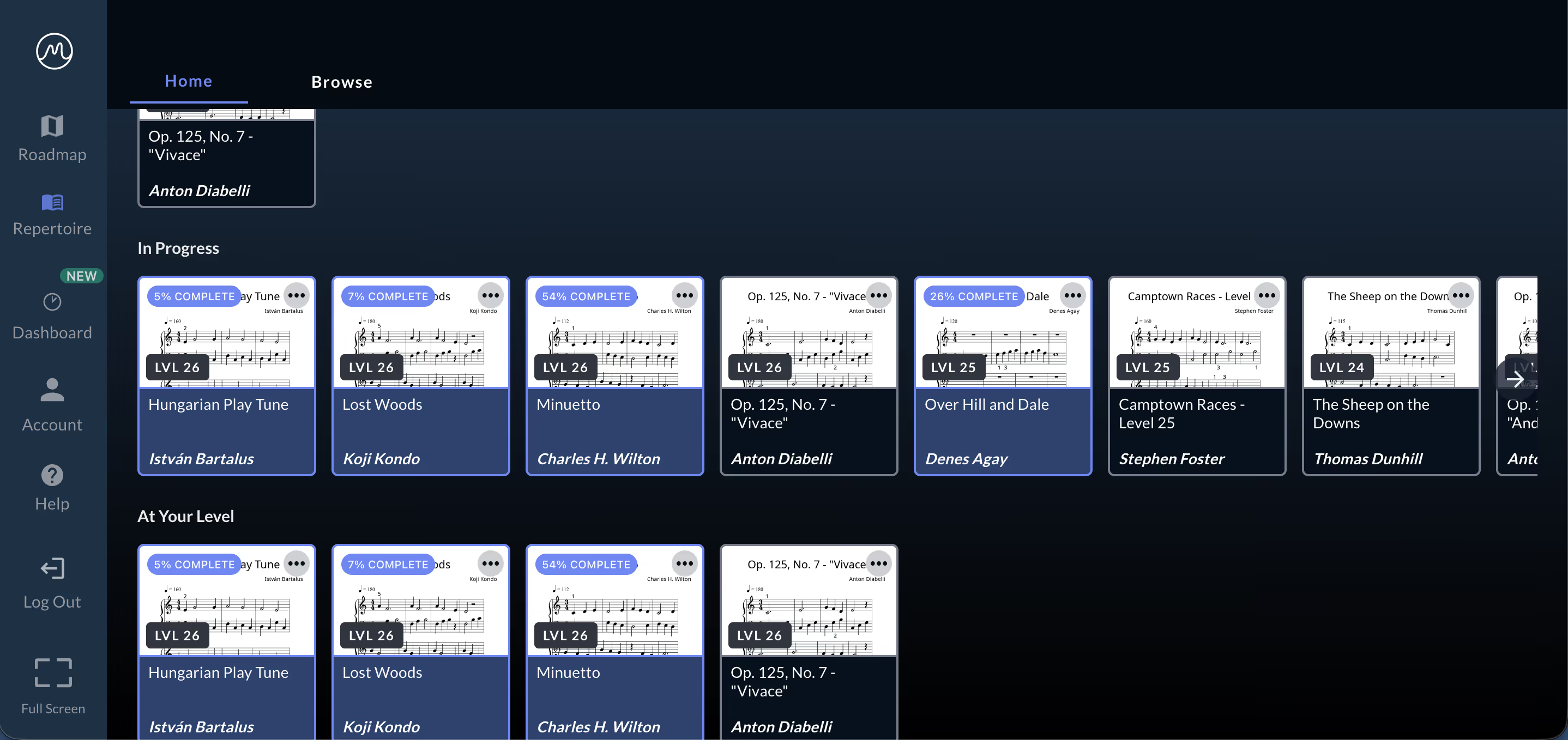
A strong learning platform should balance structure with choice. Learners benefit from a curated progression of exercises, but also from access to repertoire that feels musically rewarding.
Exposure to varied musical styles helps reinforce reading skills, rhythm, and coordination, while structured exercises isolate specific techniques. The most effective systems integrate both, allowing learners to apply technical skills directly to musical pieces.
MuseFlow, for example, combines targeted skill exercises with a rotating repertoire library, illustrating how variety and structure can coexist without overwhelming the learner.
One of the main reasons adults abandon new instruments is inconsistent practice. Software that supports short, flexible sessions lowers the barrier to daily engagement.
Consistency matters more than session length, and platforms that allow learners to resume exactly where they left off help reduce friction. This approach aligns with adult learning research showing that visible progress and self-paced control increase persistence over time.
Self-directed MIDI learning tools, including MuseFlow, demonstrate how flexible session design can support regular practice without rigid scheduling demands.
Evaluating piano learning software through these criteria—adaptive pacing, real-time feedback, focused engagement, structured variety, and flexible practice—provides a clearer framework than searching for a single “best” option.
Different platforms emphasize these elements in different ways, and the right choice depends on learning style, goals, and available practice time. Used here as an illustrative example, MuseFlow shows how these principles can be implemented in a MIDI-based learning environment, but the framework itself applies broadly across modern piano learning tools.
Understanding why these features matter allows learners to make more informed decisions—and ultimately build a practice routine that is sustainable, effective, and musically rewarding.


Keep up to date on our progress as we continue to add new features!