.svg)
Adult Beginner Piano Plan:A Simple 7-Day MuseFlow Routine That Actually Works
Finding a realistic way to start learning piano as an adult can feel overwhelming. Unlike children, most adults don’t have long blocks of free time or the flexibility to attend frequent in-person lessons. Work schedules, family responsibilities, and mental fatigue all compete for attention. What many adults need is not more motivation, but a clear, time-efficient structure that fits into daily life without becoming another source of pressure.
This 7-day beginner piano framework is designed around how adults actually learn: through short sessions, clear goals, and visible progress. It is not about rapid transformation or mastering complex pieces in a week. The purpose is to establish a sustainable practice routine that builds real skills and encourages consistency.

The Core Idea: Short, Focused, Consistent Practice
Adult learning research consistently shows that achievable goals and self-directed pacing improve persistence and long-term engagement. Rather than long, exhausting practice sessions, adults benefit more from brief periods of focused effort repeated consistently. This plan uses daily sessions of 15–20 minutes—short enough to fit into a busy schedule, but structured enough to support progress.
Each day introduces a single learning focus, reducing cognitive overload and making practice feel manageable rather than intimidating.

Day 1: Orientation and First Notes (15 minutes)
Goal: Become comfortable with the instrument and basic feedback.
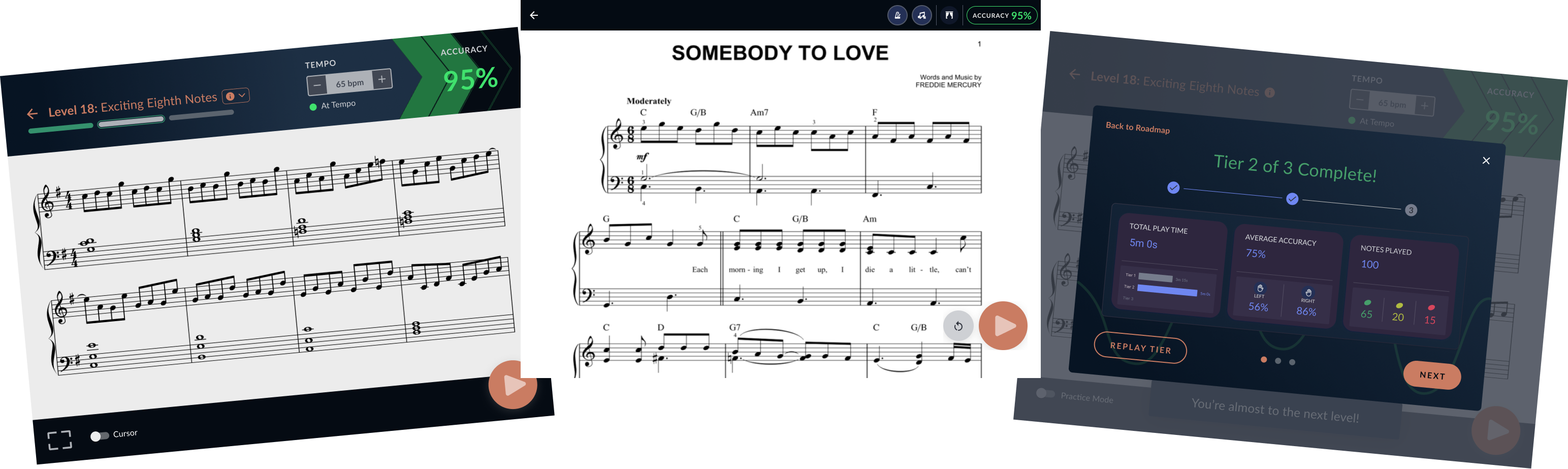
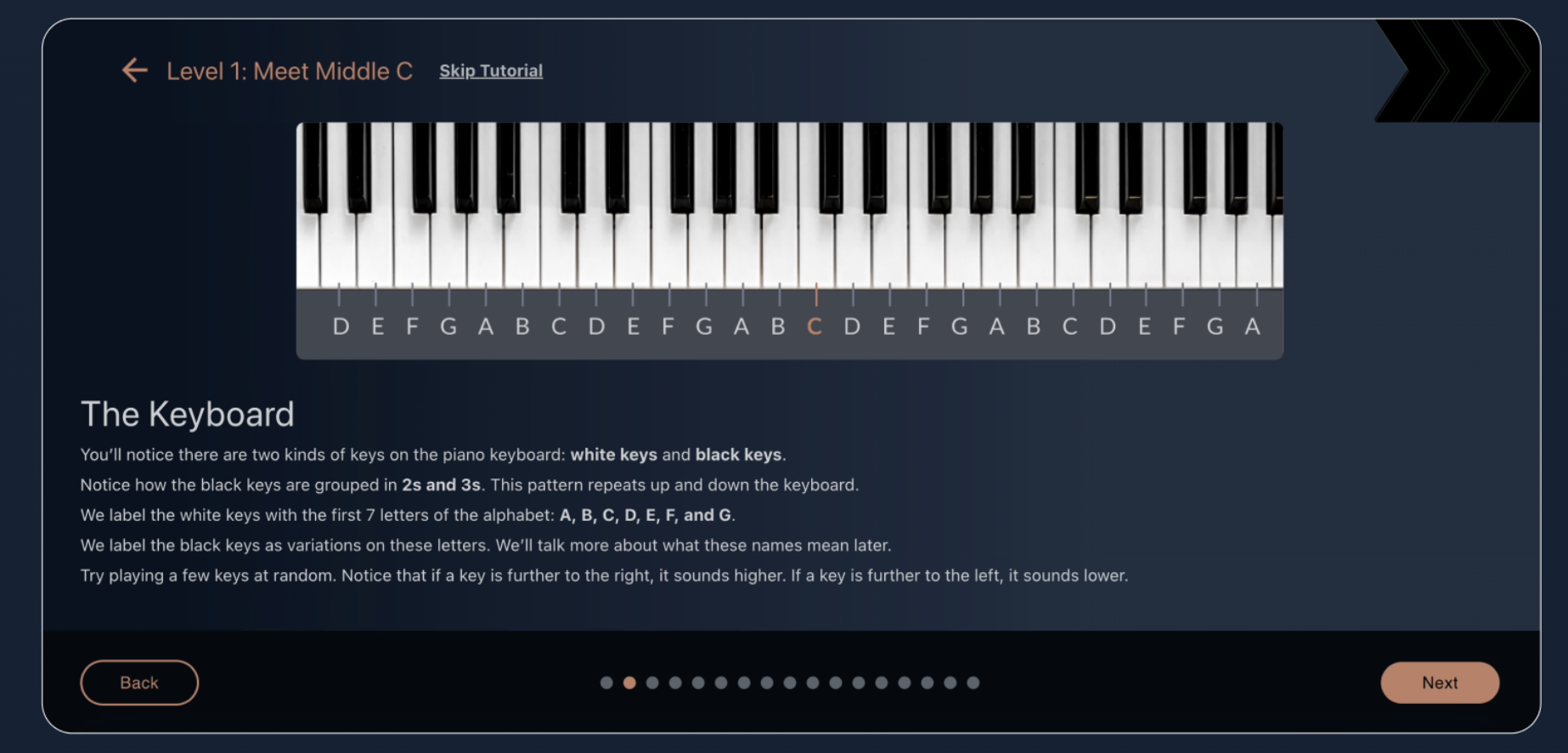
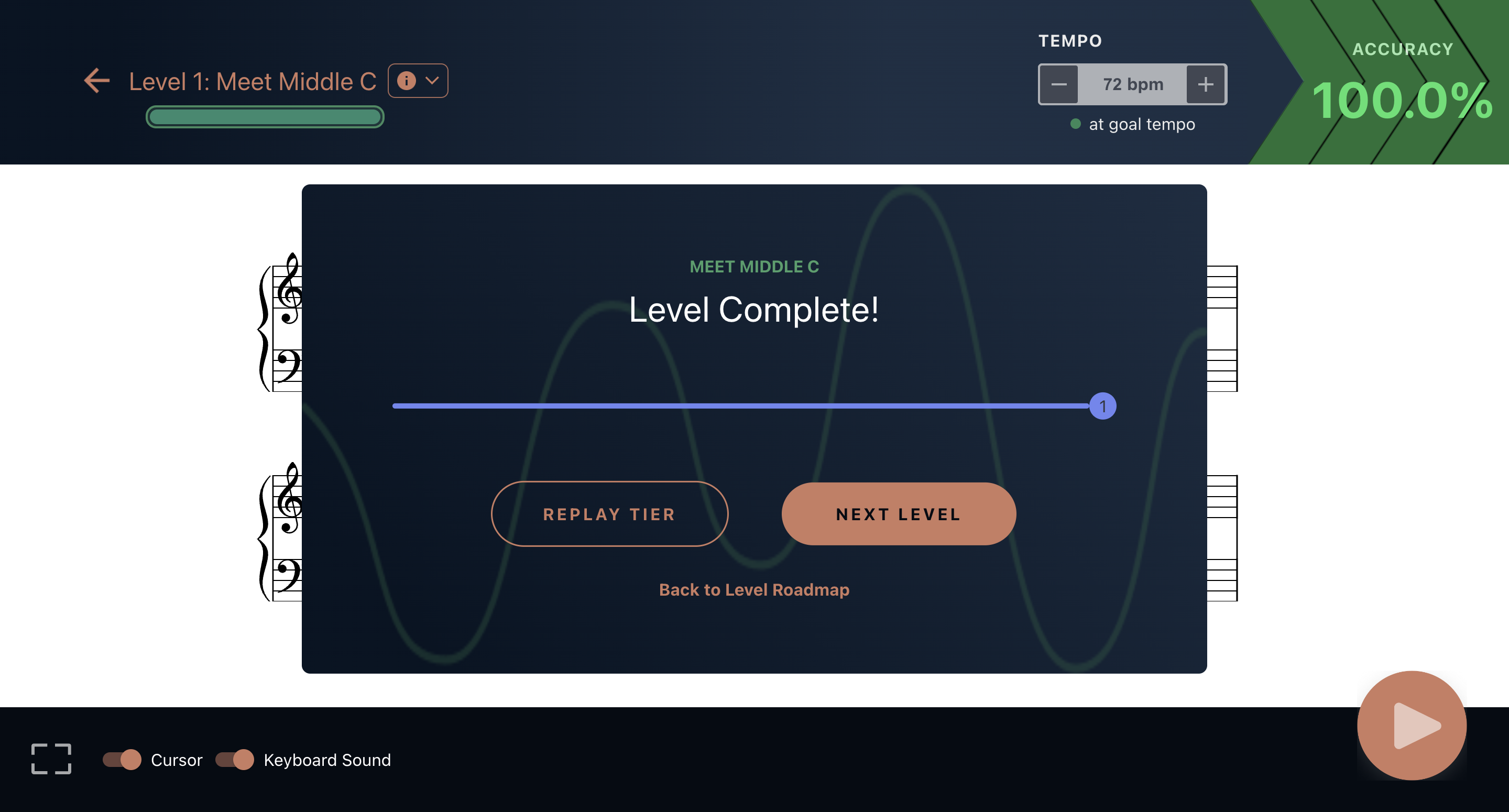
Action: Begin by familiarizing yourself with your keyboard layout and how feedback works during practice. Whether using a teacher, a learning app like MuseFlow, or another feedback method, the goal is simple exploration. Play individual notes, observe what feels natural, and focus on understanding how mistakes are identified.
Mindset: Curiosity. This is about orientation, not performance.
Day 2: Building Note Recognition (15 minutes)
Goal: Strengthen the connection between written notes and the keyboard.
Action: Today’s focus is accuracy, not speed. Take time to identify notes on the staff and locate them on the keyboard. Pausing to think is expected. This deliberate process helps build the mental mapping that sight reading depends on.
Mindset: Patience. Correct notes matter more than fast notes.

Day 3: Introducing Rhythm (20 minutes)
Goal: Add timing awareness to your playing.
Action: Rhythm is what turns notes into music. Practice playing with a steady beat, even if mistakes happen. Learning to stay in time develops coordination and prepares you for real musical pieces.
Mindset: Precision. Feel the pulse rather than chasing perfection.
Day 4: Combining Notes and Rhythm (20 minutes)
Goal: Integrate pitch and timing together.
Action: This is often the most challenging step for beginners. Start with simple material and aim for consistency rather than flawlessness. Research on sight-reading development shows that practicing pitch and rhythm together accelerates fluency compared to isolating skills for too long.
Mindset: Focus. Difficulty here is a sign of real learning.

Day 5: Playing Simple Music (15 minutes)
Goal: Apply skills to recognizable pieces.
Action: Choose a simple song or exercise that resembles real music. The purpose is not mastery, but application. Playing musical material reinforces motivation and helps learners connect technical practice to expressive outcomes.
Mindset: Enjoyment. This is where effort starts to feel rewarding.
Day 6: Gentle Challenge (20 minutes)
Goal: Work slightly beyond your comfort zone.
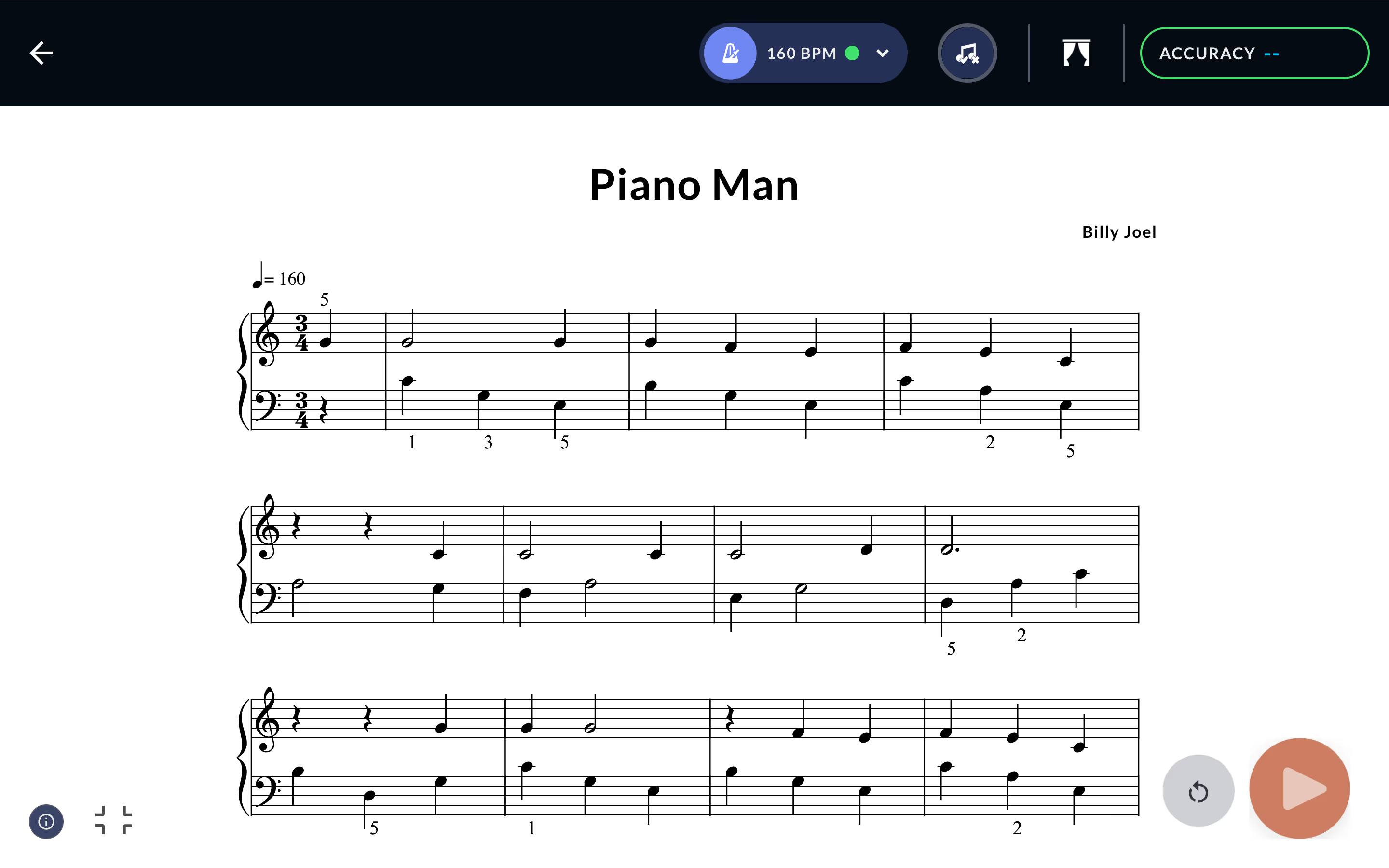
Action: Select material that introduces small challenges without becoming frustrating. Educational research on skill acquisition describes this balance as the “optimal learning zone,” where progress is strongest when difficulty is neither too easy nor overwhelming.
Mindset: Growth. Mistakes are part of improvement.

Day 7: Review and Reflection (15 minutes)
Goal: Consolidate progress and build confidence.
Action: Revisit earlier exercises and notice improvements in ease and accuracy. End the session by playing something you enjoy. Reflecting on progress reinforces motivation and supports habit formation.
Mindset: Recognition. Progress, not perfection.
Why This Approach Works for Adult Learners
This plan emphasizes principles shown to support adult learning success and enhance life:
- Time efficiency: Short sessions reduce burnout.
- Progressive structure: Each day builds logically on the last.
- Feedback awareness: Early correction prevents ingrained mistakes.
- Motivation through music: Playing real material sustains interest.
Studies on adult education and self-directed learning indicate that visible progress and adaptive pacing significantly improve retention and motivation, especially when learners can adjust practice intensity to their own capacity.
Moving Forward
After seven days, the goal is not completion, but momentum. A structured routine makes it easier to continue learning without relying on willpower alone. For adults who prefer guided practice with real-time feedback, platforms like MuseFlow can support this type of structured progression, but the learning principles themselves remain universal.
A consistent, well-designed plan—not excessive practice time—is what allows adult beginners to move forward with confidence.
Ready to start your week? Download MuseFlow and begin your adult beginner piano plan today. Your future musical self will thank you.