.svg)
Can AI Replace a Piano Teacher?Insights Into Technology and Music Education
The rapid development of artificial intelligence has led many to wonder whether AI could replace traditional piano teachers. While technology is advancing at an impressive pace, current research and classroom experiences suggest that AI is best viewed as a tool to enhance music education, not as a replacement for human instruction. AI can support both students and teachers, making practice more efficient, engaging, and tailored to individual learning needs.
The Limitations of Traditional Piano Lessons
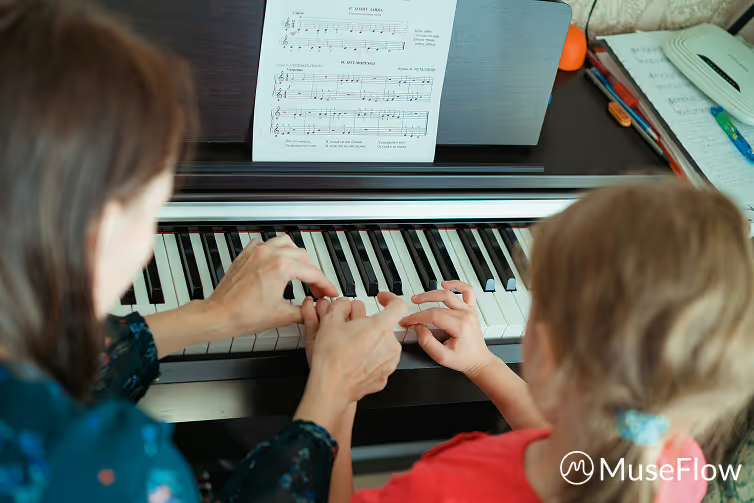
Traditional piano lessons often involve significant repetition: practicing scales, correcting posture, and reinforcing basic techniques. While these exercises are essential for skill development, they can sometimes dominate lesson time, leaving less room for creative exploration and musical expression. For students, this may feel repetitive or tedious, and for teachers, it can limit the opportunity to focus on the expressive, interpretive aspects of music.
Research on instructional design indicates that balancing skill acquisition with creative engagement is key to sustained learning. Technology-assisted practice can help achieve this balance by handling routine technical exercises, allowing teachers to dedicate more time to mentoring, interpretation, and musical storytelling.

AI as a Supportive Tool for Teachers
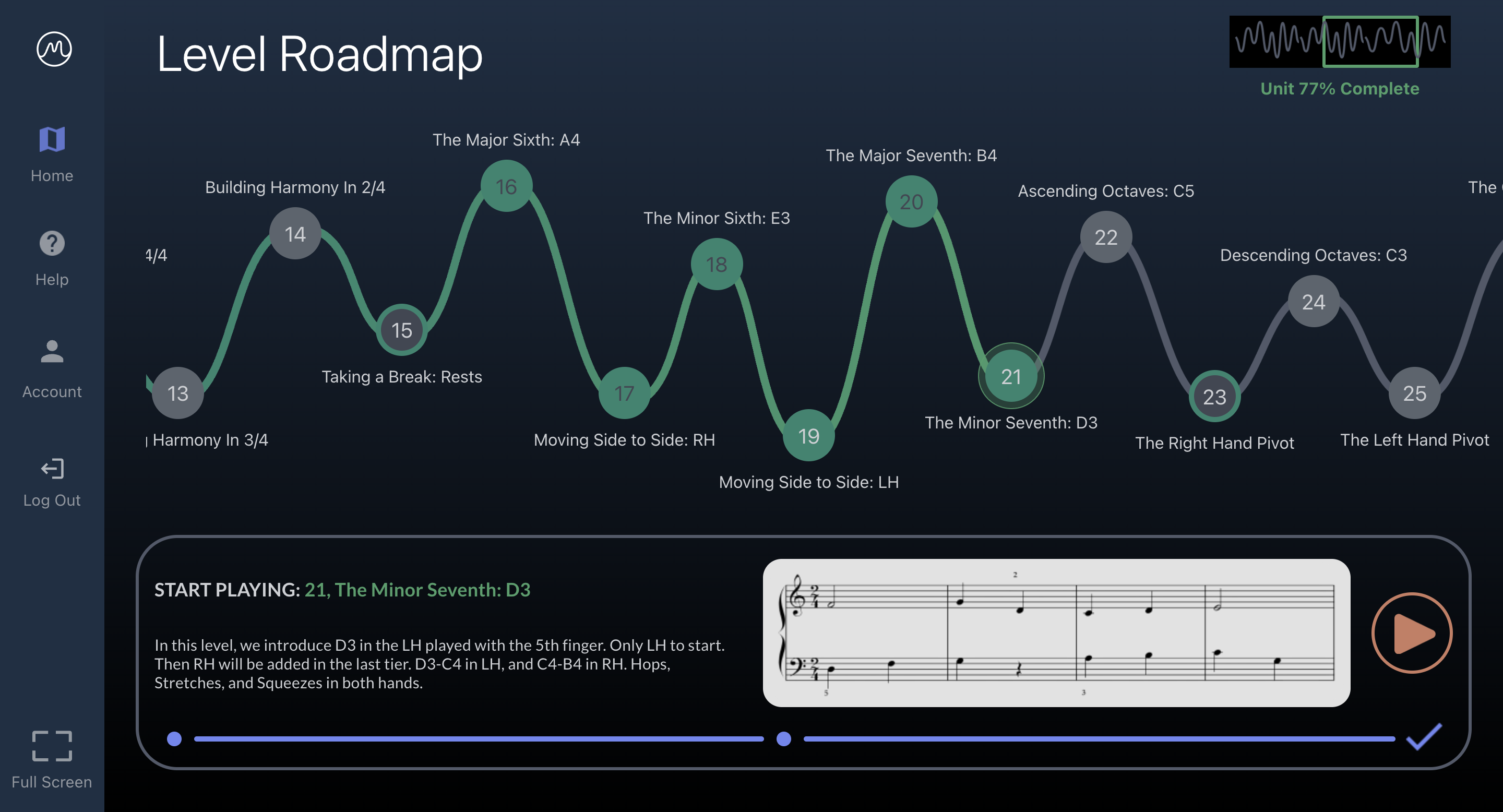
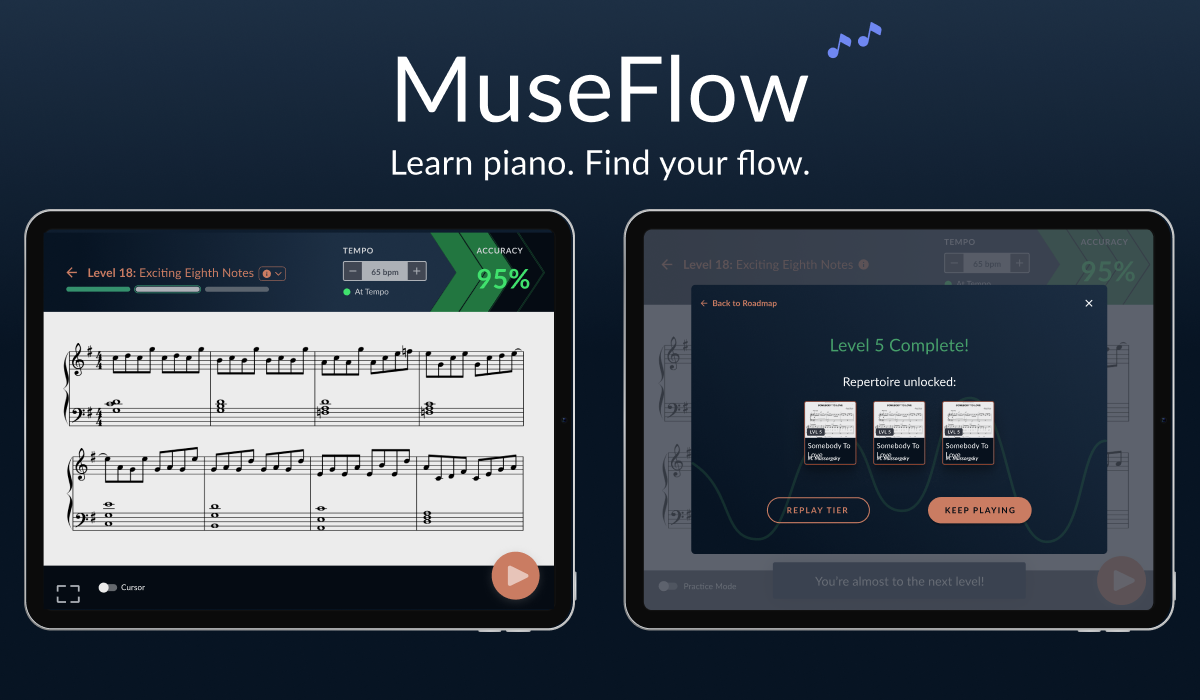
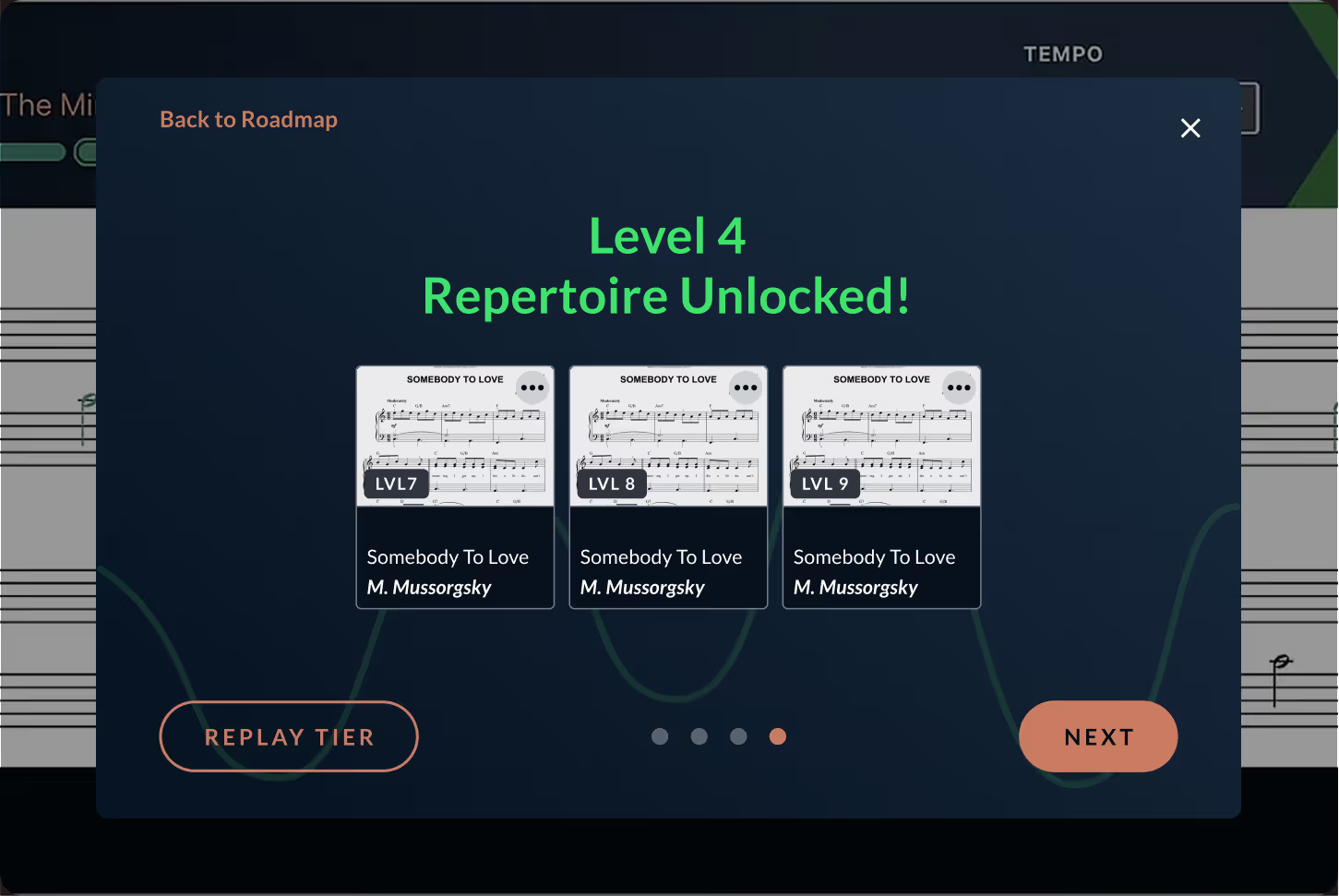
AI-driven platforms, such as MuseFlow, are designed to complement traditional teaching rather than replace it. By providing adaptive practice exercises and real-time feedback, these tools can relieve teachers from repetitive correction work. For example:
- Real-Time Feedback for Skill Development: AI systems analyze each note played, providing immediate guidance on timing, accuracy, and articulation. This instant feedback helps students build a solid technical foundation, ensuring that mistakes are addressed before they become habits. Educators report that this allows them to focus more on higher-level musical concepts during lessons.
- Engaging, Structured Practice: Gamified exercises and adaptive challenges keep students motivated and immersed. By promoting consistent, deliberate practice, AI tools help learners maintain focus without the frustration that can come from repetitive drills. Students often report feeling more confident and enthusiastic about their practice sessions.
- Personalized Learning Paths: AI platforms can adjust difficulty and content according to the student’s skill level. Adaptive algorithms ensure that learners progress at an appropriate pace, allowing teachers to provide more targeted guidance on areas that require deeper attention.
In this way, AI serves as a co-pilot for music instruction, providing structure, feedback, and engagement while leaving the human teacher to focus on mentorship, creativity, and nuanced musical interpretation.
Transforming the Lesson Experience
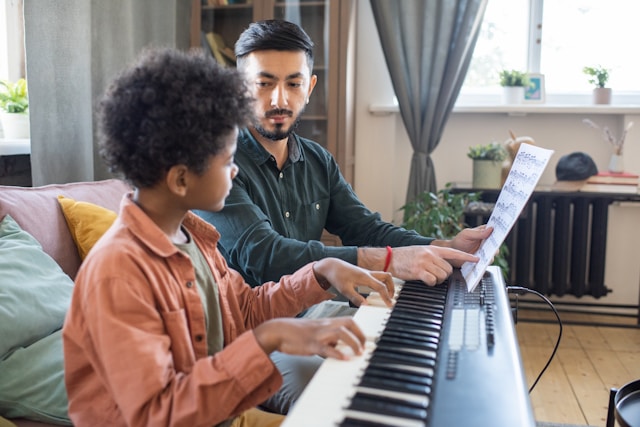
When integrated thoughtfully into a curriculum, AI can transform the role of the piano teacher. Lessons shift from repetitive technique drills to coaching sessions that emphasize musicality and expression. Teachers can explore music theory, improvisation, and repertoire development, guiding students in ways that AI alone cannot replicate.
Evidence from educational research supports this approach. For example, studies indicate that technology can increase learner engagement and attention during practice, particularly when tasks are structured, interactive, and immediately responsive. This aligns with observations from classrooms using AI-supported practice platforms, where students demonstrate higher motivation and focus.

Understanding the Role of AI in Music Education
AI’s primary role in piano education is supportive, not replacement-focused. It can:
- Reduce time spent on repetitive technique practice
- Provide personalized feedback and track progress
- Maintain student engagement through interactive exercises
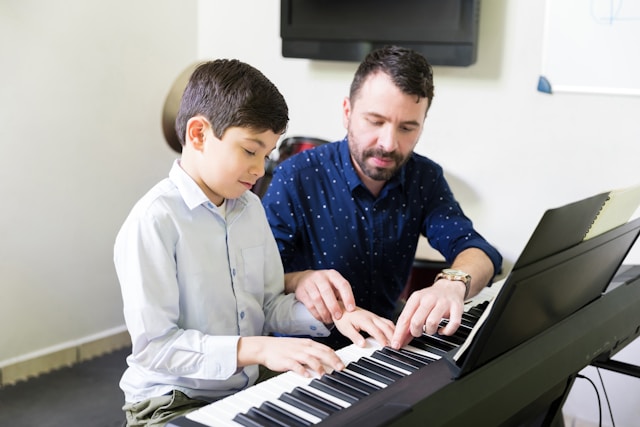
However, human teachers remain essential for fostering creativity, expression, and emotional connection to music. The combination of AI-driven tools and expert guidance offers a hybrid approach that leverages technology’s efficiency while preserving the interpretive and social aspects of learning.
Conclusion
Can AI replace a piano teacher? The evidence suggests it cannot—and likely should not. Instead, AI can enhance music education by streamlining technical practice, providing adaptive feedback, and keeping students engaged. Teachers benefit by having more time to focus on interpretive instruction and mentoring, while students gain structured, responsive practice tools.
By combining the analytical power of AI with the mentorship and artistry of experienced educators, music education can evolve into a more effective, engaging, and personalized experience. In this context, technology and teachers are partners, not competitors, in shaping the next generation of skilled, confident pianists.





.jpg)