.svg)
Piano Grades Vs. Real Musicianship: How MuseFlow Compares to Traditional Systems
For a long time, traditional piano grading systems have been the standard for tracking a pianist’s musical progress. But what exactly do those systems track? And are there perhaps some musical elements that slip through the cracks of these longstanding institutions?
What Traditional Grading Systems Do Well
Many pianists around the world judge their progress through traditional grading systems like ABRSM, TCL, and RCM. We’ve talked about these systems at length in a previous blog post.
The exams are great at giving structure to your piano learning. You can use their concrete goals and milestones for motivation and track your progress through their standardized tests. The grades can even open doors in your music career, as these systems are recognized on an international scale.
When you take a traditional exam, you will likely be asked to play polished and memorized pieces, demonstrate technical skills like scales, arpeggios, studies/études, and test your aural abilities.
With their focus in these areas, exams can be a great way to learn how to:
- Perform rehearsed pieces under pressure
- Improve your technical skills
- Give yourself a structured piano routine
The traditional system rewards memorization and repetition as you polish your repertoire. But it can be found lacking in teaching musicianship.

What is Musicianship?
Musicianship is literally defined as the “knowledge, skill, and artistic sensitivity in performing music.” More specifically, it’s the art of being a musician. It’s the creative decisions you make when playing a piece. It’s the emotion you infuse into the notes. It’s the holistic music comprehension required to be a musician.
Musicianship involves the following:
- The ability to read music quickly and fluently
- A strong sense of rhythm
- The ability to adapt and improvise
- Creativity in your musical expression
- Confidence in yourself as a musician
Exploring and improving your musicianship is the journey of finding and honing your identity as a musician.

What Traditional Grading Systems Can Miss
One academic publication explains that for musical institutions, “teachers spent much of their time teaching technique and repertoire, which many authors suggest is only one aspect of professional musicianship… The focus ideally should be on ‘producing rounded musicians showing a high level of instrumental competence, a depth of musical understanding and a core of personal confidence that will allow them to express themselves with total commitment in any performing area.’”
As we mentioned in our blog about sight reading learning, sight reading only makes up about 10-15% of traditional exams. But sight reading is crucial to musicianship.
- It helps your ability to read, comprehend, and play music quickly.
- It enhances your holistic musical comprehension
- It raises your musical floor…so you need less practice to perfect a new song in your repertoire.
- It boosts your confidence…if you can play more music sight-unseen, you’ll be more confident when encountering songs and musical styles that are new to you.
The focus on improving just for the sake of grades can also create some learning gaps. The grades reward big milestone performances rather than steady, consistent learning. And the ability to choose music pieces that play to your strengths can lead to avoidance of developing certain skills.
While these exams do test a lot of elements that are important for musicians, it just doesn’t consider everything that’s needed for well-rounded musicianship.
MuseFlow and Musicianship
We here at MuseFlow believe in giving you the tools you need to build your musicianship.
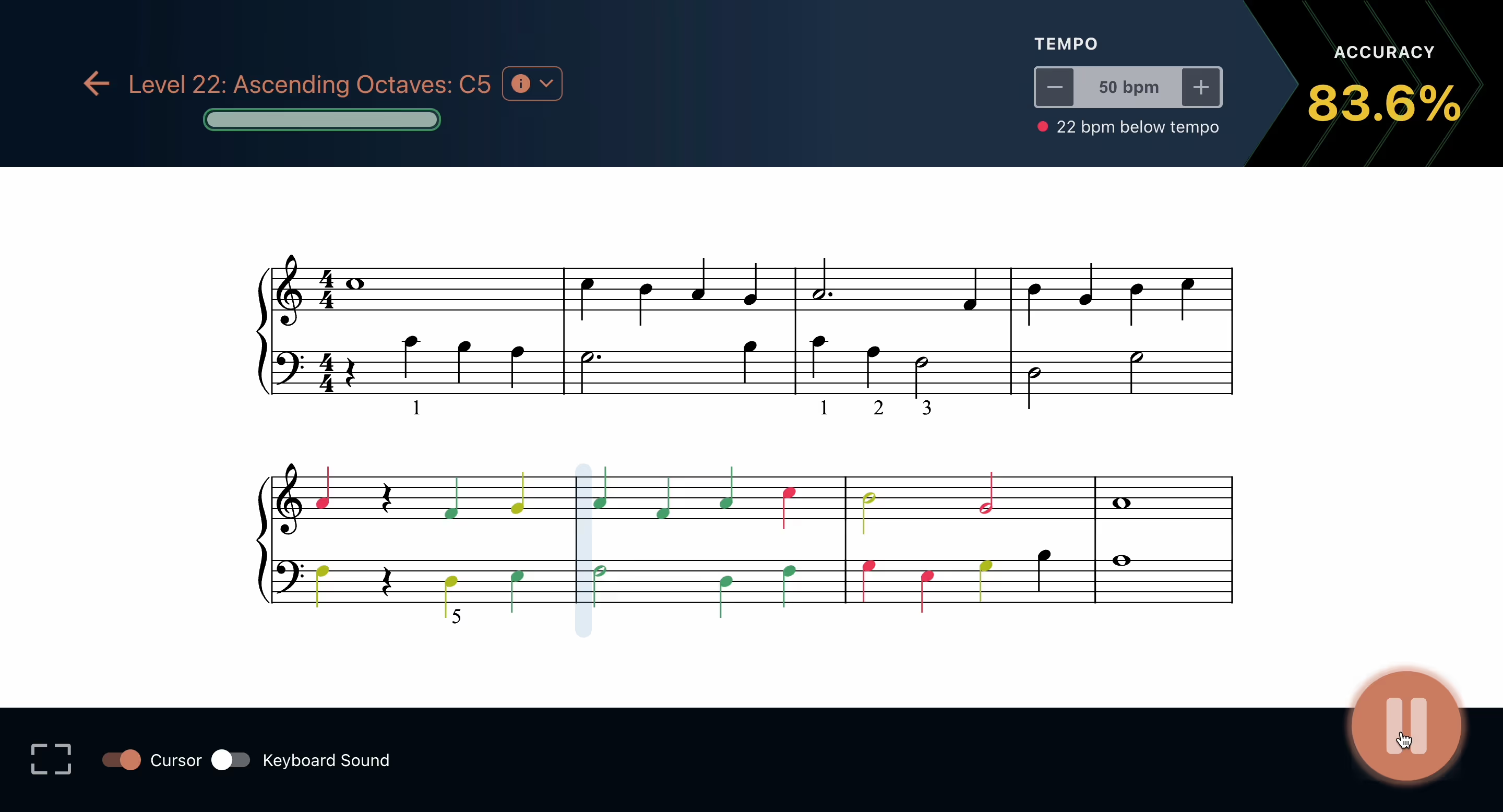
- MuseFlow’s levels offer continuous, incremental learning. The challenge level and ability to change tempo allows the program to always meet you exactly where you are.
- Sight reading is foundational to MuseFlow, raising your musical floor by teaching you to read, comprehend, and perform new music on first sight.
- MuseFlow’s indefinite, algorithm-generated music and instant feedback encourages you to stay locked into Flow State.
- One article explains that Flow State is “key to improving performance” and that studies show that “when musicians are in flow, their brains exhibit heightened activity in areas responsible for creativity and motor coordination while suppressing the prefrontal cortex, which controls self-criticism. This explains why performers in flow feel less anxious and play with more confidence.”
- One article explains that Flow State is “key to improving performance” and that studies show that “when musicians are in flow, their brains exhibit heightened activity in areas responsible for creativity and motor coordination while suppressing the prefrontal cortex, which controls self-criticism. This explains why performers in flow feel less anxious and play with more confidence.”
That focus on sight reading, incremental learning, and Flow State can help you build your musicianship and fill the gaps from traditional exam structures.
Conclusion
The ways we judge a musician’s skill can dictate the priorities of those musicians as they’re working to improve their craft. So while traditional exams can be really helpful tools, it’s also important that we think about the priorities in how we judge musical success and make sure that it includes a comprehensive view of musicianship.
As you go on your musical learning journey, never forget that you’re an artist!

.jpg)