.svg)
Real-Time Feedback in Piano Learning:Why It Makes Practice More Effective
One of the biggest challenges piano learners face—especially beginners and self-directed students—is knowing whether they are practicing correctly. Unlike reading or watching a tutorial, piano practice happens in real time, and mistakes in pitch, rhythm, or timing can easily go unnoticed. Over time, these errors become habits, slowing progress and increasing frustration.
This is where real-time feedback has become increasingly important in modern piano learning. Instead of waiting for a weekly lesson or relying on guesswork, learners receive immediate information about what they played correctly and what needs adjustment. Educational research consistently shows that timely feedback accelerates skill acquisition and improves retention, particularly in complex motor tasks such as music performance.

Why Feedback Timing Matters in Music Learning
In traditional practice, feedback is often delayed. A learner might repeat an exercise dozens of times before discovering a mistake. According to research in motor learning and music pedagogy, delayed correction makes errors harder to unlearn and reduces overall efficiency.
Immediate feedback, by contrast, helps the brain link action and outcome while neural pathways are still forming. This principle is widely supported in educational psychology and has been applied successfully in language learning, athletics, and music education.
Engagement Without Guesswork
Another problem with conventional piano practice is disengagement. Repeating static drills can feel mechanical, especially when learners are unsure whether the repetition is productive. Studies on learner motivation show that engagement increases when feedback is clear, specific, and tied directly to performance outcomes.
When feedback is visual or auditory and delivered instantly, learners remain focused on the task rather than worrying about evaluation later. This reduces cognitive overload and allows attention to stay on reading, timing, and coordination.
The Role of Flow in Effective Practice
Psychological research on flow states—a condition where challenge and skill are well balanced—suggests that learners are more likely to remain engaged and sustain practice when tasks are neither too easy nor too difficult.
In music learning, flow is especially valuable. When difficulty adjusts appropriately and feedback is continuous, practice becomes immersive rather than exhausting. Time perception fades, frustration decreases, and learners are more likely to practice consistently.
Precision Builds Musical Foundations
While engagement is important, accuracy remains essential. Piano learning depends on precise timing, rhythm control, and pitch recognition. Research in music cognition shows that early reinforcement of correct responses leads to stronger long-term performance outcomes than later correction
Real-time feedback supports this precision by correcting errors at the moment they occur. Instead of reinforcing incorrect fingerings or rhythms, learners adjust immediately, which improves technical stability and reading fluency over time.
Personalization Over One-Size-Fits-All Practice
Learners progress at different speeds. Fixed lesson paths often move too quickly for some and too slowly for others. Adaptive learning systems, which respond to performance data rather than predefined schedules, have been shown to improve persistence and learning efficiency in adult education contexts.
In piano learning, personalization means spending more time on weak areas and less on skills already mastered. Feedback-driven systems naturally support this by highlighting recurring issues and adjusting difficulty accordingly.
Where MuseFlow Fits In
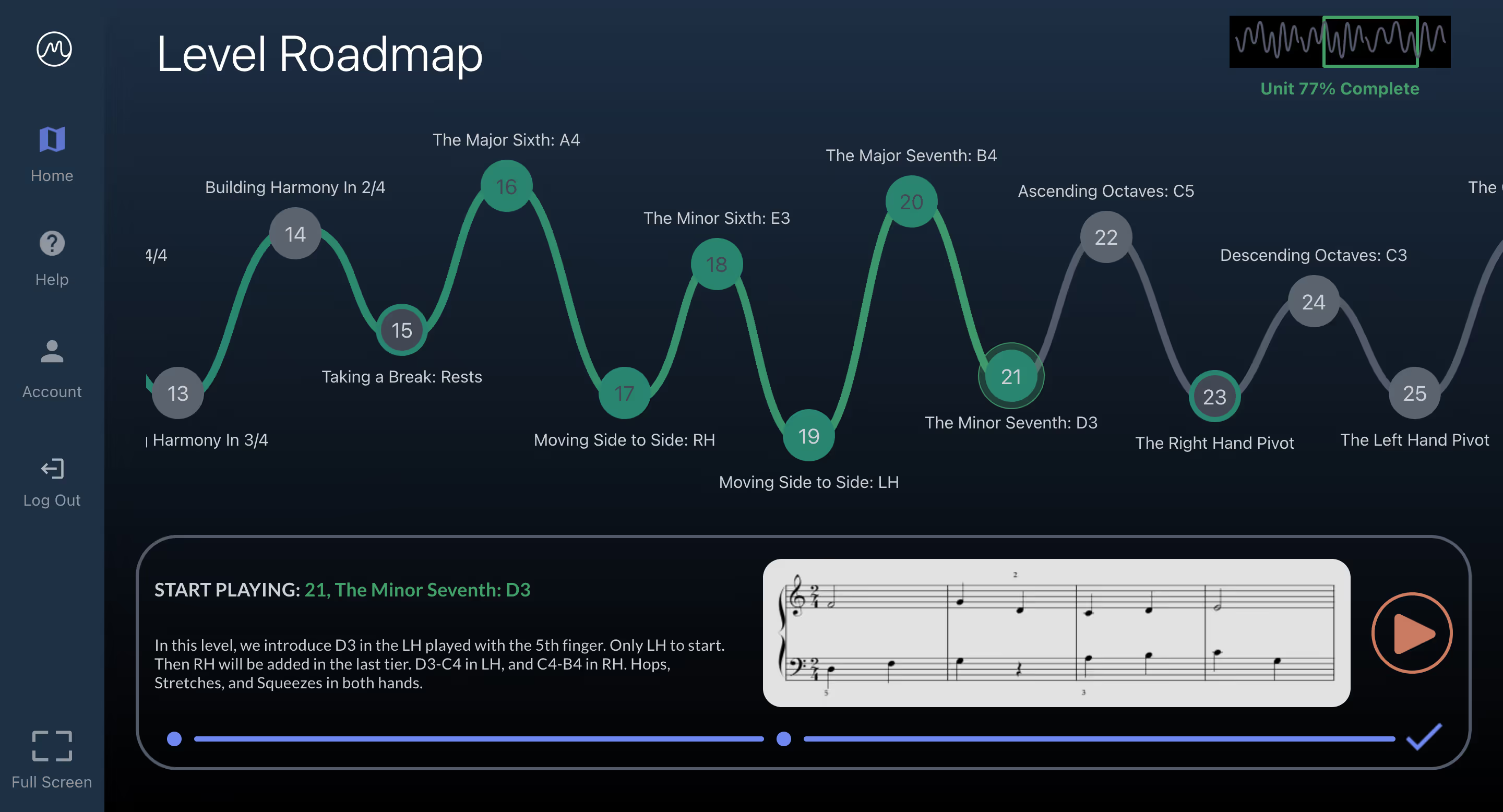
MuseFlow is one example of a piano learning platform that applies these principles. Its real-time, color-coded feedback shows pitch and timing accuracy as learners play, reducing uncertainty during practice. Instead of relying on delayed evaluation, learners receive continuous guidance while reading music.
The system also emphasizes sight reading through never-repeating exercises, which encourages true reading ability rather than memorization. Difficulty adjusts based on performance, helping learners remain in a productive challenge range rather than becoming bored or overwhelmed.
Importantly, these features are not valuable because they are “gamified,” but because they align with established learning science: immediate feedback, adaptive difficulty, and consistent exposure to new material.
Learning That Feels Sustainable
The real benefit of real-time feedback in piano practice is sustainability. When learners understand what they are doing correctly and why they are improving, practice becomes more intentional and less stressful. Short, focused sessions become effective, which is especially important for adults balancing music with work and family responsibilities.
Rather than replacing traditional instruction, feedback-based tools complement it by filling the gaps between lessons and supporting independent practice.
Final Thoughts
Effective piano learning is not about practicing longer—it is about practicing with clarity. Real-time feedback reduces uncertainty, strengthens foundational skills, and keeps learners engaged over the long term. When combined with structured progression and thoughtful difficulty adjustment, it turns practice into a focused, rewarding experience.
For learners seeking more consistency and confidence in their practice, tools like MuseFlow demonstrate how feedback-driven design can support meaningful musical progress—without sacrificing accuracy or depth.