.svg)
Why AI Piano Apps Are Effective for Independent Learners
AI-powered piano apps have become a popular option for learners who want flexibility beyond traditional lessons. Their growing adoption raises an important question: why do these tools work so well for so many people, especially beginners and self-directed learners?
The answer is not hype around artificial intelligence, but how modern piano apps apply established principles from music pedagogy, cognitive science, and human–computer interaction. When designed well, these systems solve long-standing problems in independent music practice.
The Learning Problem Traditional Practice Leaves Unsolved
Independent piano learners typically face four recurring challenges:
- Delayed feedback – Mistakes go unnoticed during solo practice
- Inconsistent difficulty – Material is either too easy or too advanced
- Low motivation – Progress feels slow and abstract
- Overreliance on memorization – Skills don’t transfer beyond learned pieces
Traditional weekly lessons address some of these issues, but gaps remain between sessions. AI-supported piano apps aim to reduce those gaps using continuous feedback and adaptive practice design.

How AI Piano Apps Actually Work (Without the Hype)
Most AI piano apps are not “thinking” in a human sense. Instead, they combine several technical systems:
- Signal processing to detect pitch, velocity, and timing from MIDI or audio input
- Pattern recognition to identify rhythmic or note-based errors
- Rule-based and machine-learning models to evaluate accuracy and adjust difficulty
- Curriculum logic to control progression and repetition
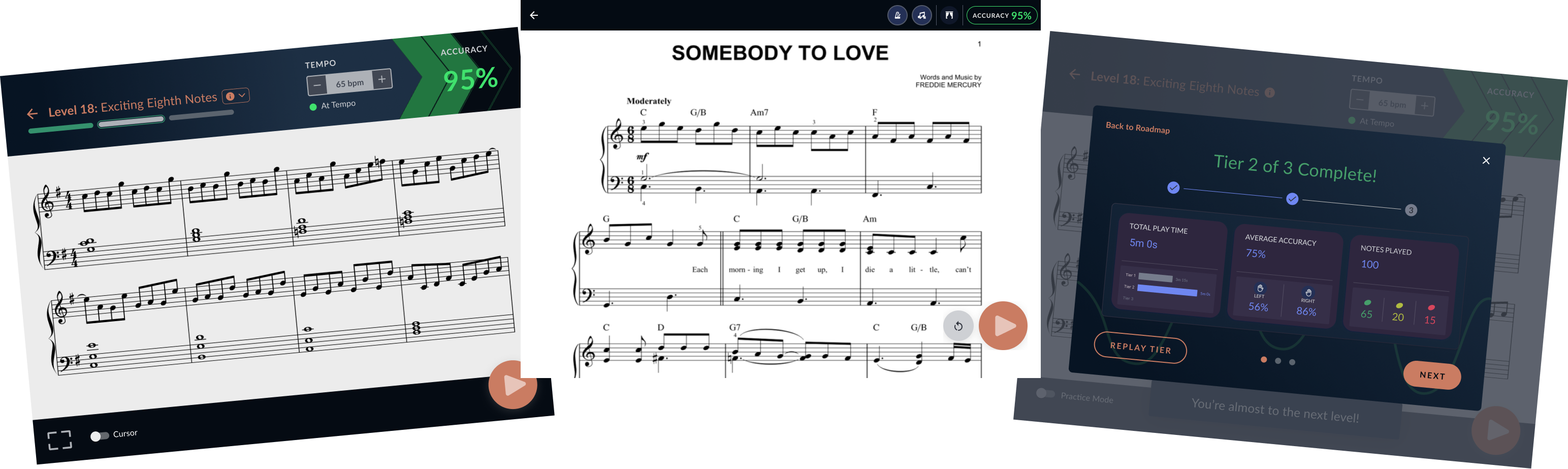
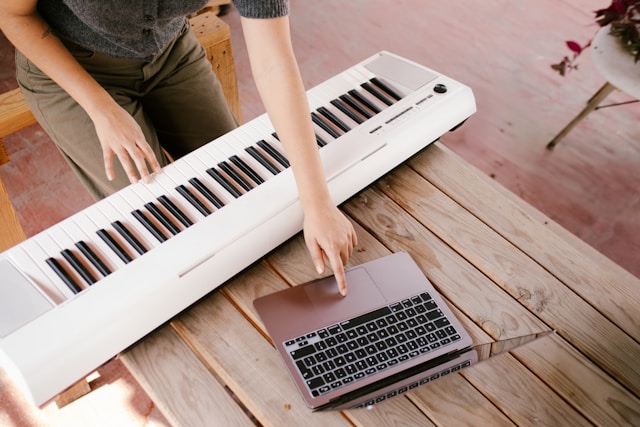
The critical outcome of this system is real-time feedback. When learners receive immediate information about what went wrong—and why—they can correct errors before they become habits. Research in cognitive skill acquisition consistently shows that prompt feedback accelerates learning and improves retention.
Why Adaptive Difficulty Matters
A common reason learners quit piano is frustration. Material that progresses too quickly overwhelms beginners, while repetitive exercises disengage more advanced learners.
Effective AI piano apps address this by dynamically adjusting difficulty:
- Slowing tempo when errors increase
- Introducing variation only after consistency is demonstrated
- Reinforcing weak skills through targeted repetition
This approach mirrors how experienced teachers adjust lessons in real time and helps learners stay within an optimal challenge range.
Motivation, Gamification, and Practice Consistency
Motivation is one of the strongest predictors of long-term musical success. Educational psychology research shows that learners persist longer when progress is visible and goals feel achievable.
Gamification supports this by:
- Breaking learning into small, measurable milestones
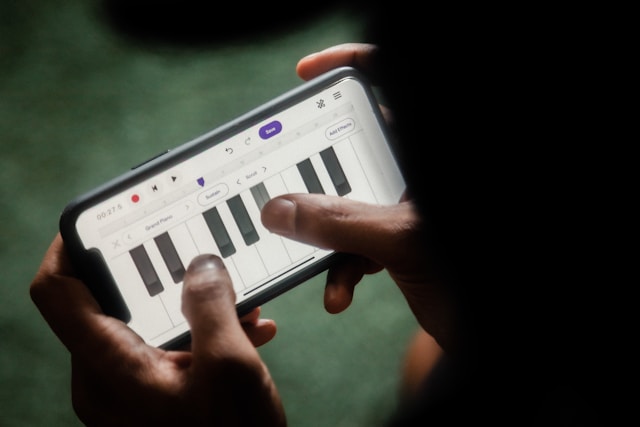
- Providing immediate visual feedback
- Encouraging regular engagement through progress tracking
In piano learning, game-inspired elements work best when they support musical fundamentals rather than replace them. Rhythm accuracy, sight reading, and coordination still form the core skill set.
Flow State and Deep Learning
The concept of flow, introduced by psychologist Mihaly Csikszentmihalyi, describes a mental state where learners are fully immersed, focused, and intrinsically motivated. Flow occurs when challenge and skill are well balanced.
In piano learning, flow is supported when:
- Tasks are clearly defined
- Feedback is immediate and specific
- Difficulty increases gradually
Well-designed AI piano apps intentionally structure practice sessions to encourage this state, which often leads to longer practice times and higher satisfaction
Beyond Memorization: Building Transferable Skills
A major limitation of many beginner piano apps is overemphasis on memorizing songs. While this can feel rewarding short term, it does not build independence.
More effective systems prioritize:
- Sight reading from the beginning
- Rhythm and timing accuracy
- Exposure to varied, non-repeating material
This ensures learners develop skills they can apply to unfamiliar music, rather than relying on muscle memory alone.
Where MuseFlow Fits In
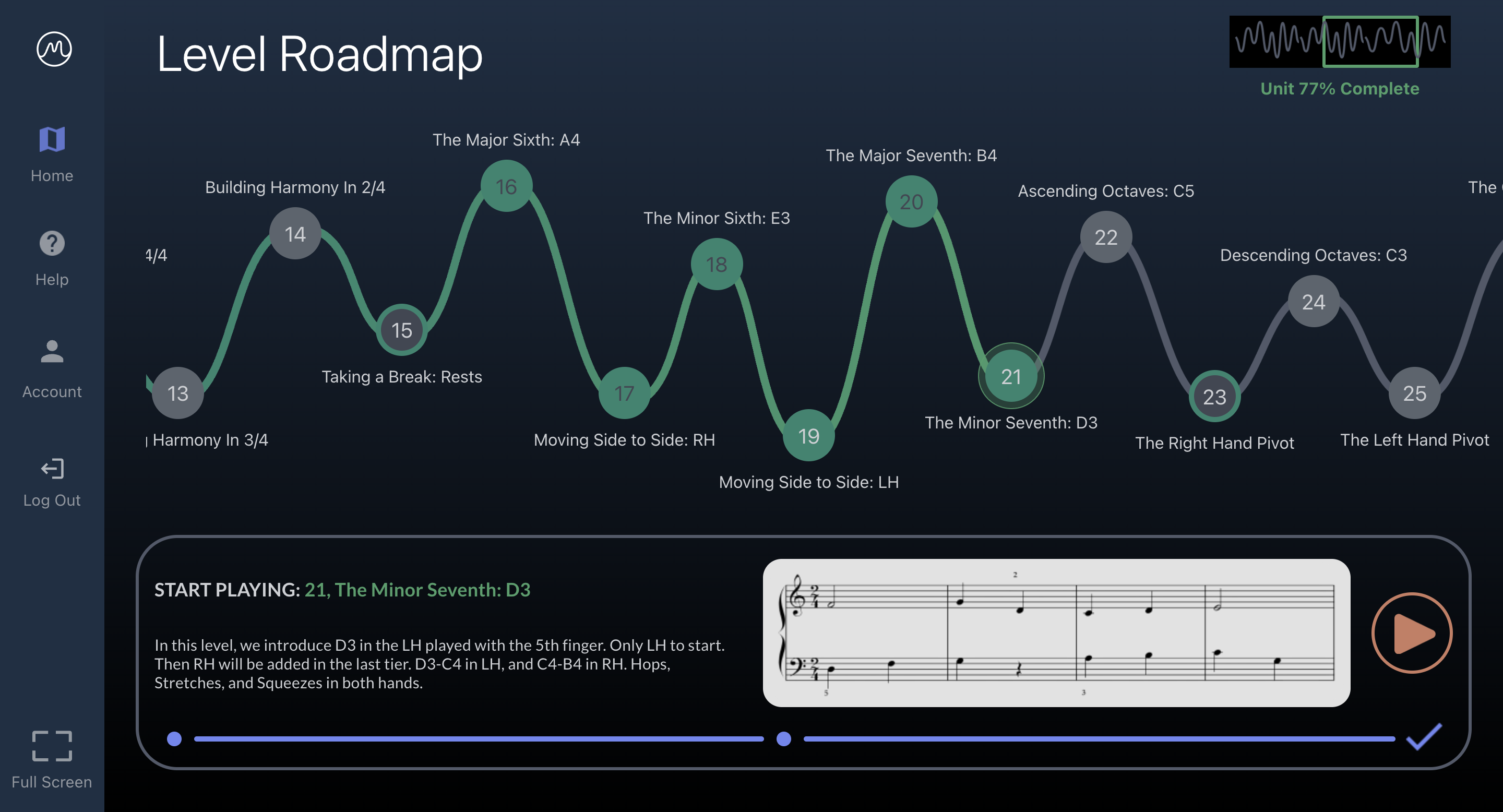
MuseFlow applies these principles through structured progression, real-time MIDI feedback, and adaptive practice material designed to reinforce sight reading and timing skills. Rather than positioning AI as a replacement for teachers, it functions as a practice-support system for learners who need consistency, feedback, and flexibility.
For independent learners facing limitations of cost, scheduling, or access, this approach offers a practical pathway to sustained progress.
The Bigger Picture: AI and the Future of Music Learning
AI piano apps are most effective when they are grounded in learning science rather than marketing promises. Their success comes from shortening feedback loops, personalizing difficulty, and sustaining motivation—not from artificial intelligence alone.
As technology continues to mature, the most valuable tools will be those that respect musical fundamentals while making quality practice more accessible. For many learners, that combination is what finally makes consistent piano study possible.