Beginners
Curriculum
Piano Chords for Beginners: The 12 Must-Know Chords to Play Any Song
July 1, 2026

Learning piano chords is one of the fastest ways to move from playing single notes to making real music. Chords form the harmonic foundation of nearly every song, and the good news is that beginners don’t need hundreds of them. By learning 12 essential piano chords, you can play or accompany thousands of songs across pop, rock, blues, folk, and classical music.
This guide focuses on practical, high-frequency chords that appear again and again in real music—not obscure theory that rarely gets used.

Western music is built around predictable harmonic relationships. The chords below appear so often because they serve clear musical purposes:
Once these sounds become familiar, you’ll start recognizing them by ear, not just by name. More importantly, these chords provide a foundation for understanding harmony, chord progressions, and improvisation later on.

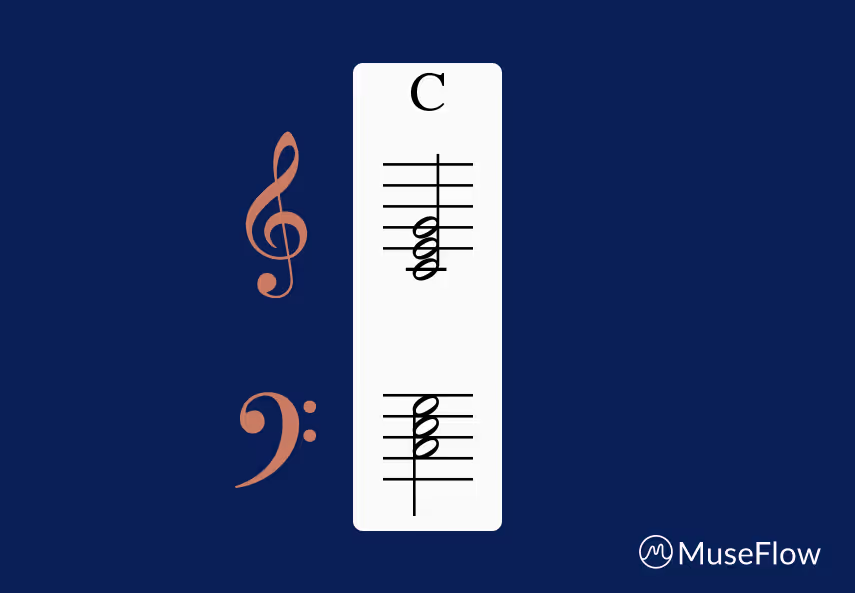
One of the simplest and most important chords on the piano. C Major functions as the tonal center in the key of C and is often the first reference point for learning harmony.
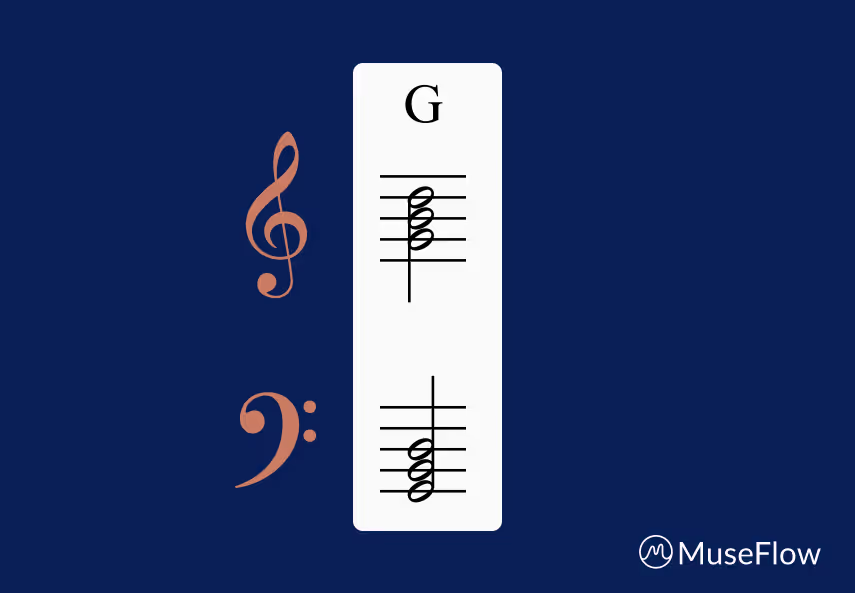
Bright and stable, G Major commonly resolves back to C Major. This relationship introduces beginners to the concept of harmonic movement.
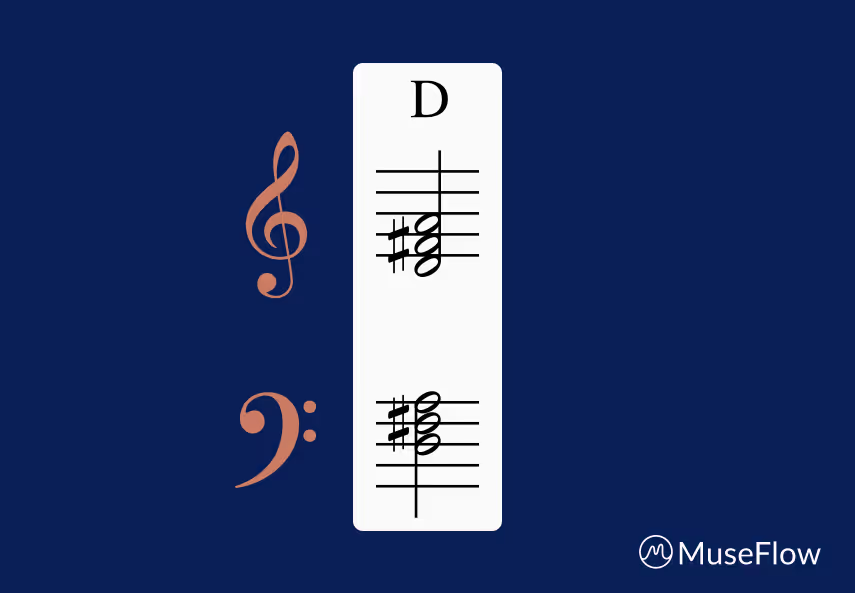
Your first encounter with sharps. D Major is widely used in pop and rock and helps solidify how black keys function within major chords.
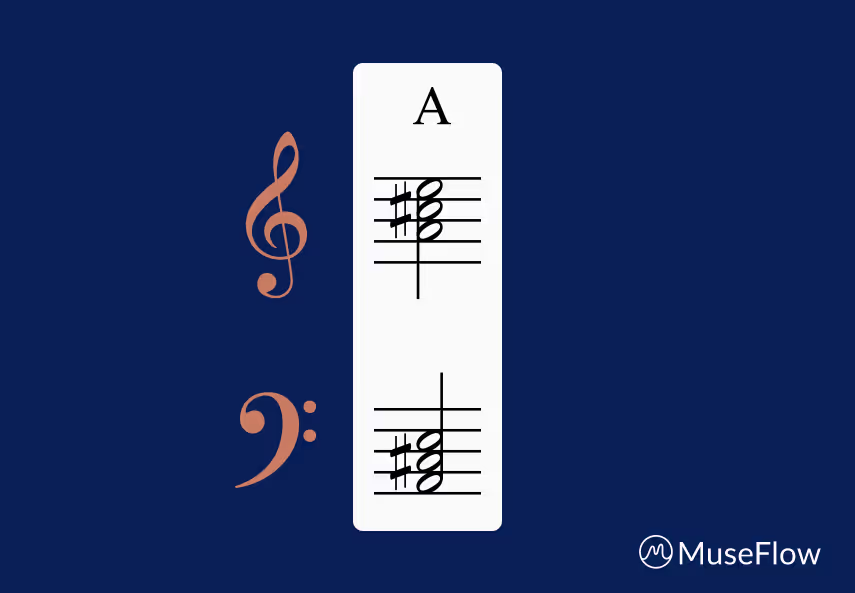
Warm and resonant, A Major appears frequently in folk, country, and rock music. It reinforces how chord shapes remain consistent across keys.
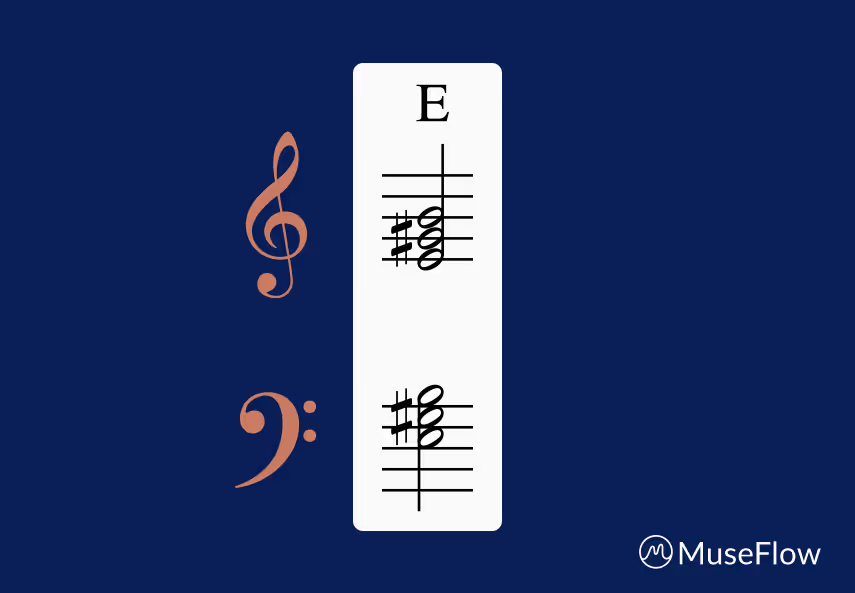
E Major is bold and assertive. It's commonly used in blues and rock progressions. This chord is essential for playing in the key of E and A.
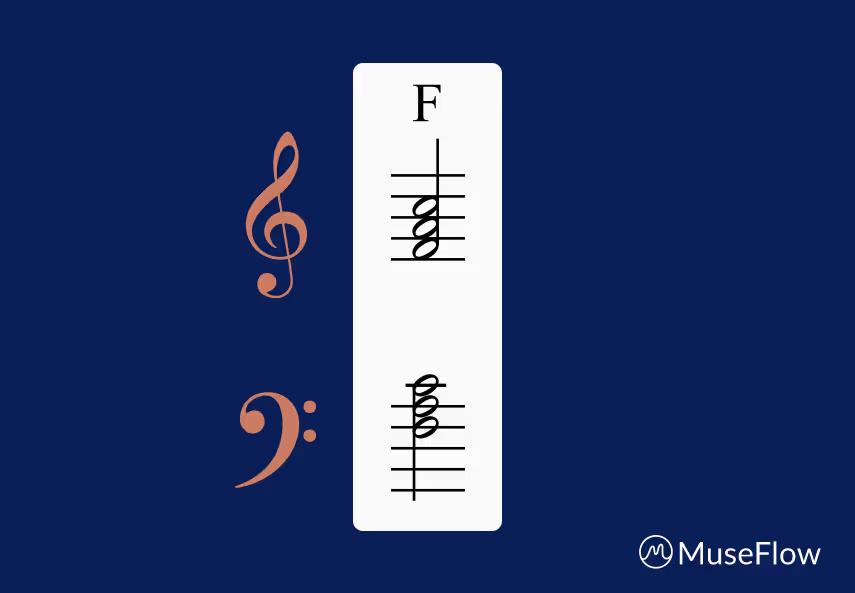
F Major is slightly more challenging because it often requires a different hand position, but it's incredibly common. It has a smooth, mellow sound and is vital for playing in the key of C.
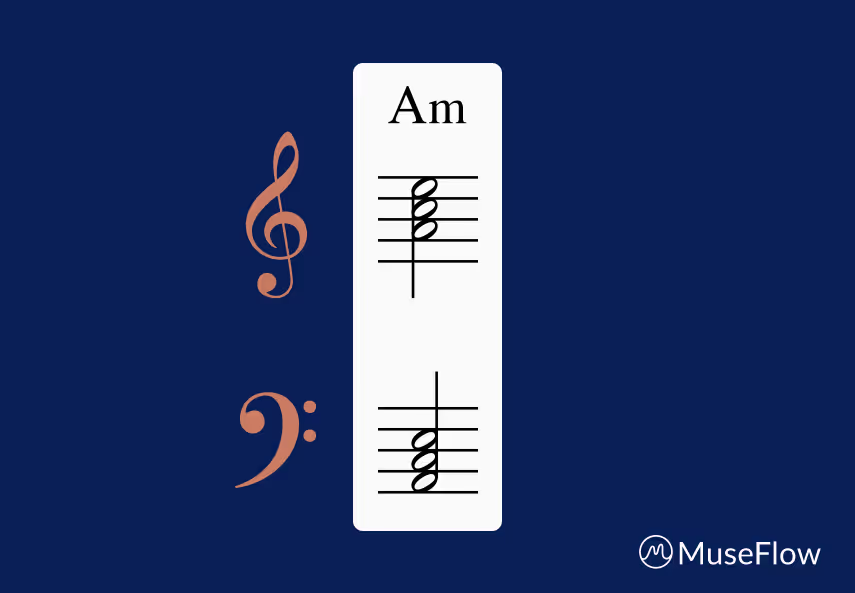
Now we enter the minor chords, which have a sadder, more introspective sound. A Minor is the relative minor of C Major, meaning they share the same notes but have a different tonal center. It's one of the most used minor chords.
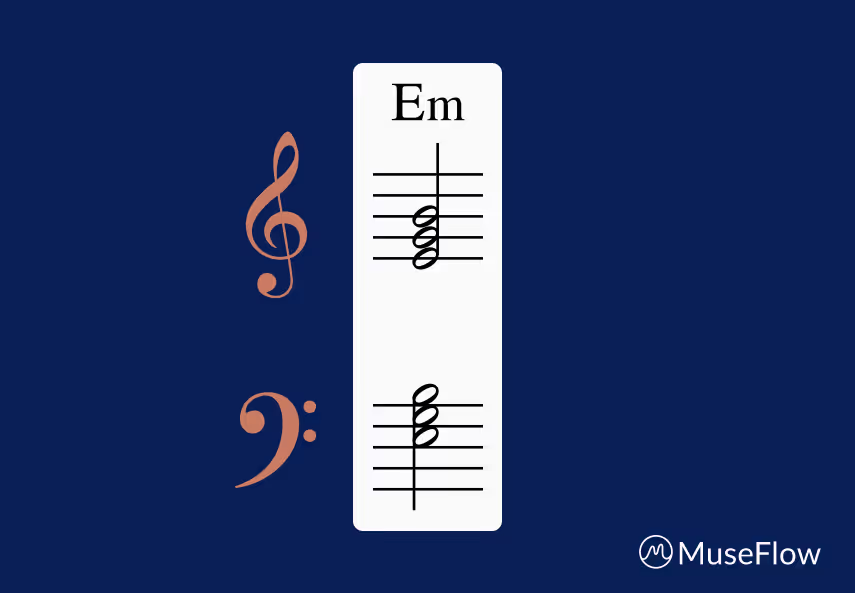
E Minor is hauntingly beautiful. It's all white keys, making it easy to play, and it's used extensively in ballads and emotional pieces.
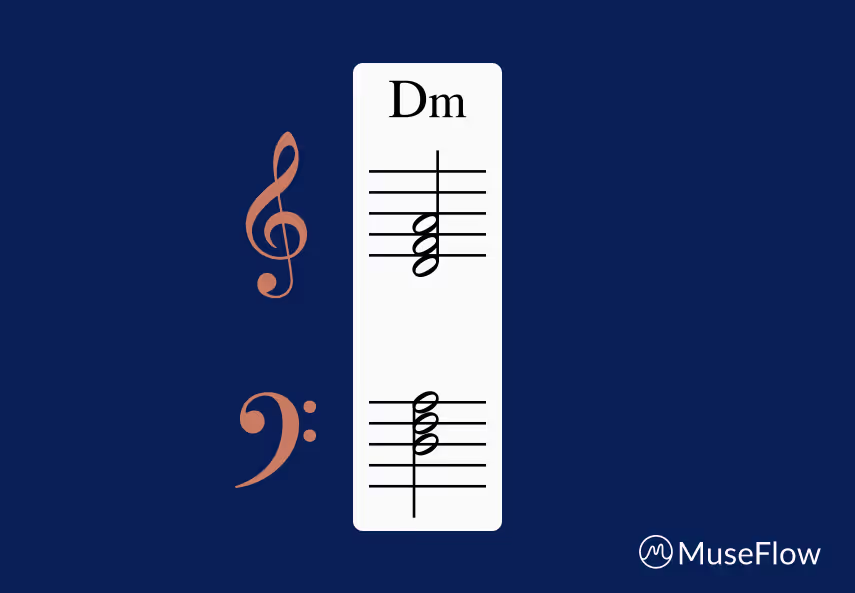
D Minor has a melancholic, dramatic quality. It's often used in classical music and adds depth to chord progressions.
This is a special chord. Diminished chords have a tense, unresolved sound that creates movement in music. B Diminished is the most common diminished chord for beginners and is essential for understanding how chords function.
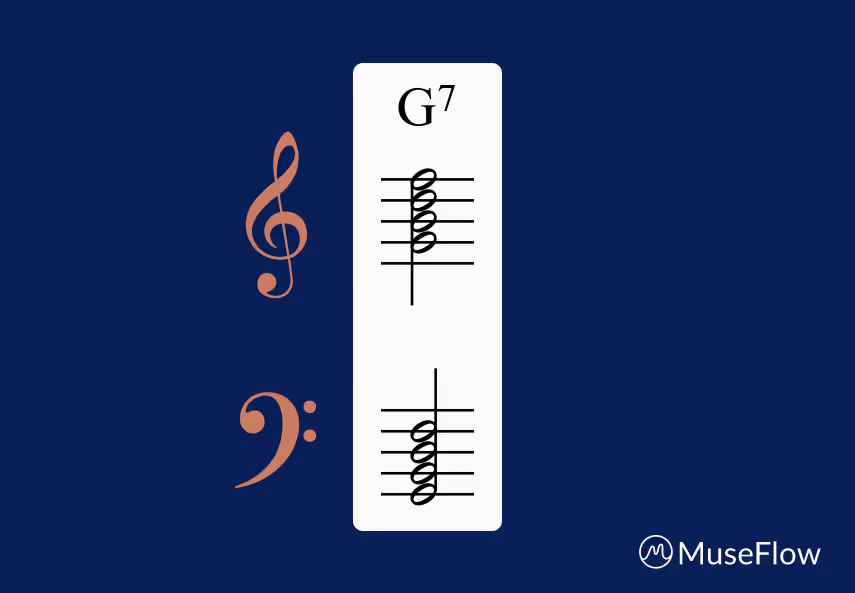
This is a dominant seventh chord, which means it has four notes instead of three. G7 has a strong pull towards C Major, making it perfect for creating tension and resolution. It's used in jazz, blues, and classical music.
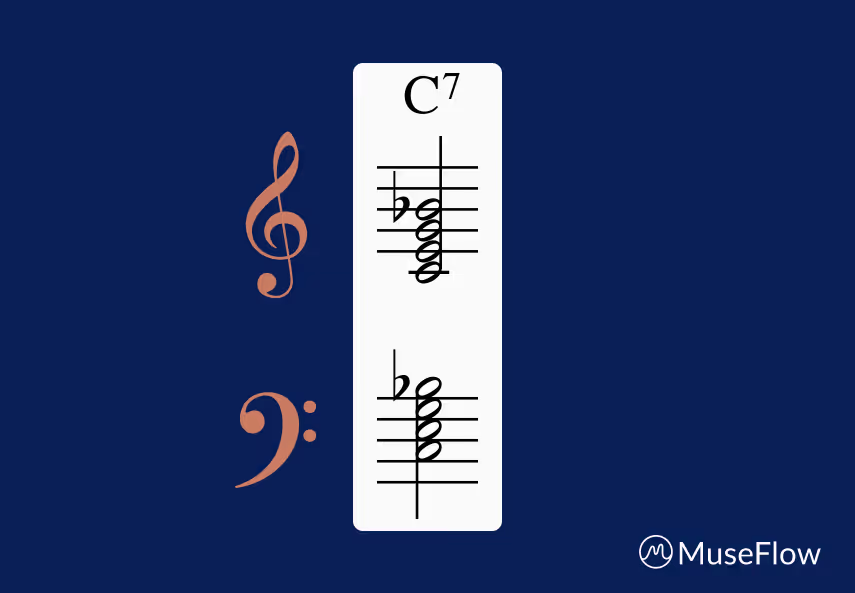
C7 is another dominant seventh chord. It creates a bluesy, jazzy sound and is used to transition to F Major. Learning seventh chords opens up a whole new world of harmonic possibilities.
Memorizing finger positions is one thing. Understanding how these chords function in music is another. This is where MuseFlow's approach shines. Instead of drilling isolated chords, you learn them in the context of real music through our sight reading exercises and repertoire library.
As you progress through MuseFlow's levels, you'll encounter these chords naturally. You'll see how they connect, how they resolve, and how they create the emotional landscape of a piece. This contextual learning is far more effective than rote memorization. Research on music learning shows that understanding the "why" behind the "what" leads to deeper, more lasting skills.

Here's the truth: knowing piano chords to play any song isn't just about memorizing shapes. It's about training your ear to hear them and your fingers to find them automatically. This comes from consistent, varied practice.
MuseFlow's never-repeating music generation ensures you're always encountering these chords in new contexts. You're not just playing C Major in one song; you're playing it in hundreds of different musical situations. This builds true fluency.
The benefits of learning piano extend far beyond the technical. It enhances cognitive function, emotional intelligence, and creative expression. And it all starts with mastering these foundational chords.

Ready to put these chords into action? Try MuseFlow for free and start learning piano chords for beginners the right way.. in context, with real music, and with instant feedback that makes every practice session count.
When exploring digital tools for learning piano, many learners encounter platforms like Piano Marvel. It is widely known for its structured exercises and extensive content library. At the same time, a growing number of learners look for Piano Marvel alternatives that align more closely with how adults actually practice, stay motivated, and develop long-term musical fluency. MuseFlow has emerged in this space by approaching piano learning from a different educational perspective.
Rather than positioning one platform as universally better, it is more useful to understand how their underlying learning models differ and which type of learner each approach supports best.
Piano Marvel follows a traditional, exercise-driven model rooted in repetition and structured drills. This approach works well for learners who enjoy methodical progression and clearly segmented practice tasks. MuseFlow, by contrast, is designed around continuous interaction, emphasizing real-time response, adaptive pacing, and sight reading development from the beginning.
Music education research has long shown that effective learning combines visual, auditory, and motor processes. Notes are not learned as isolated symbols, but as patterns that connect movement, sound, and spatial recognition. Modern learning platforms increasingly reflect this understanding by integrating feedback directly into the act of playing, rather than separating practice from evaluation.
One of the most significant differences between MuseFlow and exercise-focused platforms lies in how feedback is delivered. Traditional systems often require learners to complete an exercise before reviewing accuracy. While this can be effective, it places a cognitive burden on beginners who must play, remember mistakes, and self-evaluate simultaneously.
MuseFlow provides immediate visual feedback as notes are played, highlighting timing and pitch accuracy in real time. This approach aligns with findings from adult learning and motor-skill research, which suggest that timely correction helps prevent the reinforcement of incorrect habits and supports more efficient skill acquisition.
By reducing the delay between action and feedback, learners can focus entirely on playing with attention and consistency, rather than constantly questioning whether they are practicing correctly.
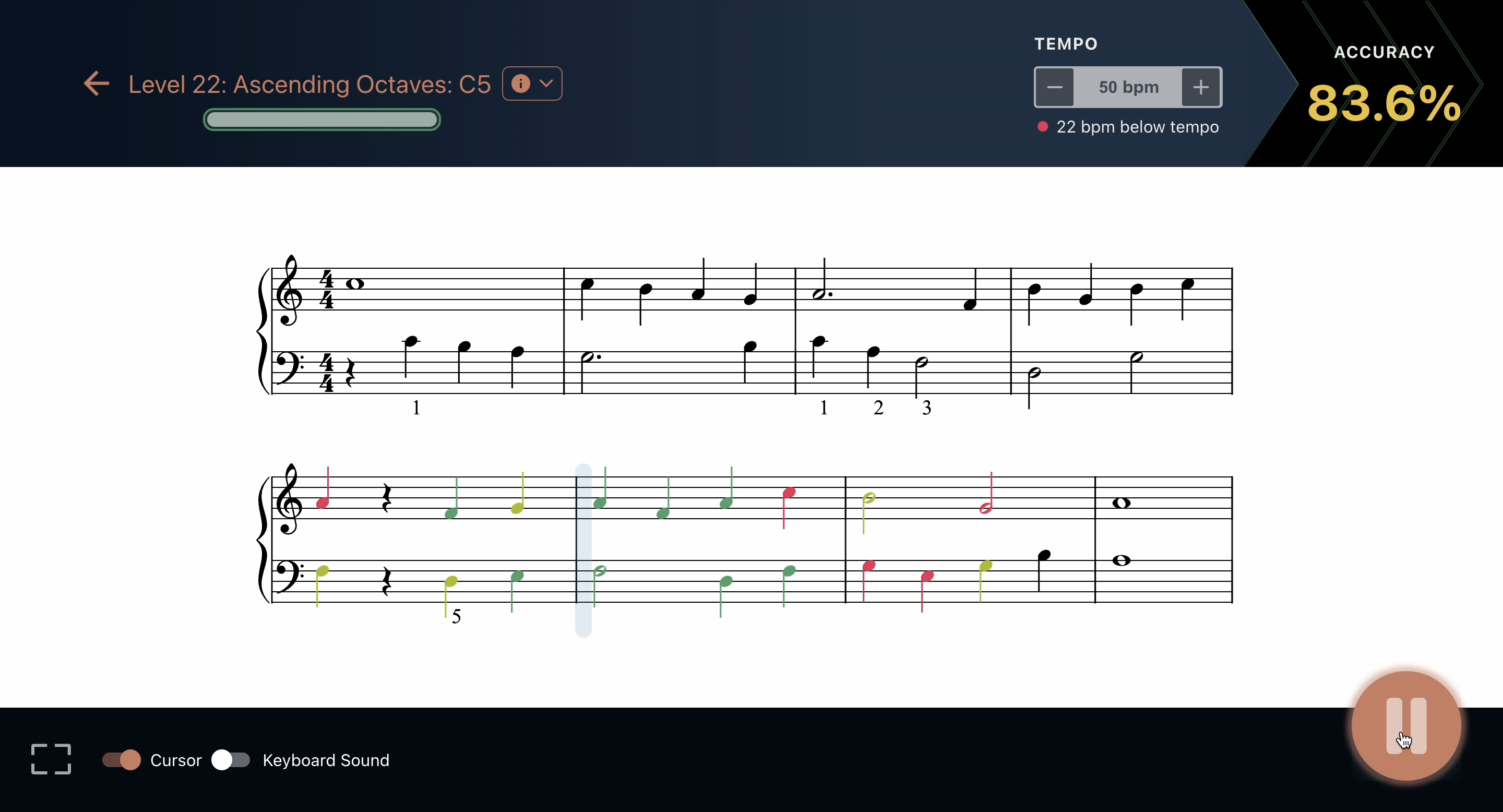
Sight reading is often treated as an advanced or secondary skill in many piano programs. MuseFlow takes a different position, treating sight reading as the foundation of musical independence. Educational studies in music pedagogy consistently associate strong sight reading ability with broader musical competence, faster repertoire learning, and greater long-term retention.
Instead of memorizing individual songs, learners are exposed to continuously varied material that encourages pattern recognition and fluent reading. This helps prevent over-reliance on muscle memory and supports transferable skills that apply across styles and difficulty levels.
For beginners, this approach can shorten the gap between early practice and meaningful musical progress, while intermediate learners often benefit from breaking plateaus caused by memorization-heavy routines.
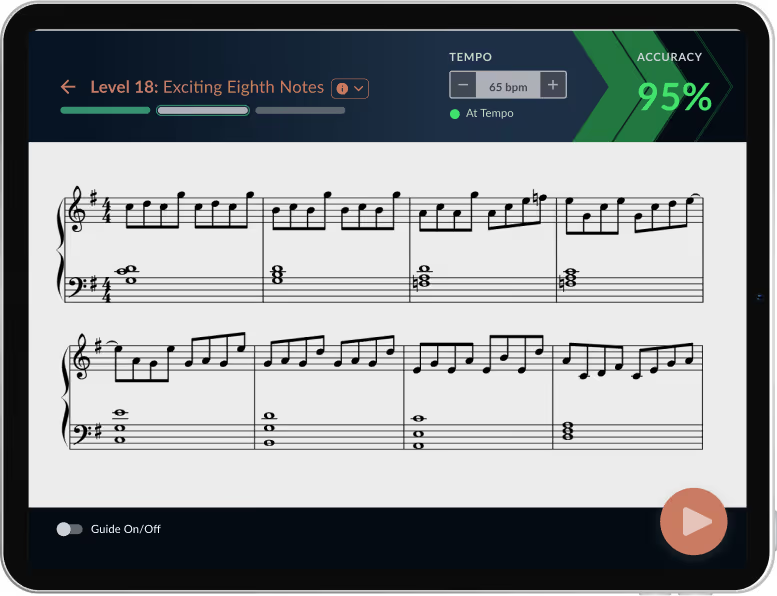
Some learning platforms rely heavily on points, scores, and rewards to maintain engagement. While these elements can be motivating in moderation, adult learners often respond better to visible progress and clear structure rather than novelty alone.
MuseFlow incorporates light gamified elements—such as progression markers and adaptive challenges—without turning practice into a distraction. This balance supports sustained focus while still providing enough feedback to reinforce consistency.
Psychological research on flow states suggests that learners remain most engaged when task difficulty closely matches skill level. By adjusting challenges dynamically, platforms can help learners stay motivated without frustration or boredom becoming barriers to regular practice.
.png)
Learners who prefer traditional, exercise-heavy practice and clearly segmented drills may find Piano Marvel well suited to their goals. Those seeking a more adaptive, feedback-driven experience often look for alternatives that emphasize efficiency, engagement, and skill transfer.
MuseFlow is designed for learners who want practice sessions to feel purposeful and time-effective, particularly adults balancing learning with other responsibilities. Rather than maximizing content volume, the focus is on making each interaction meaningful and aligned with how musical skills develop over time.
Digital piano education continues to evolve alongside advances in learning science and interactive technology. Platforms increasingly reflect a shift away from rigid, one-size-fits-all instruction toward personalized systems that respond to how individuals actually play.
As a Piano Marvel alternative, MuseFlow represents this broader movement toward adaptive learning, integrated feedback, and sight reading-centered instruction. For learners evaluating their options, understanding these pedagogical differences is often more valuable than comparing feature lists alone.
Choosing the right platform ultimately depends on learning style, goals, and preferred practice structure—but informed decisions are best made when the focus remains on educational value rather than marketing claims.
.avif)
As we speak, the technology of artificial intelligence is making shockwaves in nearly every element of our lives; from dating, to work, to pet care…it can be difficult to get a grip on what exactly it is, and how it can (or can’t) benefit us. We here at MuseFlow saw the potential in AI to revolutionize music education and we have done just that. Keep reading to read more about how AI is revolutionizing music education.
MuseFlow approaches AI as a tool to support our sight-reading first philosophy, so that you can not only play songs you love on our app, but at a party with friends, at a concert or in your living room with a four-legged audience - wherever your musical aspirations take you. AI analyzes your progress and playing style to generate constantly new, progressively structured music. We focus on sight reading to make you an independently proficient player.
MuseFlow is certainly not the first piano app; how many have you downloaded before being met with rote memorization, boring jazz standards and plunky exercises? We combine our expert pedagogical philosophy with a meticulously designed curriculum, supported by AI to implement our approach adapted uniquely to you.
So far we’ve discussed how AI plays a part in the sight reading first philosophy and our adaptive learning approach. That’s just a preview into not only how AI supports our state-of-the-art features, but how we aim to improve the way you study music. Let’s dig a bit deeper.

MuseFlow uses AI in its unique adaptive learning structure, incorporating AI’s capability to accommodate a diverse range of learning styles and tailor instructions to where a learner currently is, whether they’re a beginner or a teacher brushing up on your skills.
As an example: let’s say, as you’re practicing, you’re really struggling with d7 chords but you intuitively pick up complex rhythms. MuseFlow will note that and continuously give you music phrases with that chord included until you’ve mastered it. It’s smoothly incorporated into your individualized practice, all while giving you real-time feedback.
What makes this different from a static method book or a one-size-fits-all curriculum is that MuseFlow’s AI is always listening and learning alongside you. It doesn’t just track right and wrong notes, it recognizes patterns in your playing over time. Maybe you tend to rush through fast passages, or you consistently hesitate before a key change. MuseFlow picks up on those nuances and adjusts your practice material accordingly, creating a feedback loop that keeps you growing without overwhelming you.

When you reach a point where something is perfect for you - not too challenging and not too boring - this is called the flow state. Learning feels effortless and time flies by. Some major elements of achieving flow state are balance between skills and difficulty, immediate feedback, and intrinsic motivation.
We make it easy to track your progress as you go and maintain control of your education. Practice feels like play. And when practice feels like play, you actually do it, on your own terms. That consistency is what separates the students who stick with piano for life from those who quit after a few months.

We prefer to think of MuseFlow as your personal AI tutor. We don’t believe the future of piano education is about replacing the very real human element in music education, but about building on a teacher's presence and giving students a leg up.
While MuseFlow handles the technical instruction, your teacher can carry you forward with the craft and musicianship. When you arrive at your lesson having already internalized the mechanics of a piece, your teacher is freed up to focus on the deeper artistry. Expression, dynamics, storytelling through music. That’s where the magic happens, and MuseFlow helps you get there faster.
We here at MuseFlow are passionate about music education and have worked hard to build an app that is not only revolutionary, unique, and effective, but one that honors the fun that inspired music learning in the first place. If you’re curious to see how AI can help your own journey, click below to try MuseFlow for free.
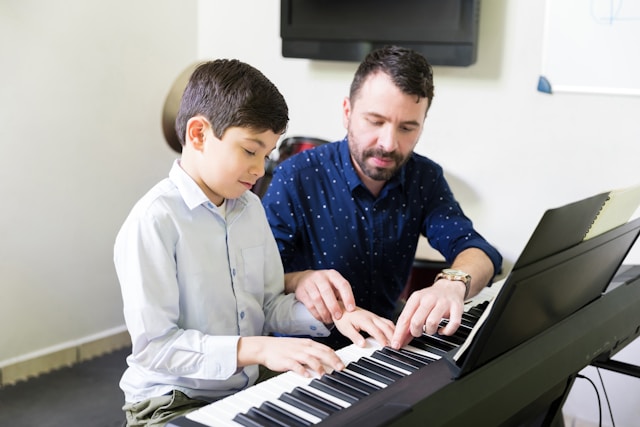

There are perhaps few things scarier to a musician than focal dystonia. I recently had lunch with a friend who is a professional clarinetist for the San Francisco Ballet, and she mentioned she personally knows about one hundred classically trained musicians who have developed this neurological disorder!
In the sports world this is commonly referred to as the yips, and this disorder affects around 1% of professional musicians across all genres. However, 95% of those cases come from classically trained musicians. Let’s discuss why this happens, and what mitigation efforts you can be put in place so that focal dystonia never presents itself in your performance.

Focal dystonia causes a loss of voluntary motor control in extensively trained movements. The brain develops overlapping neural maps, and musicians can experience cramping, tightness, fatigue, and involuntary muscle contractions. This can make it hard to perform complex instrument movements that musicians have been practicing for years.
Focal dystonia is idiopathic, meaning that “experts can’t point to one factor that causes it.” But some risk factors have been determined. According to Medical Problems of Performing Artists:
Because there’s a strong association between anxiety and perfectionist tendencies and focal dystonia, we should look at the ways piano teaching and training can either contribute to or alleviate those risk factors.
.jpg)
Many traditional teaching systems can encourage students to repeat certain bars and passages over and over again in order to perfect their technical skills and repertoire. But that can actually be detrimental to your fine motor skills.
Extreme, precise repetition can lead your brain to reorganize its neural connections in a process called cortical remapping. This is understood to be a major risk factor for focal dystonia. Variation is important for keeping your neural maps from overlapping.
The perfectionism that many musicians are taught can directly lead to major risk factors.

To avoid these potential risk factors, we need musical education that reduces the repetitive, overly controlled, anxiety-inducing perfectionism that is far too prevalent in classical training. We can do this by:
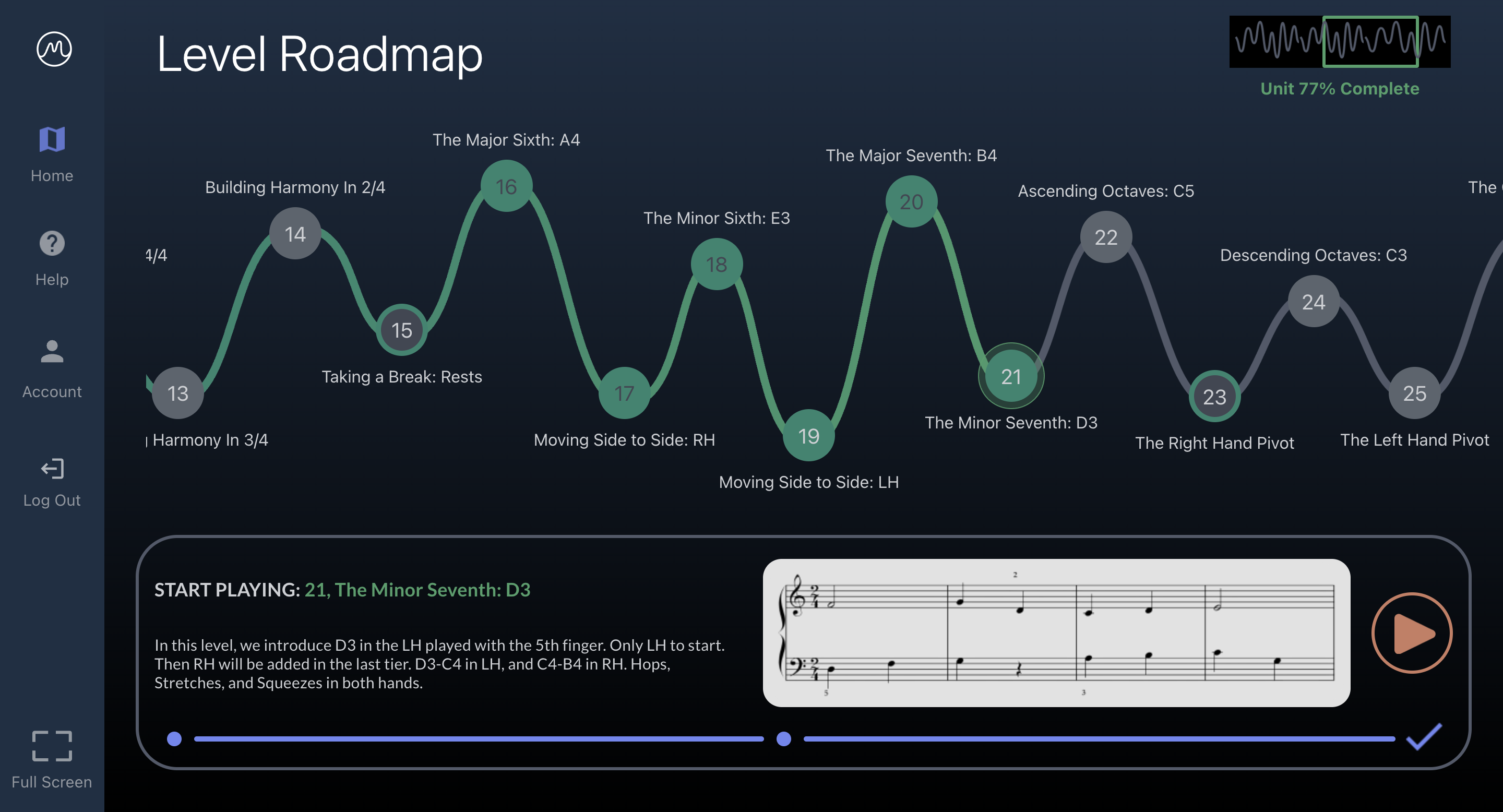
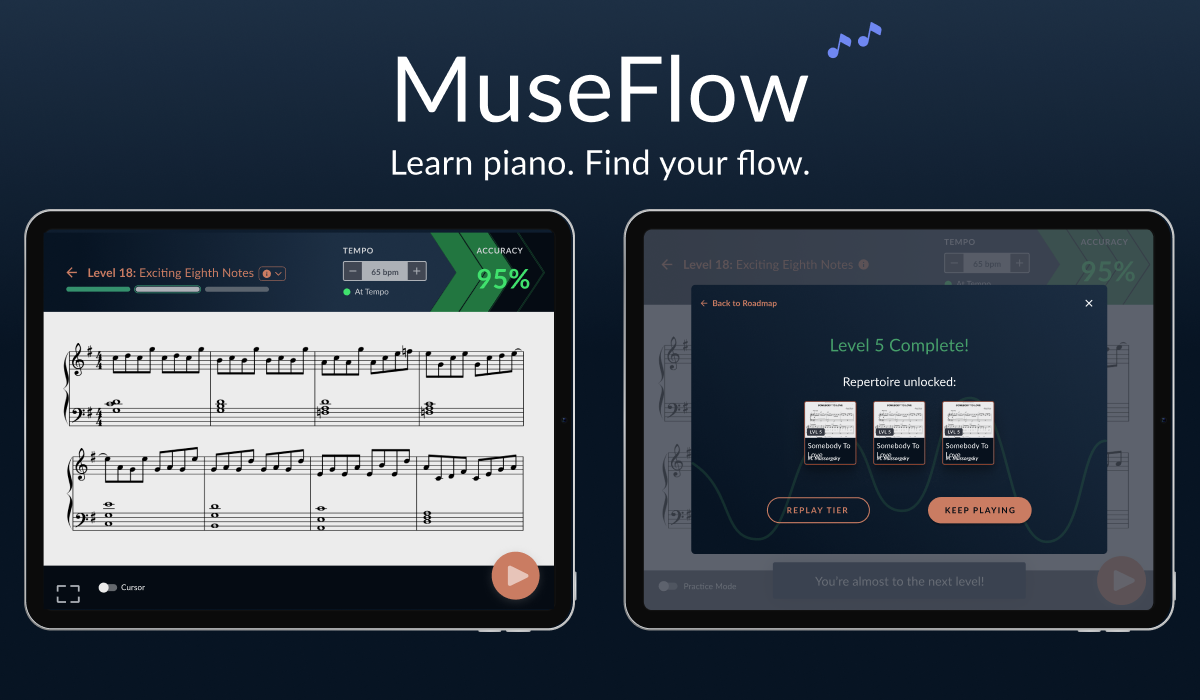
MuseFlow is a piano education program that encourages Flow State and sight reading through constant music variation. The system offers an alternative to the high-pressure classical training that can be healthier for your nervous system and reduce the risk factors associated with focal dystonia.
If left unchecked, focal dystonia can threaten to derail musicians’ careers. So it’s worth considering how we can reduce the possible risk factors in our music education.
It’s important to note that specific training methods can’t treat focal dystonia or guarantee you won’t develop it. Some people have genetic predispositions and prior injuries that make them more vulnerable to developing the disorder than others. But by focusing your music education around variation, flow, and positive reinforcement, you can support healthier motor learning principles.
And here’s the cool thing about ditching repetitive perfectionism…it can also make learning the piano a lot more fun.
For a long time, traditional piano grading systems have been the standard for tracking a pianist’s musical progress. But what exactly do those systems track? And are there perhaps some musical elements that slip through the cracks of these longstanding institutions?
Many pianists around the world judge their progress through traditional grading systems like ABRSM, TCL, and RCM. We’ve talked about these systems at length in a previous blog post.
The exams are great at giving structure to your piano learning. You can use their concrete goals and milestones for motivation and track your progress through their standardized tests. The grades can even open doors in your music career, as these systems are recognized on an international scale.
When you take a traditional exam, you will likely be asked to play polished and memorized pieces, demonstrate technical skills like scales, arpeggios, studies/études, and test your aural abilities.
With their focus in these areas, exams can be a great way to learn how to:
The traditional system rewards memorization and repetition as you polish your repertoire. But it can be found lacking in teaching musicianship.
Musicianship is literally defined as the “knowledge, skill, and artistic sensitivity in performing music.” More specifically, it’s the art of being a musician. It’s the creative decisions you make when playing a piece. It’s the emotion you infuse into the notes. It’s the holistic music comprehension required to be a musician.
Musicianship involves the following:
Exploring and improving your musicianship is the journey of finding and honing your identity as a musician.

One academic publication explains that for musical institutions, “teachers spent much of their time teaching technique and repertoire, which many authors suggest is only one aspect of professional musicianship… The focus ideally should be on ‘producing rounded musicians showing a high level of instrumental competence, a depth of musical understanding and a core of personal confidence that will allow them to express themselves with total commitment in any performing area.’”
As we mentioned in our blog about sight reading learning, sight reading only makes up about 10-15% of traditional exams. But sight reading is crucial to musicianship.
The focus on improving just for the sake of grades can also create some learning gaps. The grades reward big milestone performances rather than steady, consistent learning. And the ability to choose music pieces that play to your strengths can lead to avoidance of developing certain skills.
While these exams do test a lot of elements that are important for musicians, it just doesn’t consider everything that’s needed for well-rounded musicianship.
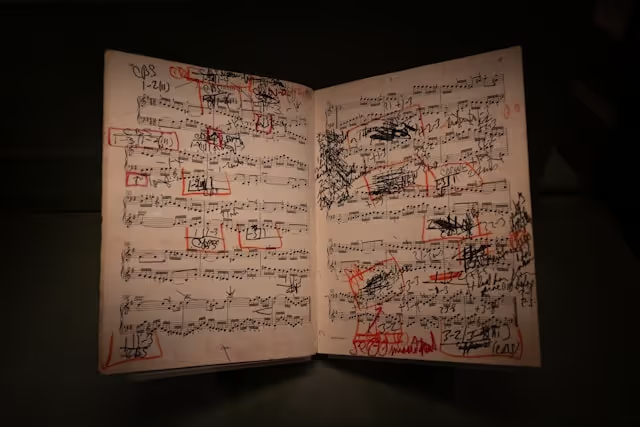
We here at MuseFlow believe in giving you the tools you need to build your musicianship.
That focus on sight reading, incremental learning, and Flow State can help you build your musicianship and fill the gaps from traditional exam structures.
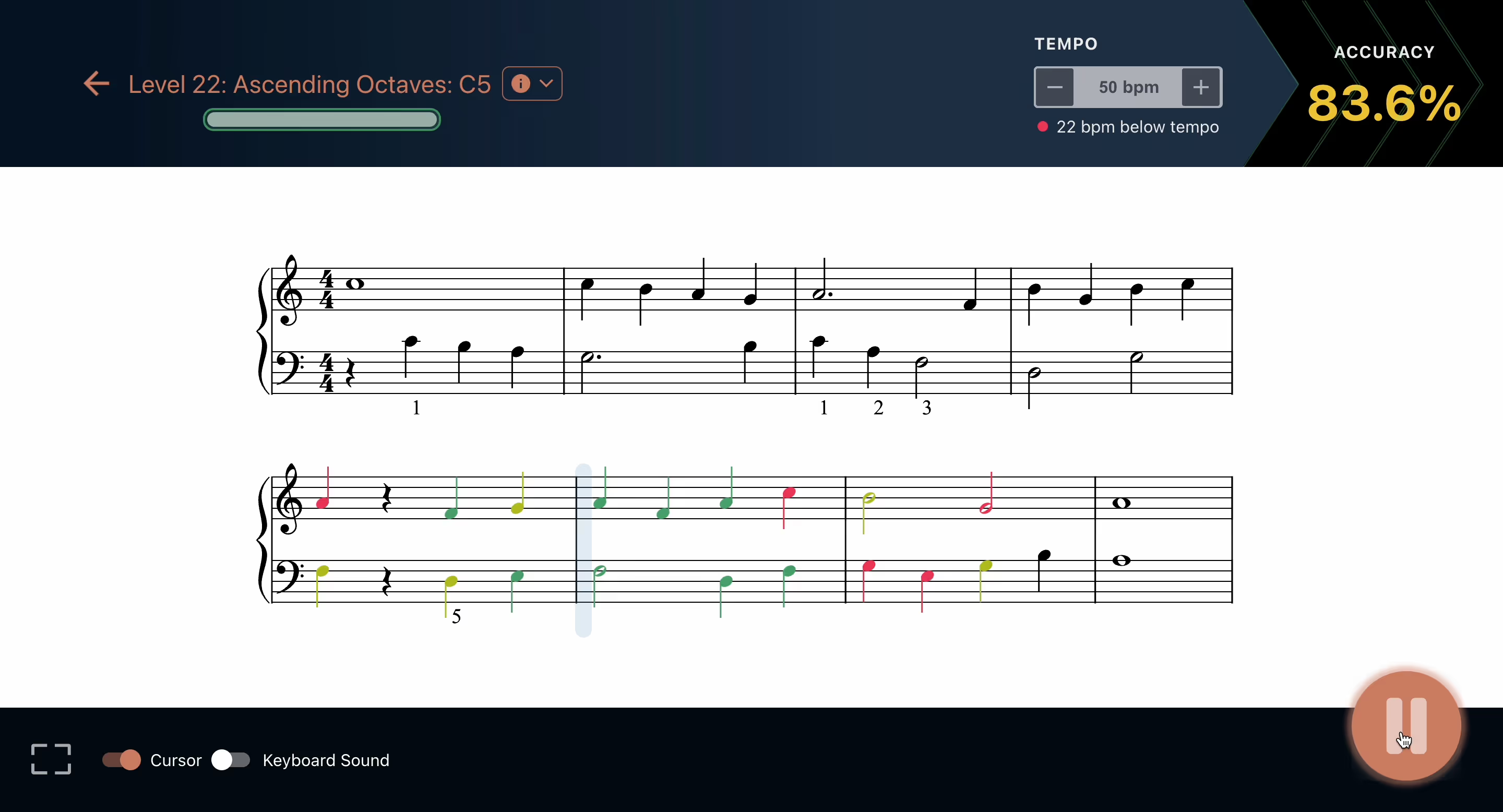
The ways we judge a musician’s skill can dictate the priorities of those musicians as they’re working to improve their craft. So while traditional exams can be really helpful tools, it’s also important that we think about the priorities in how we judge musical success and make sure that it includes a comprehensive view of musicianship.
As you go on your musical learning journey, never forget that you’re an artist!
Sight reading is the ability to play a piece on first sight. It’s a unique skill that requires reading, comprehending, and then translating sheet music in an instant. It involves deciphering rhythm, pitch, time pressure, and coordination…all at the same time.
The benefits of learning this skill are endless. As we talked about in our previous blog, sight reading:
A study in the International Journal of Music Education found that while sight reading is important, training is “often neglected,” even among advanced pianists.
But why is that? It may be in part because traditional piano learning systems are largely insufficient at helping you develop, track, and practice the skill.
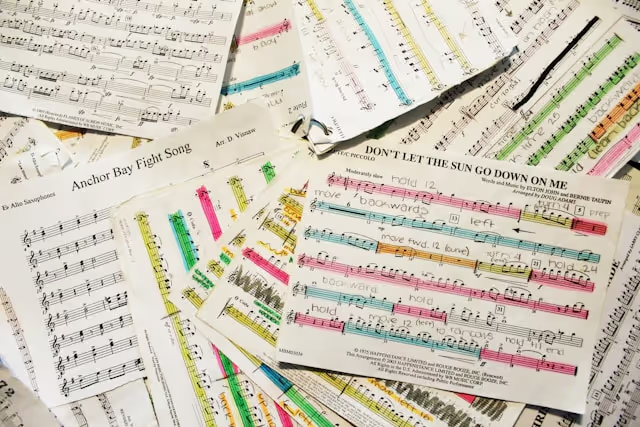
We’ve talked in a prior blog post about the different piano grading systems. Music exam boards like ABRSM and RCM offer these systems to help pianists track their progress, set goals, and offer standardized certifications that musicians can use for college and job applications. While these can be very useful, we’ve found that they just don’t prioritize sight reading.
A major component of these grading systems is preparing, polishing, and performing a number of songs. Learning these songs:
In most cases, sight reading is only a small component of the exam. For ABRSM, often seen as the standard for piano grading systems, sight reading makes up about 14% of a typical exam. In fact, across the board, sight reading tends to only occupy about 10-15% of piano grading exams.
But you don’t learn sight reading by polishing your repertoire…you learn it by playing music you’ve never seen before.

Within these grading systems, the sight reading component is usually graded on a pass-fail basis. You either succeed at the given level or you don’t. But sight reading is a lot more nuanced than that.
Your sight reading ability exists on a spectrum. You could have advanced skills of reading fluently at tempo but struggle with rhythms. You could move quickly at the keys you know well but freeze at the ones you don’t. It’s a nuanced skill, and your assessments should be similarly nuanced.
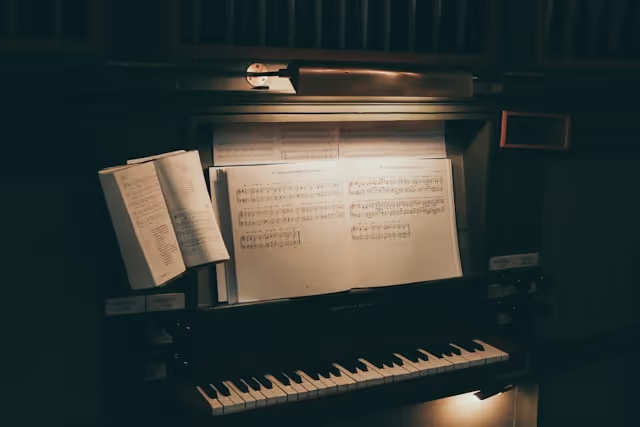
Just like every other aspect of playing the piano, learning sight reading requires practice. There are books that offer guidance and sheet music specifically for this. That could give you a good start, but you’ll always run into the same problem: running out of sheet music.
Sight reading involves playing a piece of music on your first exposure to it, so you can only really practice and get better if you have a steady stream of new-to-you songs. Sight reading books are finite resources that you’ll eventually read through and no longer have use for.
So if the traditional infrastructure for sight reading:
Then how are you supposed to actually learn it?

This is where MuseFlow comes in. While most other piano learning systems treat sight reading as a secondary skill, MuseFlow treats it as a trainable system that’s foundational for your musical progress.
Compared to the pass-fail aspect of traditional piano exams, MuseFlow offers an adaptive, incremental approach to learning sight reading and tracking your skill level. When you play MuseFlow’s gamified system, the app gives you real-time feedback on the notes you play. So you’re able to see exactly where and how you can improve at any given level.
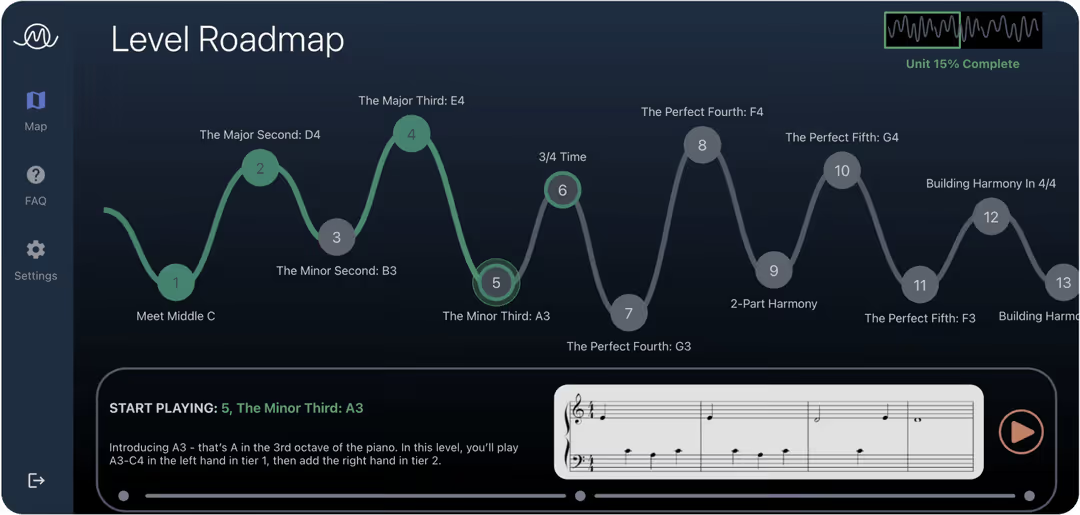
MuseFlow also introduces one new idea at a time, and you can change the tempo whenever you want less or more of a challenge. The hyper-specific nature of the program ensures that it’s always meeting you at your skill level and helping you along as you get better.
And perhaps most importantly, MuseFlow’s algorithm-based generative sheet music gives you an indefinite amount of songs. That means there’s no need to worry about running out of new-to-you music to practice your sight reading.
Sight reading is an essential building block to your musicianship as a pianist. But if learning this skill has ever felt hard for you, that’s totally normal! Traditional learning methods just haven’t been sufficient.
As opposed to traditional systems, MuseFlow:
No matter your age and skill level, you can learn to sight read. All you need are the right tools!
Millions of people play the piano around the world. That’s millions of people at different skill levels, learning and improving at totally different stages of their piano journeys. That’s why we at MuseFlow are fascinated by trying to create a system for all levels and experiences.
But how do pianists judge their skill level? And do different countries use different methods?
This is where piano grading systems come in. These are exams that test things like song performance, scales, and knowledge of music theory. When you pass one of these exams, you can move on to the next grade and your piano-learning journey continues!
Let’s break down the most popular grading systems around the world and dig into which one might be perfect for you.
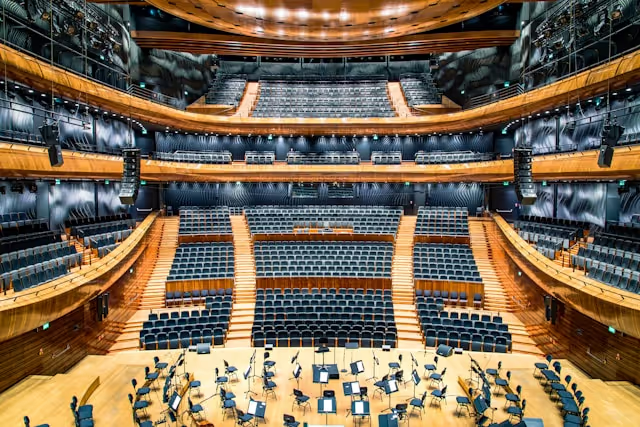
The ABRSM is a British music examination board that has been around since 1889. It offers in-person and digital exams and is one of the most commonly used and recognized grading systems worldwide. It is commonly considered a global standard for music education.
The grades start at Initial Grade for beginners, followed by Grades 1-8 of ascending difficulty. There’s no entry requirement for exams for Initial Grade through Grade 5, but exams for Grades 6-8 come with a prerequisite of passing Grade 5 or above in either Music Theory, Practical Musicianship, or Jazz Practical Grade. Beyond Grade 8, ABRSM offers three levels of advanced diplomas: ARSM, LRSM, and FRSM.
The exams focus on comprehensive musical knowledge, skills, and performance. You will be tested on:
Because their exams have a strong classical and traditional focus, ABRSM is perfect for students interested in classical piano training. And because ABRSM is the most well-known examination board, the grades you earn from them will be recognized around the world.
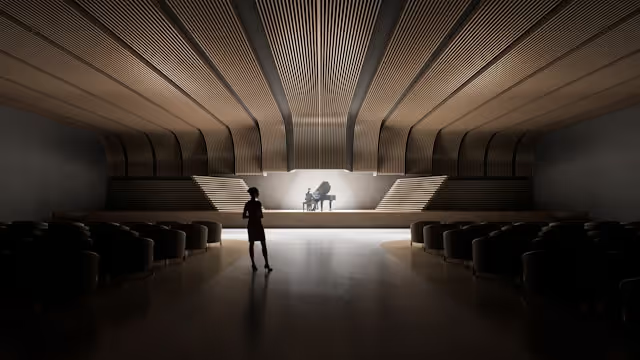
Trinity College London (was established in 1872 with more than 600,000 candidates per year in over 60 countries worldwide. While not quite as popular globally as ABRSM, Trinity College is still widely recognized and respected.
One of the big differences with ABRSM is that Trinity offers a separate pop and rock exam structure as well as their more classical-focused exam. Their exams also offer more flexibility and assessment options to choose from.
TCL has similar grades to ABRSM, with Initial Grade, Grades 1-8, and advanced diplomas ATCL, LTCL, and FTCL. Their exams are performance-focused and have face-to-face and digital options.
Here, you will tested on:
Because of their pop/rock grade track, Trinity College is perfect for someone with a more modern musical focus and sensibility.
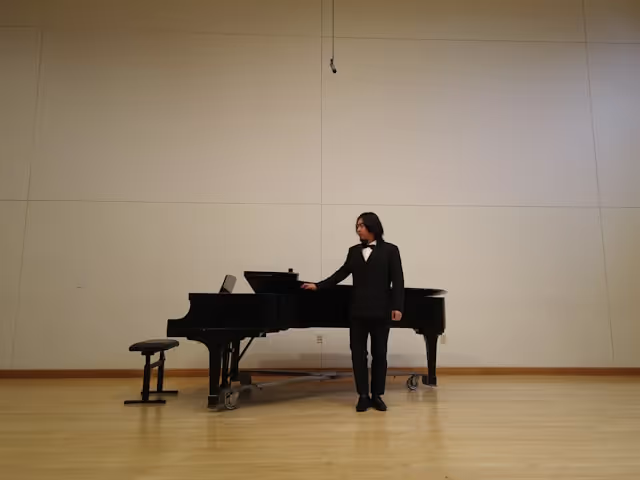
The RCM is a Canadian school based in Toronto and was founded in 1886. Its system is also recognized internationally and is popular in North America, used by 500,000 North American students today.
The RCM system starts with Prep A and Prep B, and then moves on to Grades 1-10. This means that RCM has spread its system into more exams than ABRSM and TCL.
Exams are more focused around classical and jazz, but there is an option to substitute some songs from the pop syllabus as well. From Grades 5-10 you must pass a music theory exam before taking that grade’s performance exam.
In an RCM exam, you will be tested on:
RCM is a popular option for North American pianists who still want internationally recognized certifications. This is one of the more theory-focused systems, so it’s great for those looking to include more theory in their piano education. With more grades, it’s also good for musicians who want a more incremental approach to their musical education.
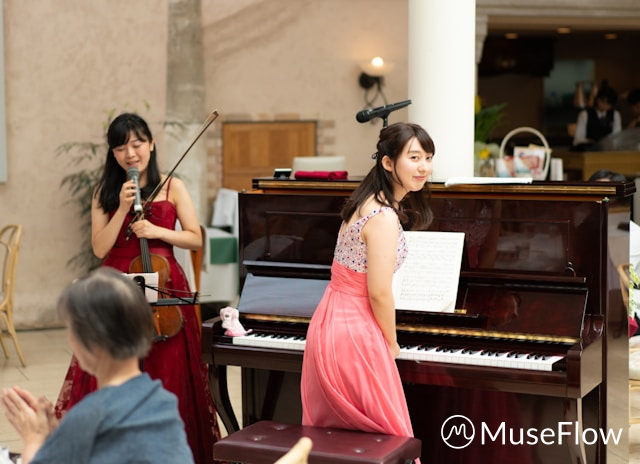
This is far from an exhaustive list of the piano grading systems, but ABRSM, TCL, and RCM are three of the most popular and widely recognized. The systems may come with different styles of exams, but all can help you set standardized goals, track progress, and offer certifications that can be useful for college applications and ensemble auditions. If you’re looking for a way to structure your piano learning progress, these piano grading systems can help you do just that.

Keep up to date on our progress as we continue to add new features!