Adult Learning
Beginners
Curriculum
Flow State
Self-Improvement
Essential Sight Reading Tips for Beginners: Starting: A Practical Starting Guide
November 2, 2024

Sight reading is one of the most important foundational skills for pianists, and adult learners just starting out may benefit from a broader overview of the best ways to learn piano as an adult. It allows musicians to approach unfamiliar sheet music and play with continuity rather than relying solely on memorization. Strong sight reading skills open the door to broader repertoire, faster learning, and greater musical independence.
For beginners, however, sight reading can feel intimidating, leading many to ask about the most beginner-friendly piano learning apps that can support structured progression. Notes, rhythm, coordination, and timing all compete for attention at once. The good news is that progress does not depend on talent or speed, but on how practice is structured. With the right approach, beginners can develop sight reading skills steadily and with less frustration.
The following principles outline how to start sight reading effectively, regardless of whether you are learning independently, with a teacher, or using a digital learning platform.
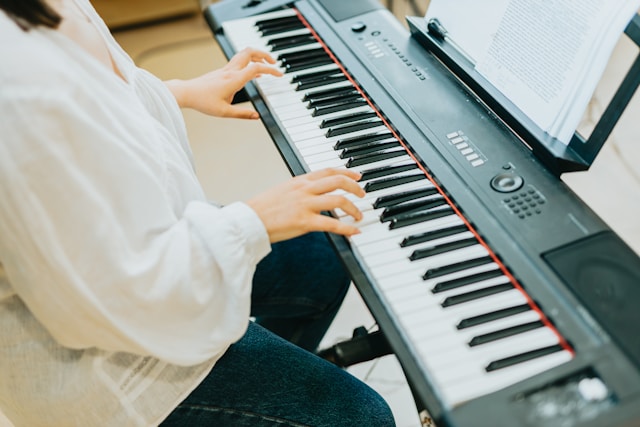
Sight reading is not just a performance skill—it is a learning accelerator. Beginners who develop reading fluency early spend less time decoding notes later and more time shaping musical expression. Instead of struggling through every new piece, they recognize patterns, intervals, and rhythmic structures more quickly.
Developing sight reading early also reduces dependence on repetition and memorization. This makes long-term progress more sustainable and allows learners to explore new music with confidence rather than hesitation.
One of the most common beginner mistakes is playing too fast too soon; newcomers may benefit from reading a broader guide on how to start learning piano from scratch before focusing exclusively on sight reading. Sight reading improves when the brain has time to process notation accurately. Slowing down allows learners to connect written notes to physical movement without panic or guesswork.
A practical rule is to choose a tempo where mistakes are manageable and intentional correction is possible. Accuracy builds recognition; speed follows naturally. Even short, slow sessions—10 to 15 minutes—are more effective than rushed practice.

Large pieces can overwhelm beginners. Breaking music into short phrases helps reduce cognitive load and allows focused attention on specific challenges.
Chunking music this way reinforces pattern recognition and prevents frustration. Over time, familiar techniques require less effort, and learners naturally need less segmentation when reading simpler material.
Many modern learning systems structure exercises this way, but the principle applies equally to traditional sheet music: isolate, understand, then connect.
Mistakes are an inevitable part of sight reading. What matters is how they are handled. Beginners progress faster when errors are treated as information rather than interruptions.
Continuing to play while noting where timing or pitch slips occurred helps maintain flow and prevents anxiety-driven stopping—a concept further explored in discussions about just-in-time learning and flow state in music education. Adjusting tempo or simplifying material after repeated errors is more effective than restarting from the beginning each time. This approach builds resilience and keeps practice productive rather than discouraging.

Rhythm is often more challenging than pitch. Beginners benefit from practicing rhythm intentionally, even away from the keyboard.
Using a metronome at slow tempos helps internalize steady pulse. Counting aloud, tapping rhythms, or clapping patterns before playing reinforces timing awareness. When sight reading, maintaining rhythm—even with occasional wrong notes—is often more musically valuable than stopping to fix pitch.
Some learning tools include built-in metronomes, but the key principle is consistency and control, not complexity.
Sight reading improves most effectively when material is neither too easy nor too difficult. Overly simple exercises limit growth, while overly complex pieces increase frustration.
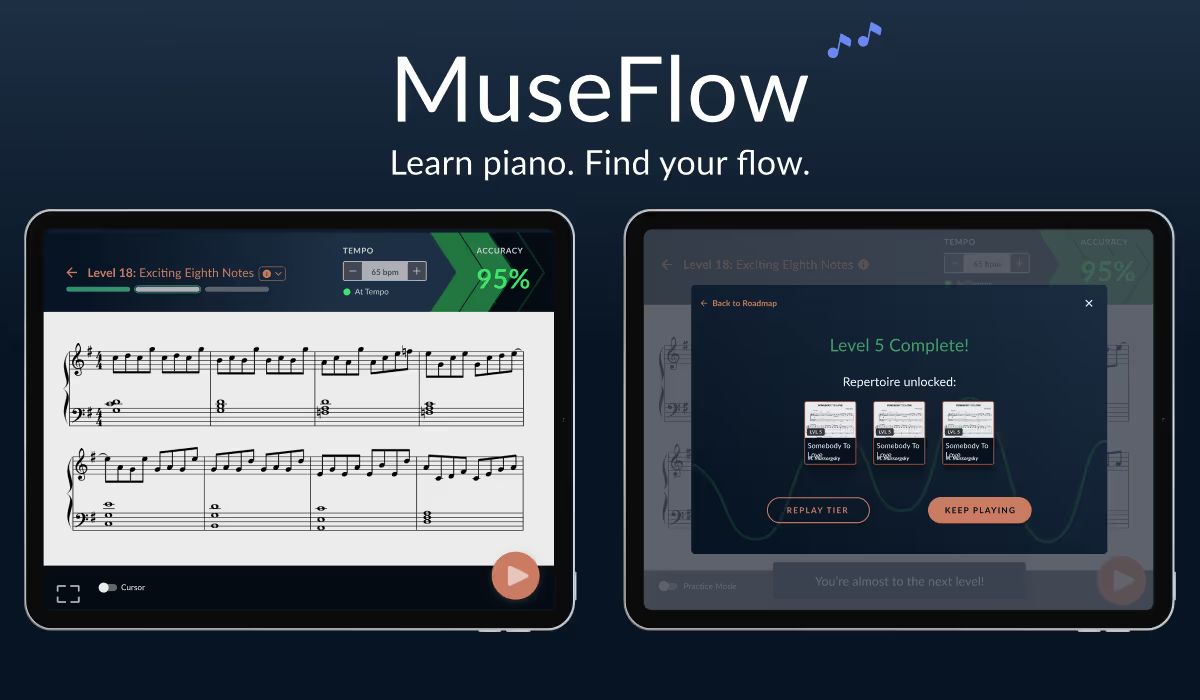
Beginners should feel challenged but capable. If accuracy consistently drops below a comfortable range, difficulty should be reduced. If material feels effortless, progression should increase slightly. This balance supports focused attention and sustained motivation.
Adaptive learning systems can assist with this, but self-assessment works just as well when learners remain attentive and honest.
Progress in sight reading often happens gradually. Recognizing small gains—cleaner rhythms, fewer hesitations, better coordination—reinforces motivation.
Many learners experience “aha” moments where concepts suddenly click. Noticing these moments helps build confidence and encourages consistency. Progress is cumulative, and celebrating small wins prevents discouragement during slower phases.
.png)
Sustained improvement depends on regular practice. Sight reading should feel challenging but not exhausting. Short, focused sessions are more effective than long, unfocused ones.
Engagement increases when learners approach practice with curiosity rather than judgment, a balance explored further in discussions about empowering beginners through sight reading and flow state. Viewing sight reading as exploration—not evaluation—helps maintain focus and enjoyment, even when material becomes more complex.
Sight reading is a skill built through structure, patience, and consistency—not shortcuts—and music practice can also support creativity and mental well-being as part of a broader learning journey.. Beginners who slow down, focus on accuracy, practice rhythm deliberately, and choose appropriate difficulty develop fluency more reliably than those who rush toward complexity.
Digital platforms such as MuseFlow can support this process by offering structured progression, real-time feedback, and adaptable pacing. However, the underlying principles remain universal and can be applied with or without technology.
By emphasizing progress over perfection and treating mistakes as part of learning, beginners can build sight reading skills that support long-term musical growth and confidence.

Let’s talk about the last time you felt anxious, overwhelmed, or sad. Maybe you were grieving the end of a relationship or the loss of a pet. Maybe you were struggling with the change of seasons or shifting family dynamics. These experiences are tough, and it can be hard to cope.
Now let’s think about the tools you used to manage those emotions. Did music play even a small role in helping you feel better?
If it didn’t, it probably could have—because both listening to and playing music can offer comfort when talking alone can’t. Music soothes us when we’re stressed and instills hope when we’re depressed, restless, or simply interested in self-improvement. Piano learning apps could be a solid place to start.
We’ll talk about one of the best piano learning apps shortly. First, let’s discuss the link between music and mental health.

The secret is out, and music can 100% help us regulate our emotions. Before we talk about what that looks like, consider Merriam-Webster’s definition of music:
a: vocal, instrumental, or mechanical sounds having rhythm, melody, or harmony
b: the science or art of ordering tones or sounds in succession, in combination, and in temporal relationships to produce a composition having unity and continuity
The verdict is in, and by definition, music is both an art and a science. It also promotes unity and has a soothing effect on the body. This is because music reaches deep into the endocrine system, which produces the hormones that impact how we feel. So when we play or listen to music, the body triggers the release of dopamine—the feel-good hormone responsible for pleasure and reward.
“I don’t think I’ve ever been this good at reading music. It never made sense to me before.” – Arjuna C., MuseFlow (a piano learning app) student
At the same time, music lowers cortisol, the stress hormone, making us feel calmer and more at ease. It can even improve our immune health by increasing levels of an important antibody, salivary immunoglobulin A, which offers protection from illness. And another study found that playing or listening to music at 60 beats per minute can induce a state of relaxation by driving alpha wave activity. (Alpha waves are associated with wakeful relaxation, which helps the brain unwind and fuels mental clarity.)
It’s no wonder that in therapeutic settings, experts use music to help clients process their emotions. Techniques like guided listening and music improvisation allow people to access their feelings and memories in ways that might be difficult to articulate verbally. From where we’re standing, it makes total sense that 71% of surveyed adults cited music as the greatest influence on their mood. After all, creativity makes us feel good.

Listening to music is powerful—but playing music can have an even greater impact. Learning to play an instrument like the piano is a solid way to get your creative juices flowing. You see, learning new things that are right outside your skill level challenge the brain to think in new ways: finding patterns, making connections, and ultimately achieving a flow state. This helps us break free from linear thinking and fully embrace creative problem-solving.
“Let’s go!! Kept myself in the flow state by first dropping the tempo so it wouldn’t be too frustrating, then got comfortable, then before it became too easy to the point of boring I reattempted it at goal tempo and I passed. What a rush of dopamine from completing the level that initially I couldn’t do!!” – Kyle L., MuseFlow student
From a neuroscience standpoint, learning an instrument like the piano activates several areas of the brain all at once. AI piano teaching apps like MuseFlow, for instance, engage the prefrontal cortex—responsible for planning and decision-making—along with the motor cortex and auditory system. This helps improve emotional regulation and unlocks creativity.
Fortunately, platforms like MuseFlow are making it easier than ever to learn the piano and unlock your full creative potential. Regardless of your skill level, piano training apps will give you space to clear your mind and grow creatively.

Thanks to technology, engaging with music has never been more accessible—or more innovative. Piano practice apps like MuseFlow, recognized as one of the best piano apps of 2026, are transforming how we learn and experience music. These tools let people explore their creativity in ways that traditional methods might not.
For instance, piano lesson apps can guide students step-by-step through learning an instrument, complete with personalized feedback and positive encouragement. This real-time interaction builds confidence and creativity. Then, when. you’ve mastered a skill within this game-like environment, you can apply those skills to songs that get unlocked after you pass each level. not to mention, this approach also supports each user’s mental wellness.
“Any success I achieve is its own reward. Just having moved to the next higher level, I feel good and surprised that it went so quickly. That’s a plus!” – Dennis L., MuseFlow student
And technologies like interactive piano lesson apps break down barriers to access too. With MuseFlow’s intuitive design and seamless user experience, anyone can start learning the piano from the comfort of their home—completely at their own pace. Together, music and technology are making creativity and well-being more accessible than ever.
So why not take the first step toward a healthier, more creative life? Start your seven-day free trial today and learn the piano through personalized sight reading with MuseFlow. You’ll also tap into the creative and therapeutic benefits of music.

This one goes out to all of the music teachers out there!
You love your instrument. It takes a music lover to teach music, after all. You know that your students could love their instrument, too, if they gave it a chance – but it takes a lot of frustration and work to get there.
The truth is, playing an instrument is one of the most rewarding and fulfilling things a person can learn to do, precisely because it is hard. Your mind, muscles, and senses are all completely occupied, and when the practice begins to pay off, you can tell! The hours spent spinning melodies, rhythms, and chord progressions out of raw skill are golden. You know that. Your fellow musicians know that.
Making a young student understand is a different story.
Today, we’re going to talk about how sight reading helps even beginner students feel fulfilled by music, and how engaging in flow state can make sight reading fun and rewarding.
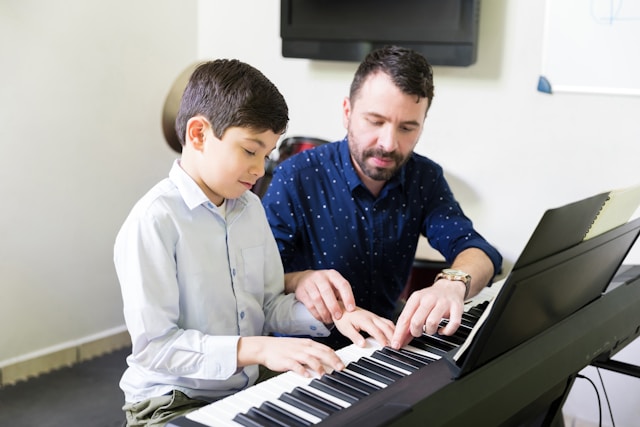
Strong sight reading skills make it easier to really sink into a piece of music. Sight reading is more than just a way of learning new music – it makes it easier to truly understand the music we are working with. Reading and understanding means more fluent playing, a better grasp of music theory, and better composition. Knowing how to write and read music makes it much easier to live in a whole world of musical experience.
A study by Katie Zhuko, “Exploring advanced piano students’ approaches to sight reading,” explored the level of skill that different pianists have. All musicians in the study said that sight reading skills were very important. Even pianists who were able to attain a high level of mastery without sight reading agreed.
Early students often struggle to stay motivated, and will quickly drop their instruments because they lack rewarding music to play and practice. Sight reading lets beginners practice plenty of fun music in the same way early readers get to choose from countless fun books. Sight reading is difficult, though, and many musicians never become fluent. Traditional teaching methods only make it harder to practice sight reading: you are taught a skill, assigned a song to practice, and then repeat that song dozens of times, until you are playing only from memory and never want to see sheet music again. In other words, sight reading is a vital skill that motivates beginners, but we handicap it from the very beginning.

Mihaly Csikszentmihalyi was the groundbreaking psychologist behind 'Flow: The Psychology of Optimal Experience.’ Flow state is a state of total focus and concentration. It is often associated with working on a challenging but doable task. When your skills are being pushed to their limit but no further, the result is a ‘goldilocks zone’ where challenge is met with immediate reward. You become immersed: the whole world narrows into one task, which completely sucks you in.
Flow state is very familiar to musicians. Social events such as jam sessions and concerts make us feel “in the moment,” the music running through us, totally one with our fellow musicians and the song in the air. Even when we play alone, a difficult and rewarding piece feels totally immersive. Intermediate and advanced musicians will experience flow state in ensembles, performances, and even while sight reading new music.
While experienced musicians are familiar with flow state, we don’t expect it in beginner musicians. A study by Arvid J. Bloom and Paula Skutnick-Henley found that a flow state comes from self-confidence and emotional expression. When do you think a new musician feels self-confident? With traditional teaching methods, every time a student learns a new skill, the teacher will give them a song which starts out feeling frustrating and difficult. Their job is then to go home, sit down at the piano or pick up the guitar, and play it until it is easy. This means hours of tediously plinking out the same noises without the opportunity to really sink in and enjoy the moment. As a teacher, you know that the reward for practicing will far outstrip the frustration – but getting there takes endurance, and not everyone manages it.
One of the best gifts you can give your students is the experience of flow state. It makes learning more fun and effective. It reduces the risk of drop-out. Even better, flow state opens a window to what being a musician is really like. It lets a nervous novice experience musicianship the way you experience it.

MuseFlow is designed to help beginner musicians feel more confident. It teaches fundamental concepts like chords, meter, and harmony one at a time in bite-sized chunks. All of the lessons are personalized and machine-generated, so the student gets to learn with new and doable music in every single lesson. Then, they can apply those skills to a new piece of music and immediately feel like they “get it.” They get to focus on learning skills, not just memorize songs – and that means that playing songs gets to be fun again.
Curious about whether MuseFlow is right for your students? Visit www.museflow.ai to find out more. With a MIDI keyboard and a computer, you can try out the beta version at www.beta.museflow.ai. We can’t wait to hear your feedback as we make musicianship available to all students!
Learning to play the piano from scratch can be an exciting and fulfilling journey, but it will also feel overwhelming if you don't know where to start... Thankfully, MuseFlow is here to make the process smooth, enjoyable, and effective! Whether you're a complete beginner, intermediate, or advanced plater, the new piano learning app provides all the tools and support you need to start and continue your musical journey. Find out below how to get started learning piano from scratch with MuseFlow.
Setting up MuseFlow is straightforward. The app will guide you through the initial setup process, including connecting your MIDI keyboard. There is a 7-day free trial so you can take your time and test the software before making any payments. The team will also always be there to help you if you have any questions setting up the new app.
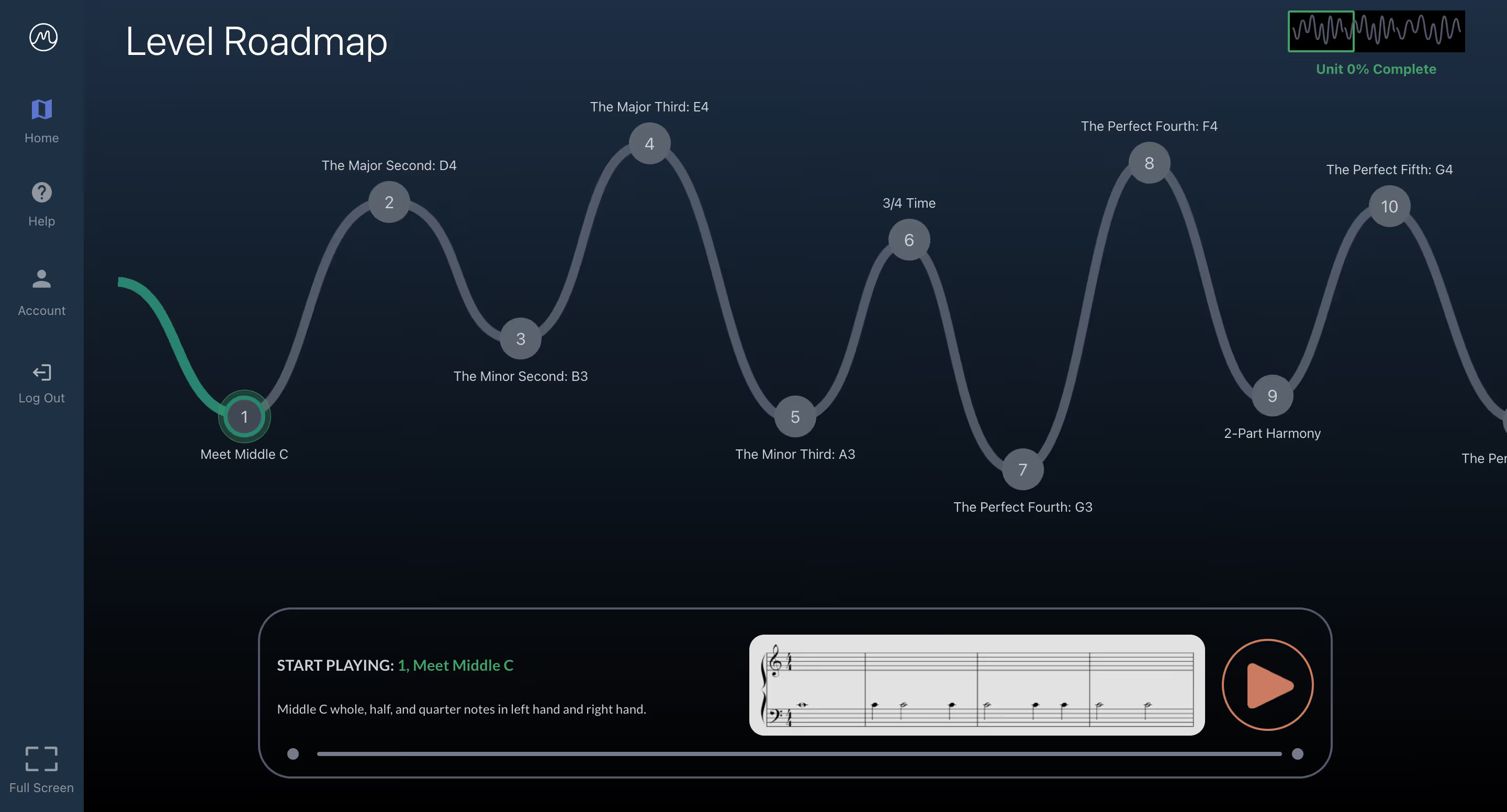
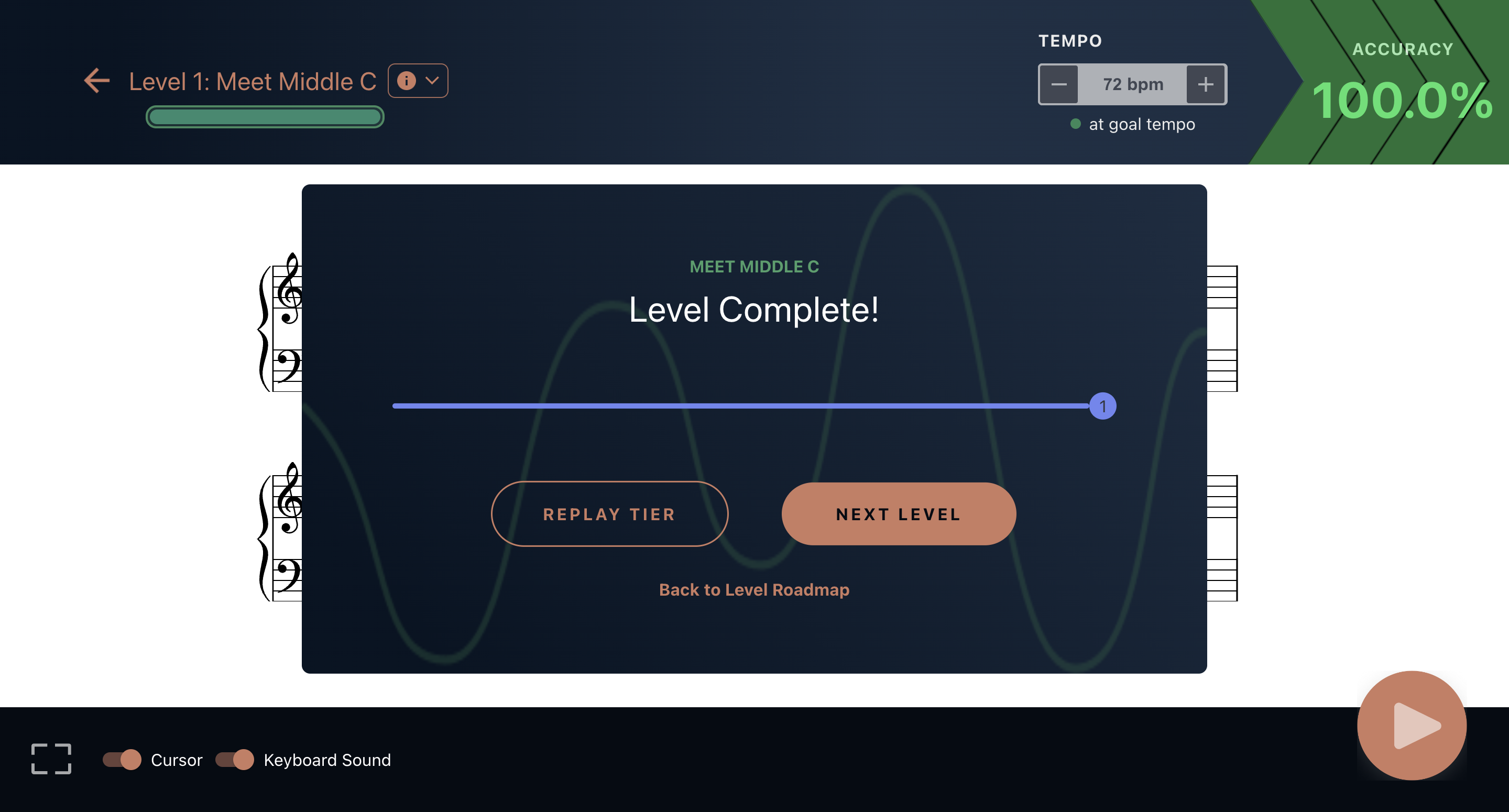
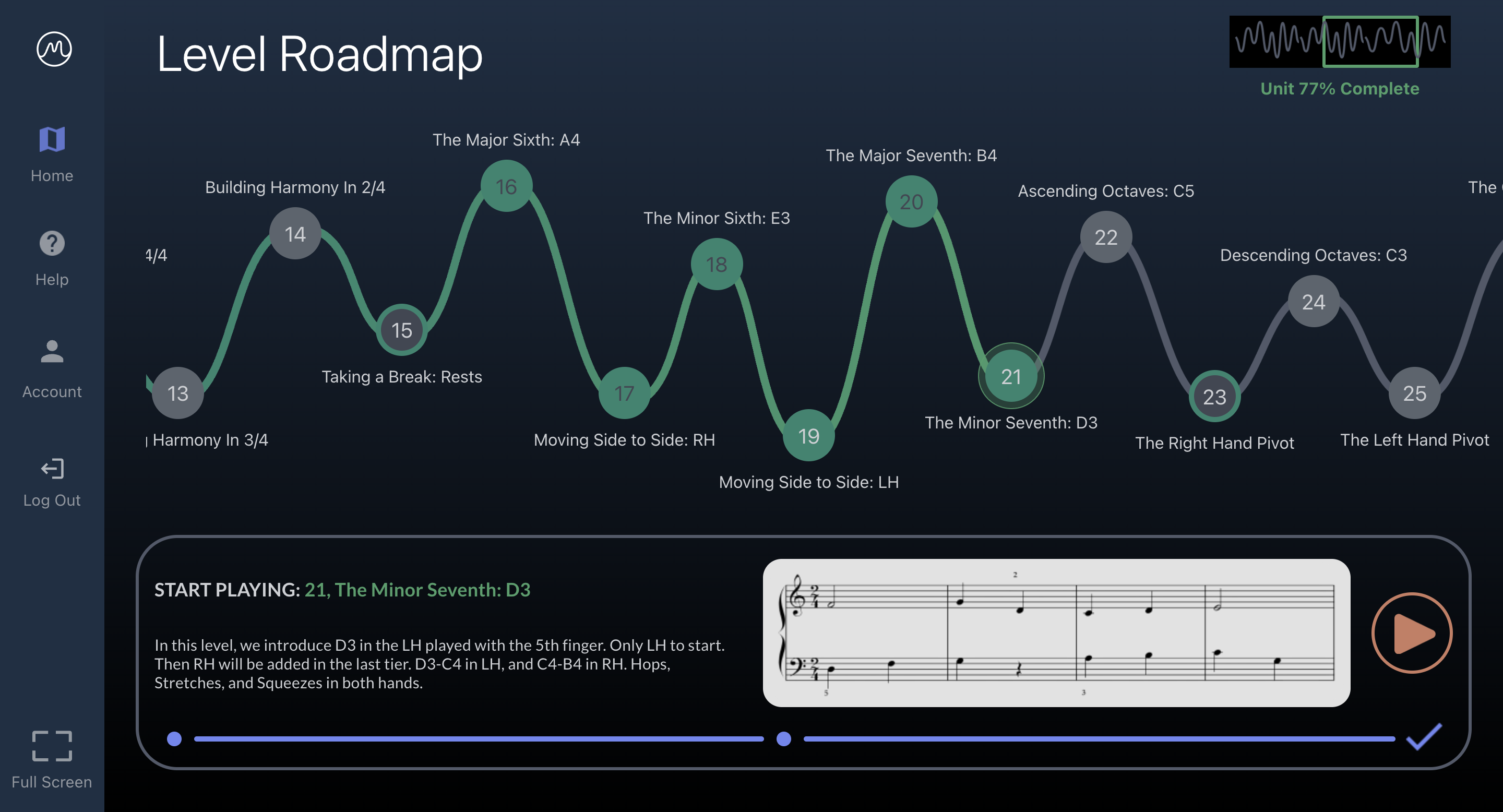
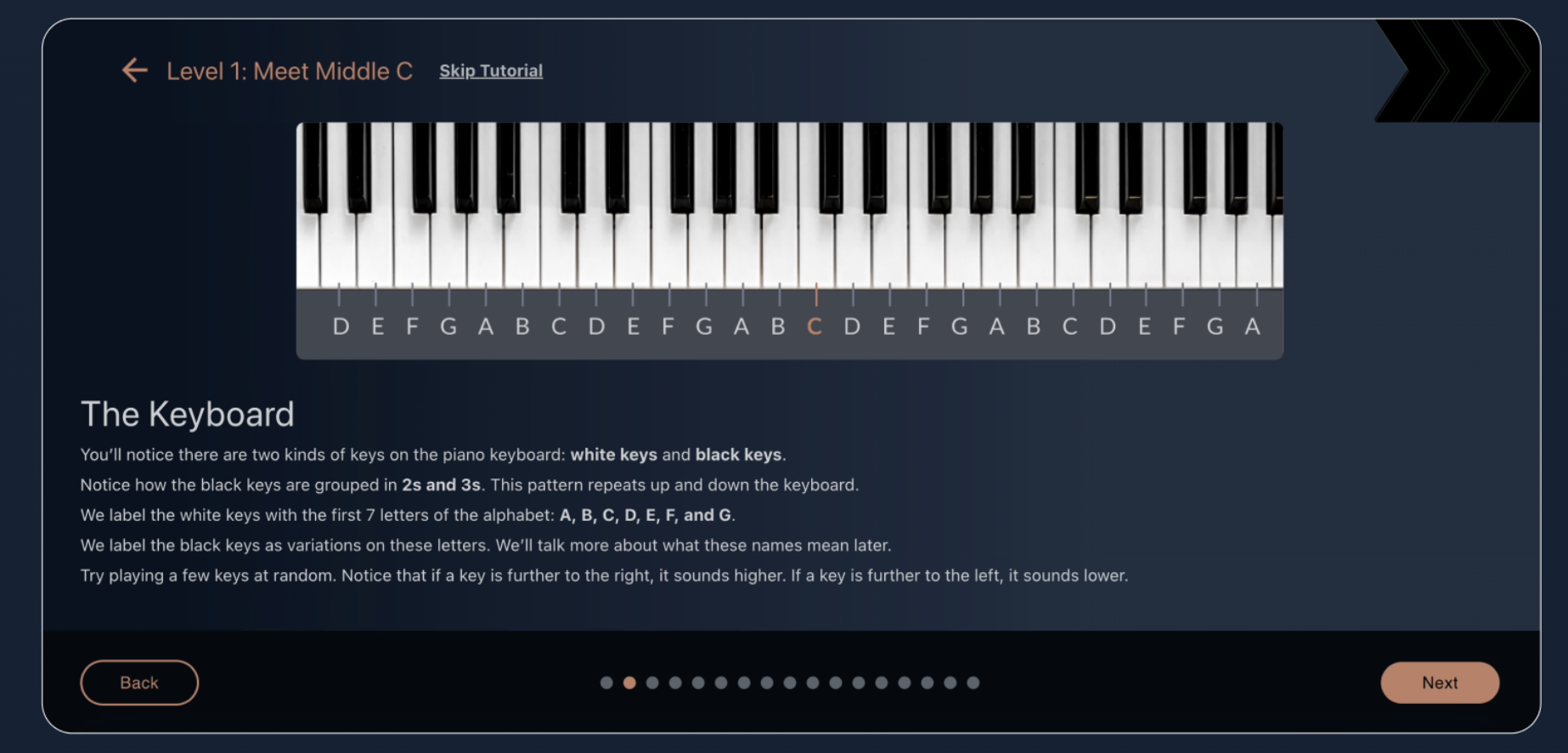
MuseFlow begins with a self-guided initial assessment to analyze your current skill level. This assessment is important for creating a personalized learning path tailored to your specific needs. You get to choose where in the curriculum you'd like to start. You can go through all the levels, seeing which one is best suited for you to start at. Note that each tier gets progressively harder in each level, so that by the of the level, you're playing the new skill within the context of the known knowledge you've gained from the rest of the curriculum so far. Don’t worry if you’re a complete beginner— MuseFlow is designed to be easy and straightforward. You can start from level 1 which is 1 note, two hands, and three rhythms.
During the assessment, you’ll be asked to play a few notes and rhythms. MuseFlow’s AI will analyze your performance to understand your starting point. This information helps the app customize each level to match your abilities, making sure that you start at the right level and progress at your own pace. This helps you learn faster or learn slow; you can learn at your preferred speed! How cool is that?!
Once the assessment is complete, MuseFlow will create a personalized learning path just for you. This path includes a series of lessons and exercises designed to build your skills gradually... Each lesson focuses on a specific aspect of piano playing, such as note recognition, rhythm, hand coordination, and music theory. If you're better at one than the other, the app will automatically adjust your lessons.
These lessons are interactive and engaging. This makes learning fun & effective. The California headquartered company built the app so that it uses a combination of interactive video tutorials, practice exercises, sight reading lessons, and repertoire (songs), to reinforce your understanding and help you master each concept. The best part? You’ll receive instant feedback on your performance, allowing you to correct mistakes and improve quickly...that's why so many users call it the best piano lessons app.
You can already hear it in the the name MuseFlow. It's called that because the app is designed to help you achieve a flow state—a mental state of complete immersion and focus. We've all been there before, in that state. The app continuously adapts to your skill level, providing just the right amount of challenge to keep you engaged without feeling overwhelmed.
When you’re in flow state, you’ll find that time flies by, and you’re fully absorbed in your practice. You've probably been there before while doing something your really enjoyed, and time just flew past. This state of deep concentration not only makes learning more enjoyable but also enhances your ability to retain information and develop skills quickly.
Customers love this unique feature, the real-time feedback system. As you play, the app listens to your performance and provides instant corrections on notes, timing, & technique. This immediate feedback is like having a personal tutor available 24/7; a personal tutor that is friendly and has patience for you.
Pay close attention to the feedback and use it to adjust your playing. This is the fastest way to learn. Correcting mistakes as they happen helps you develop proper techniques and prevents bad habits from forming. This real-time feedback really makes sure that your practice sessions are effective & productive.
Consistency is key to learning any new skill, and playing the piano is no exception. Think about anything that you're really good at... growth comes from doing it regularly. That's often the hardest part to learning. MuseFlow makes it easy to incorporate regular practice into your personal routine... The app’s flexible design allows you to practice anytime, anywhere, whether you have a few minutes during a break or a dedicated session in the evening.
Set aside a specific time each day for practice, and stick to it. As you keep doing it, the routine will build up. Even short, daily practice sessions can lead to significant progress over time... MuseFlow’s gamified elements, such as progress bars and levels, help keep you motivated and make practice sessions enjoyable.
Starting to learn piano from scratch will be an incredibly rewarding experience, especially with the right tools and support. Learning a new skill and get great at it is one of the best feelings you can have. MuseFlow makes the journey accessible & enjoyable by providing personalized learning paths, real-time feedback, and a supportive community. By following these steps you’ll be well on your way to becoming a confident and skilled pianist.
Learning to play the piano is one of the greatest feelings in the world, but takes a lot of work and time to perfect it. Many aspiring pianists face many different obstacles that make the journey frustrating & difficult. Thankfully, MuseFlow is here to help you! This innovative app is specifically designed to address common piano learning challenges, making your practice sessions more effective, fun and enjoyable. Here are the 5 most common challenges and how MuseFlow solves them!
Challenge: Staying motivated throughout the learning process can be tough. Progress might feel slow, and it’s easy to become discouraged. A lot of people give up early.
Solution: The best piano apps like MuseFlow keeps you highly motivated by making practice session fun and more engaging. The app uses modern elements of gamification, unlike most other piano apps out there. It captures that "aha" moment and gives that back to you on repeat. The learning is the game itself. Every new skill you learn is a level you have to beat. These features are guaranteed to make practicing feel like a really fun game.. providing a strong sense of accomplishment. This will automatically boosts your confidence and encourages you to keep going! You will LOVE it because each practice session is an exciting personal adventure that keeps you coming back for more. Gamification is knows to boost motivation if done correctly.
Challenge: Traditional piano lessons follow a one-size-fits-all approach. This is an old-school way of learning, because it can be frustrating for learners who actually need personalized guidance.
Solution: The best piano learning app uses machine learning and AI technology to provide a personalized learning experience. The software carefully assesses your skill level and then adapts the lessons to match your own personal needs. How amazing is that?? This means you’re always working on material that is both challenging and achievable! By tailoring each practice session to your abilities & goals, MuseFlow always makes sure that you’re progressing at your own pace. It also makes sure you're getting the most out of your practice time. There is no other solution out there that makes practicing so effective yet fun!
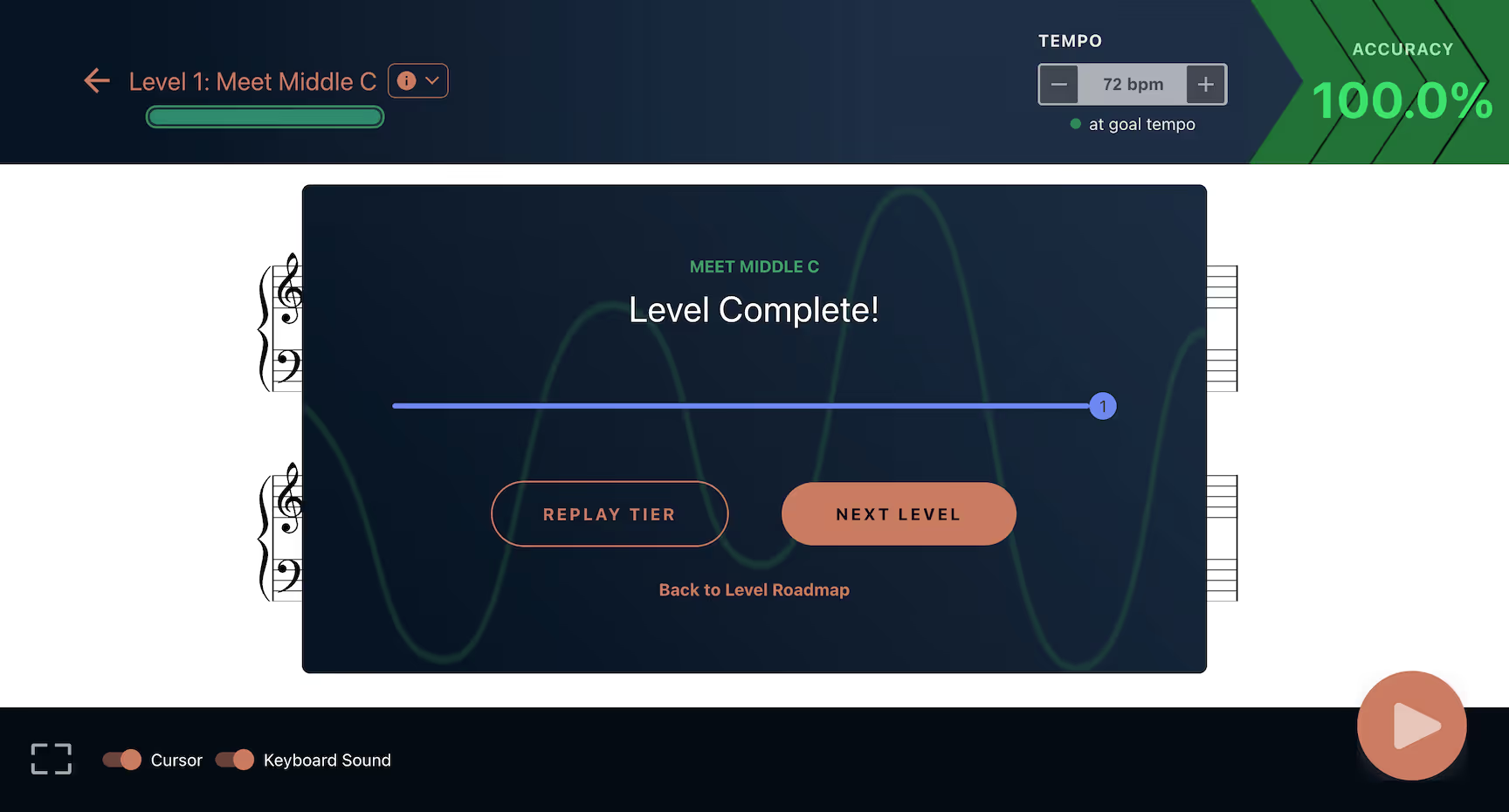
Challenge: Without immediate feedback, people often develop really bad habits. These habits can be hard to break later on..
Solution: The learning app will provide you with real-time feedback on your playing. This helps you correct mistakes right as they happen. That's by far the best way to learn. As you keep practicing, the app listens to your performance and offers instant corrections on notes, timing, and technique! This immediate, smart feedback makes sure that you develop better habits from the start. This of course will make your learning process more efficient. The innovative real-time feedback feature is like having a personal tutor available 24/7 - guiding you through each practice session. The only difference is that the tutor is friendly and never gets mad at you.
Challenge: We all know that practice can become monotonous and boring.. which often leads to frustration and quitting. Not anymore!
Solution: The California based tech startup designed the practice sessions to be more interesting. This is done by offering a large variety of exercises & challenges. MuseFlow midi piano lesson's interactive features and huge music library provide so many different opportunities for exploration and growth. The app regularly updates its content, so there’s always something new to learn. Customers are loving this, because they never get bored. By keeping your practice sessions amusing, the software helps you stay interested and excited about your musical journey.

Challenge: Many piano learners struggle to build a strong foundation - in piano techniques and music theory.
Solution: MuseFlow’s complete course structure is build so that you develop a strong foundation, in both technique and theory. The app provides step-by-step interactive tutorials and exercises designed to improve your piano playing. That means that whether you’re focusing on sight reading, finger movements, or understanding musical notation, the AI software's structured approach helps you master your fundamentals. This strong foundation is important for progressing to more advanced playing in the future and becoming a confident, skilled pianist.
The piano is the most popular instrument, so it's definitely worth the challenges to learn how to play. As discussed above, learning to play the piano comes with its fair share of challenges... but MuseFlow is designed to make the journey so much smoother and more enjoyable like never before. By addressing common obstacles such as staying motivated, needing personalized guidance, receiving real-time feedback, always keeping practice sessions interesting, and building a strong foundation, the software really makes sure that you have the all the support and resources you need to succeed!
Learning to play the piano on your own is the best when you figure out how. It can be a super fulfilling yet challenging adventure. There are many success stories of people teaching themselves instruments, but most of the time it's very challenging. Especially as traditional methods can often feel overwhelming and sometimes don't mesh with your personal learning style & pace. If you’re searching for the easiest way to teach yourself piano, then congrats, you've found it. MuseFlow, an innovative app built by engineers and professional musicians, is there to simplify piano learning. Read below to quickly find out why the app that helps you teach yourself piano is your best friend when it comes to mastering the piano independently...with ease and confidence!
Try MuseFlow's 7-Day-Trial right now!
As you might know, one of the first challenges of self-taught piano learning is knowing where to start and how to progress? MuseFlow eliminates this confusion. This is done by offering a personalized learning path that constantly adapts to your individual skill level & goals.
How it helps: When you start using the smart piano software, you current skill level and your musical preferences is taken into account. The app then tailors your learning plan to suit your exact needs. This is done to make sure you're not wasting time on lessons that are too easy or too difficult... This makes it more fun and saves you a lot of time. Also this adaptive learning approach helps you stay engaged & progress at your own pace. Therefore making self-teaching straightforward and more FUN!
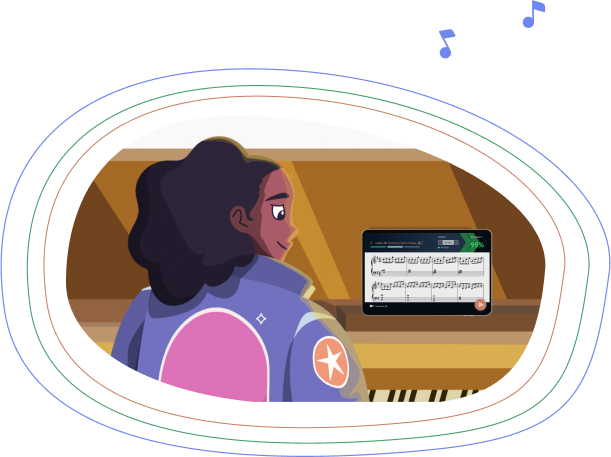
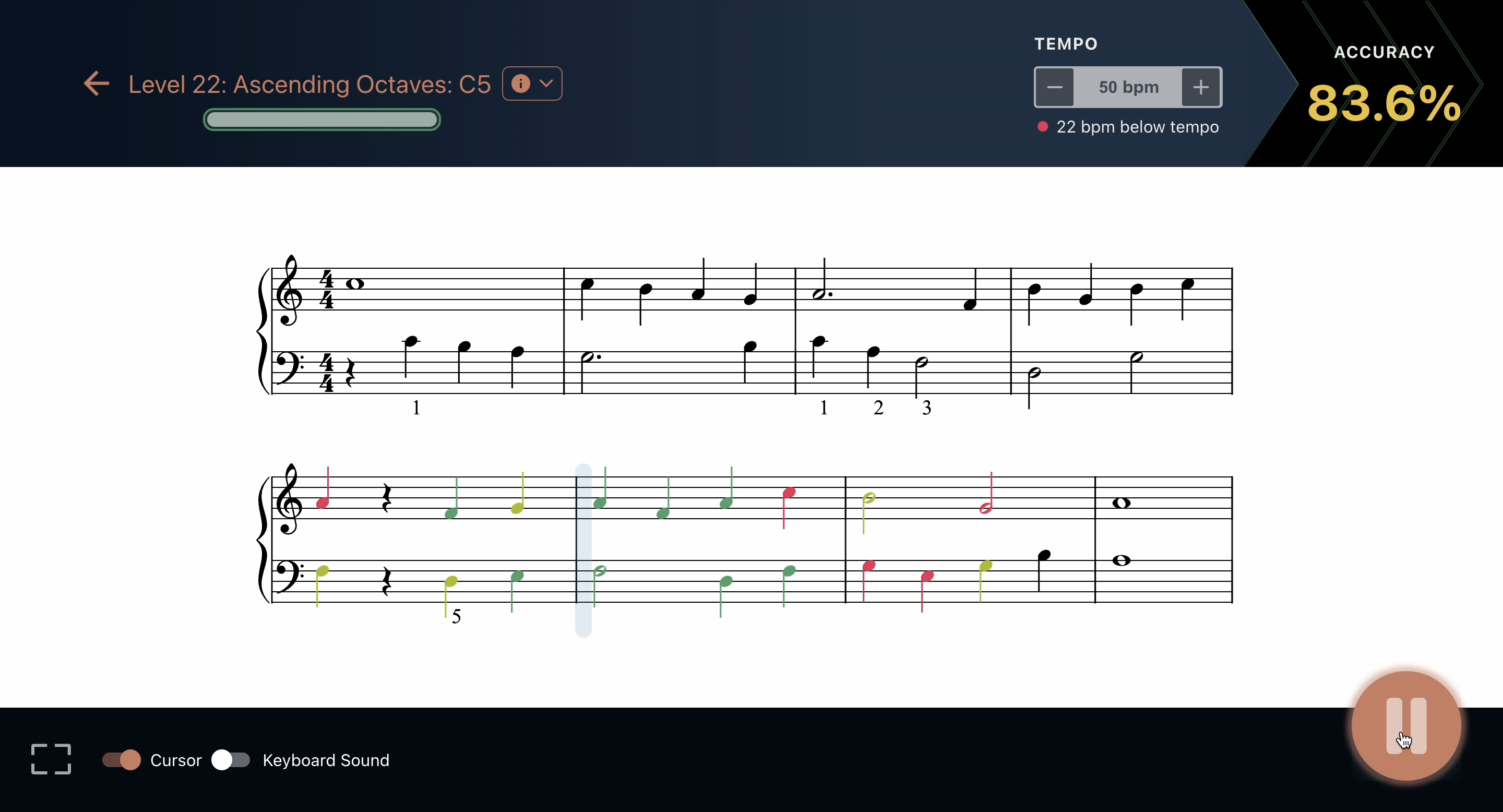
Another big challenge when teaching yourself piano is that there is no immediate and fast feedback. This of course is important for correcting mistakes and developing the right technique. The AI piano teacher provides real-time feedback on every note you play. This works like the responsive guidance you would receive from a live piano teacher. The only difference is the app won't get mad at you and is always paying attention.
How it helps: As you play, the machine learning & AI listens and instantly tells you if you hit the right notes.. with the correct timing! Now how great is that? This feedback is essential for learning and correcting your playing in real-time. You always want to make sure you're not creating bad habits, especially in the beginning. This is how it’s like having a teacher by your side, confirming when you’re doing things correctly and guiding you in the right direction when you're making mistakes.
No matter what you are trying to learn, maintaining motivation is one of the biggest challenges. When you’re teaching yourself an instrument, you can easily lose motivation when you're getting stuck. MuseFlow tackles this by making learning very engaging and enjoyable at the same time. This is being done through gamification and interactive features, just like it should be in 2024.
How it helps: MuseFlow strategically incorporates elements of gaming. Just like social media app do, but here, gamification is done for the best cause. It has features like like achievements, levels, and rewards to keep you highly motivated. Each lesson feels like a mini fun game, where you can earn points and unlock new content by mastering skills. This approach keeps the learning process fun and super exciting. It helps you stay committed to practicing regularly without feeling like a chore, because the more something feels like a chore the less you want to do it.

For many self-learners, finding the right resources can be time-consuming and often costly. You don't know where to start and what to trust. MuseFlow offers an extensive library of songs, exercises, and tutorials, all included within the app. The AI is even able to create new songs for you so that it never gets boring. Overcoming piano learning challenges is easy when you have an app that supports you from all angles.
How it helps: Whether you are looking to master classical pieces, explore jazz, or play contemporary hits, MuseFlow provides a diverse range of music to choose from. That means there is something for everyone. Alongside musical pieces, the AI piano app includes detailed tutorials that break down techniques and theories in an easy-to-understand manner. There is no more need for external books or courses, making the piano software a one-stop-shop for all your learning needs!
Remember that when teaching yourself, it’s important to track your progress. Do this to stay motivated and to stay aware of your improvements. The app offers detailed analytics for you. It also show you your progress through reports. This will help you understand your learning journey better.
How it helps: Through the tracking, you can see detailed insights into your playing habits, your strengths, and the areas for improvement. This information is important for self-reflection. It helps you plan your future learning strategies. It also allows you to celebrate your successes and set realistic goals, keeping your learning journey on track.
MuseFlow the best piano teaching app offers the easiest way to teach yourself piano. What's great is that in 2024 we have the best technology available to help you. With its personalized learning paths, real-time feedback, engaging content, flexible accessibility, and detailed progress tracking, it makes sure that self-taught pianists have all the tools they need for success! Try it today, there is 7-day free trial, so no risk involved.

Learning to play the piano can be a really hard task and reasons for this can be time constraints, maintaining motivation, and mastering complex skills. However, with the right tools in 2026, these obstacles can be managed easily. MuseFlow is a new revolutionary app designed to make piano learning accessible, enjoyable, and successful for everyone. Read below to find out how the California based tech company will help you with your piano learning challenges, turning potential frustrations into victories!

The challenge? Every learner has a different pace and style of learning. This can be very difficult to accommodate with traditional piano lessons and teaching methods.
The solution: MuseFlow uses advanced AI & machine learning models to personalize your learning experience. The app learns your specific skill level and preferences to tailor lessons specifically for you. This customization makes sure that you're not overwhelmed by overly difficult tasks. You also don't get bored by lessons that are too easy! By providing just the RIGHT level of challenge, the technology keeps you engaged and helps you progress in your learning journey.
The challenge? Finding time to practice is one of the biggest hurdles to learn the piano, especially for adults; there are always other priorities. That's why users are saying it's the easiest way to learn to play piano for adults.
The solution: The piano software offers flexibility. It really allows you to practice whenever it fits into your schedule. Whether you have 15 minutes during your short lunch break or some quiet time late at night - MuseFlow is ready when you are! The app’s structure allows you to pick up exactly right where you left off.. really making sure that every minute of practice is effective (and fun!)

The challenge? You know that keeping motivation high can be tough and it often fades, especially when progress feels slow.
The solution: MuseFlow uses gamification elements in your learning process! Just how you continue to play video games that are hard, you will do the same here. Progress bars, achievement milestones, and interactive challenges make learning feel more like playing a game. Fun right? This approach not only makes practice sessions more enjoyable but also increases your motivation to stick with your learning goals. You’ll look forward to logging in & leveling up your skill. As mentioned before this is just like in your favorite games! It's really the best app to teach yourself to play piano with AI.
The challenge? Without immediate and personalized feedback, it’s hard to realize and correct mistakes during practice.
The solution: The piano app provides real-time feedback. On every note you play. This immediate correction helps you adjust your technique on the spot. This reinforces good habits by quickly addressing errors. Such instant feedback is important for effective learning and FAST improvement. You will get more out of every practice session, even if it's super short.

The challenge? Access to up to date learning materials can be expensive & hard to find.
The solution: The app that helps you overcome piano learning challenges offers a wide range of resources within the app. Step-by-step guides to a library of music tailored to your specific skill levels... These resources are there to support your learning journey from beginner to advanced levels. They provide you with all the tools you need to succeed without the need for expensive books or private lessons. Private lessons are also usually expensive.
.avif)
The challenge? Tracking your own progress can be annoying and inaccurate, especially without professional tools.
The solution: The AI piano app simplifies progress tracking. You will receive detailed analytics and visual progress reports. This means you can easily see how much you’ve improved over time. It helps you identify areas that need more work, and set smarter personal goals for future practice. This data-driven approach helps you celebrate your achievements and plan your next steps effectively. As you might heard the saying by Peter Drucker "You can't manage what you can't measure."
The California based tech-start-up is transforming the way to learn piano. The team of experts and professional musicians are making it easier to start and continue your musical piano learning journey- minus the common challenges. With personalized lessons, flexible scheduling, motivational tools, and personal support, MuseFlow really makes sure that every learner has the resources they need. It really has everything you need to succeed. That means whether you’re a complete beginner or returning to the piano after a break, the AI app is designed to help you overcome obstacles & achieve your musical goals! You'll enjoy the challenge with MuseFlow, discover the joy of playing piano today!

Keep up to date on our progress as we continue to add new features!