Beginners
Flow State
Just-in-time
Self-Improvement
Best Sight Reading App for Beginners: Learn Piano in 2 Minutes a Day with MuseFlow
November 6, 2025

Sight reading is one of the most important skills for pianists, especially for beginners. It enables musicians to interpret sheet music in real time instead of relying on memorization, opening the door to a broader repertoire and greater musical independence. Many adult learners struggle with sight reading because of limited practice time, inconsistent routines, or a lack of structured material. Even a few minutes of focused, high-quality practice can significantly improve fluency and confidence over time.
The “2-Minute Sight Reading Challenge” from MuseFlow demonstrates an approach designed to address these issues. By combining short, structured sessions with immediate feedback and varied exercises, this method provides an efficient pathway to developing sight reading skills.
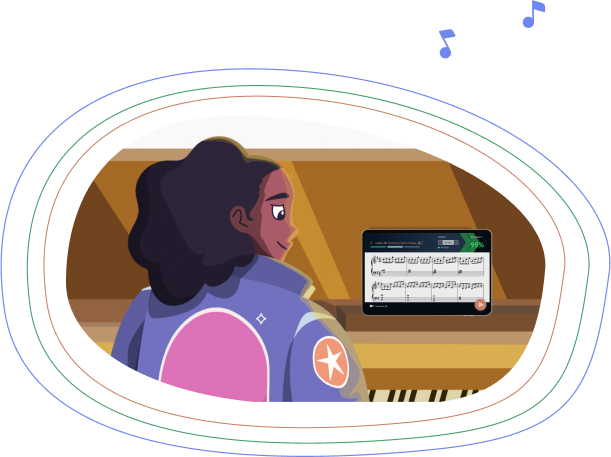
This method is simple and practical for beginners, particularly adults with limited time.
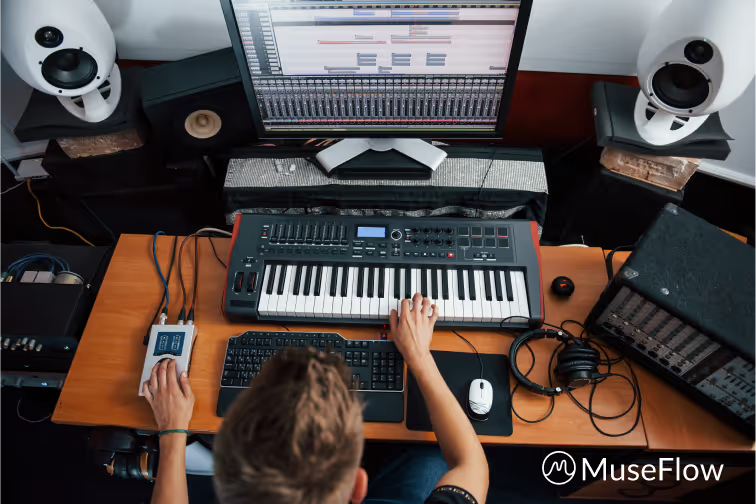
Begin by connecting a MIDI keyboard to the MuseFlow app. Real-time feedback is central to this approach. Immediate correction allows learners to identify mistakes as they occur, reinforcing accurate patterns and reducing the chance of ingrained errors. Studies on learning show that instant feedback accelerates skill acquisition by strengthening neural pathways and supporting automatic recognition.
Unlike traditional sheet music or fixed libraries, the Sight Reading Trainer generates an ongoing sequence of new exercises. This ensures that learners practice true sight reading rather than memorization. By encountering novel material at the right difficulty level, learners develop anticipation skills, pattern recognition, and adaptability—core components of fluent sight reading.
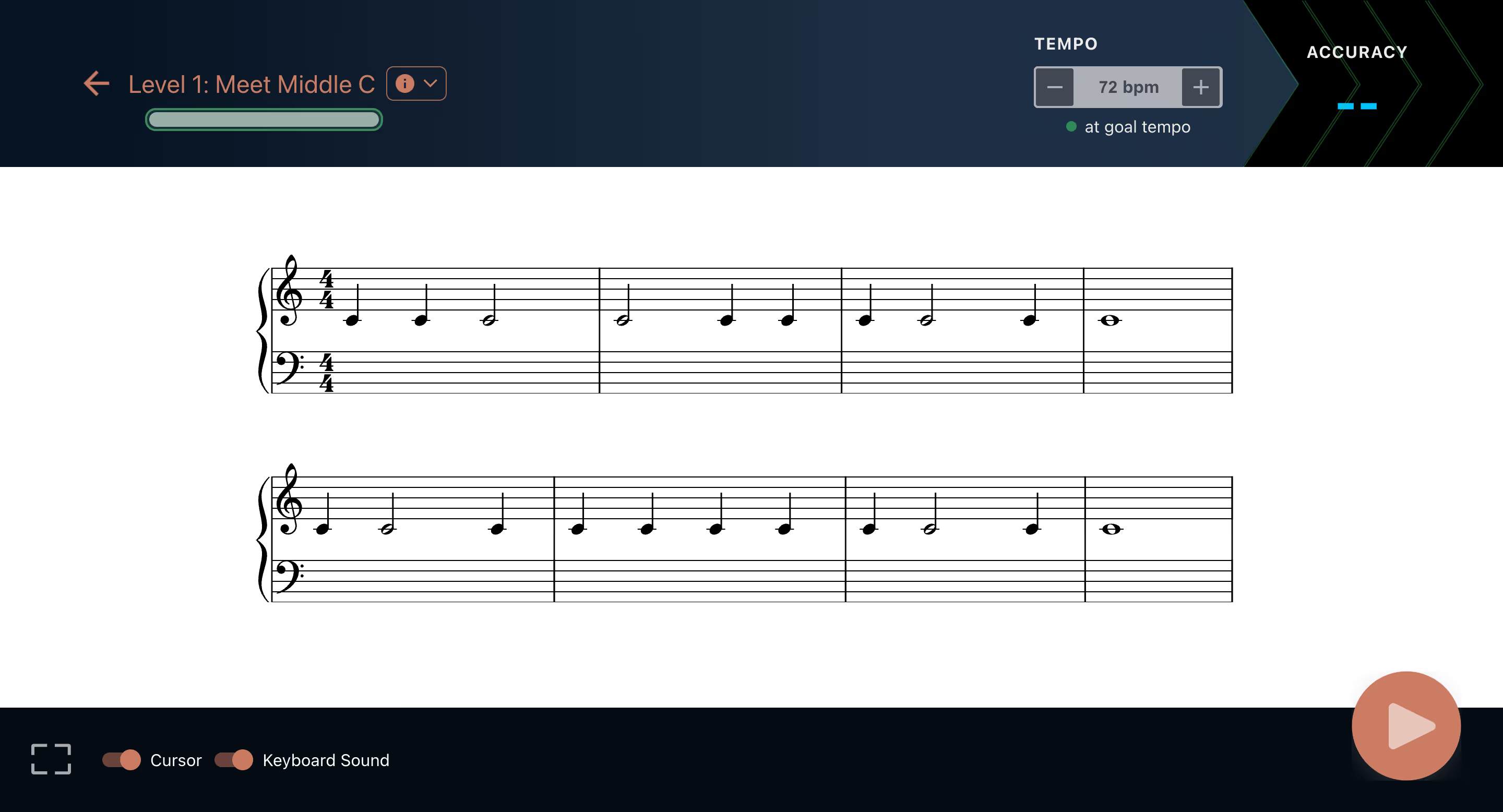
Short, concentrated sessions are surprisingly effective. A two-minute commitment removes the mental friction of starting practice while encouraging full attention. Research indicates that brief, highly focused practice often produces better retention than longer, distracted sessions. Adults benefit from micro-practice sessions that fit into busy schedules, allowing consistent progress without feeling overwhelmed.
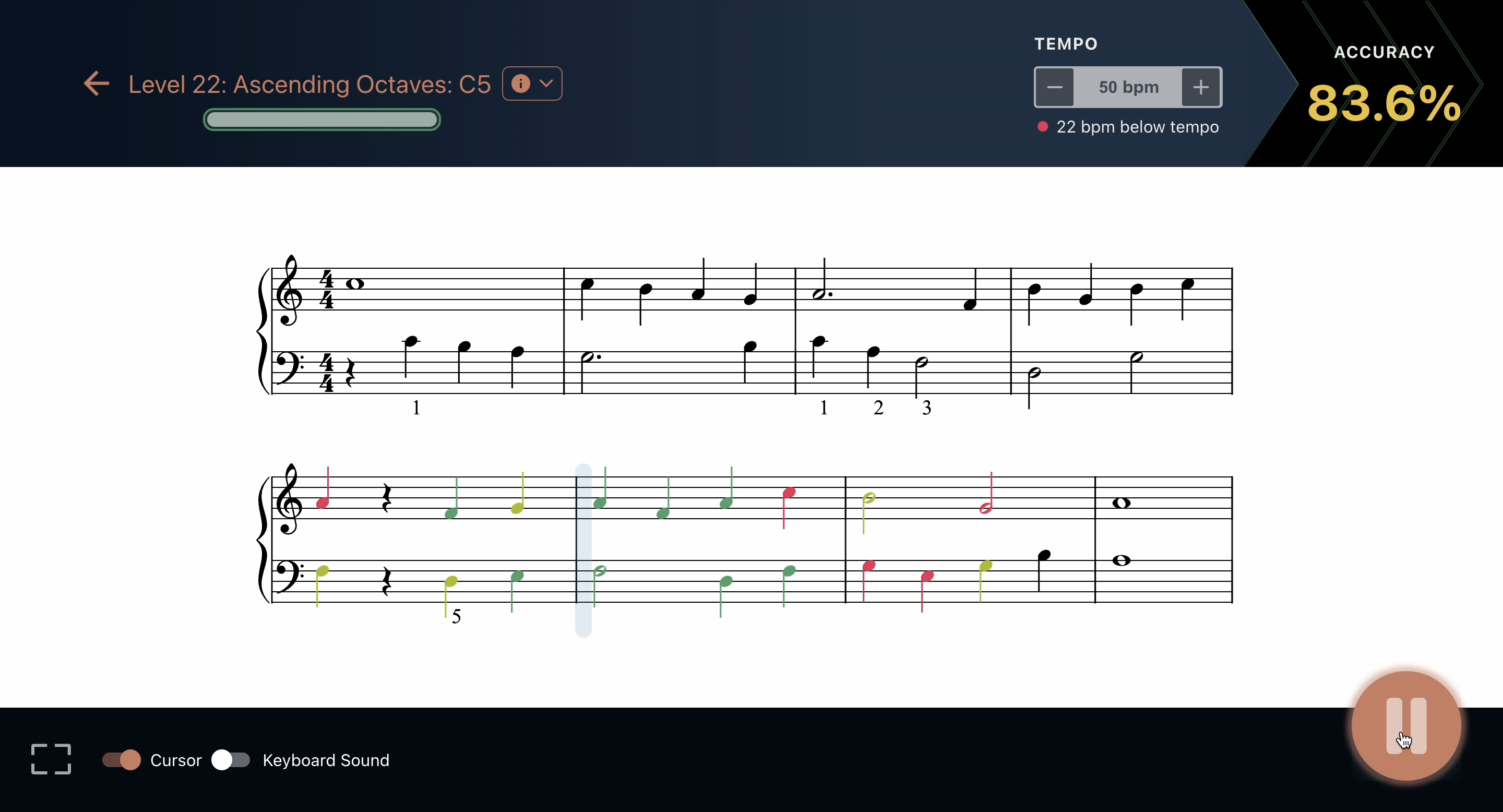
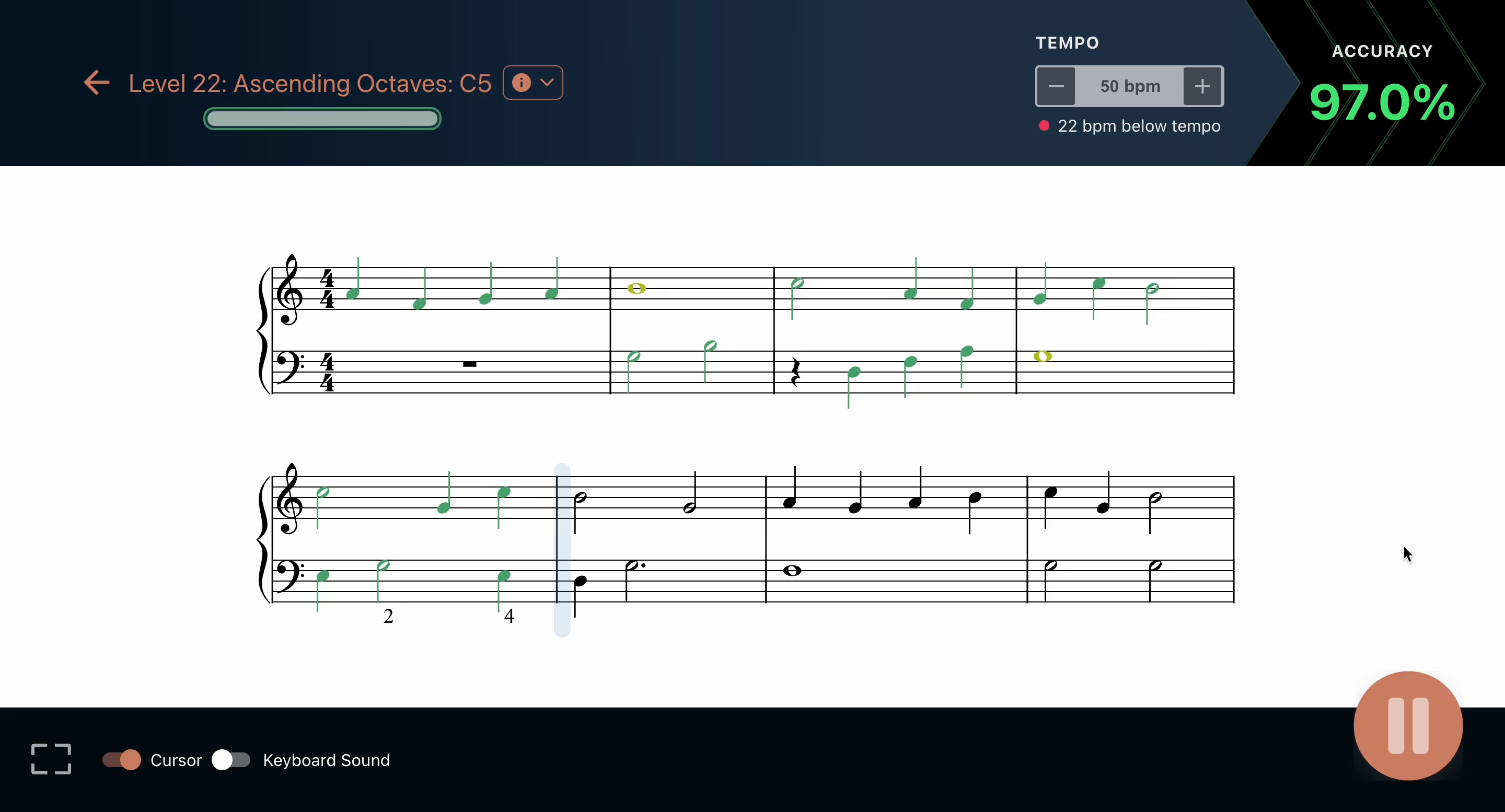
Color-coded feedback—green for correct notes, yellow for timing adjustments, and red for errors—guides learners immediately. This enables rapid correction and reinforces proper technique. Immediate visual cues help learners internalize patterns more effectively than delayed feedback, which can slow progress and reduce engagement.
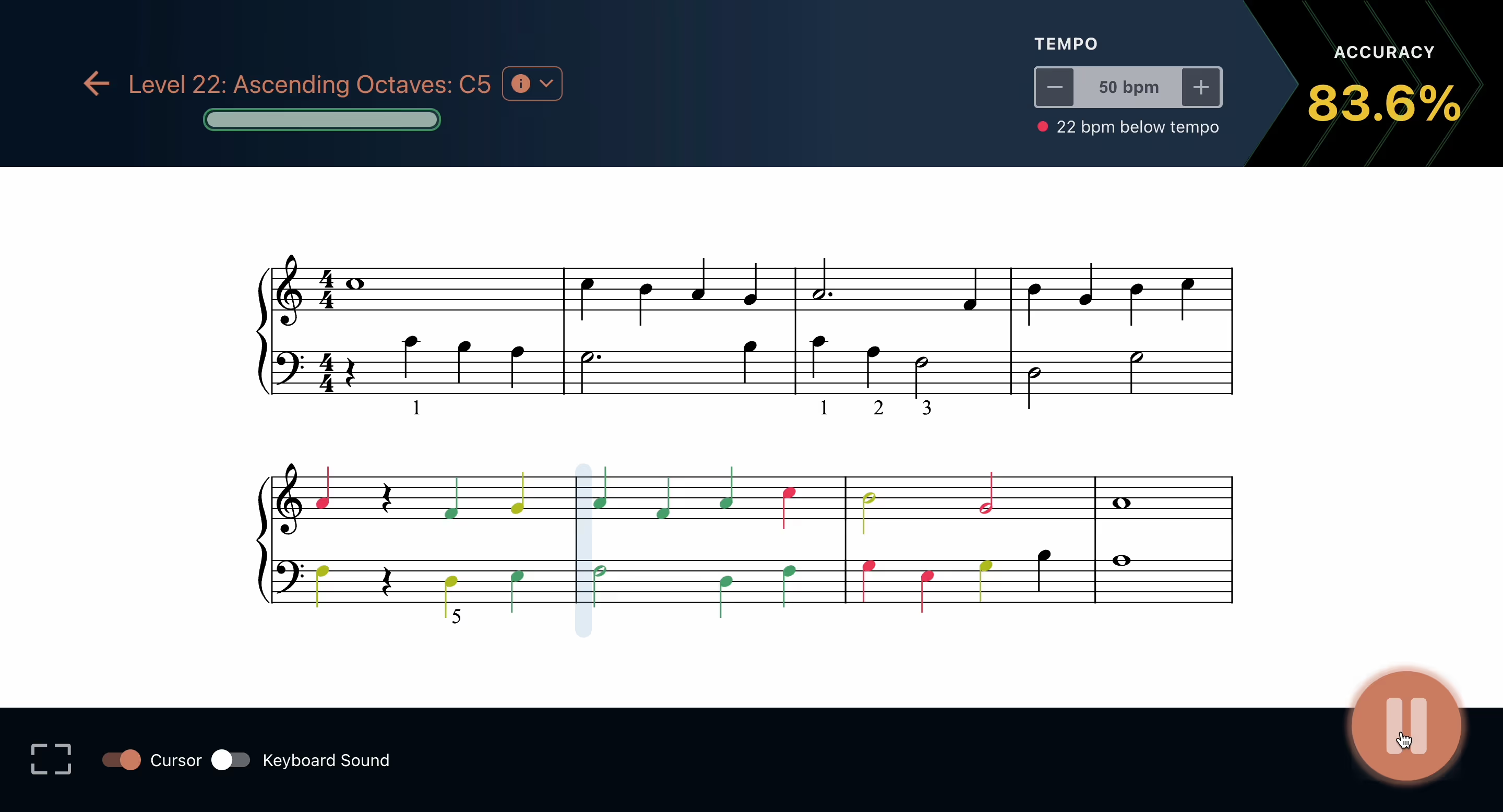
Ending practice at the point of peak engagement prevents fatigue and promotes a positive association with piano practice. Cognitive psychology research supports this strategy, showing that learners are more likely to sustain consistent routines when sessions end before exhaustion.
Several factors make the 2-minute approach effective for building sight reading skills:
The combination of these elements allows adult learners to steadily increase their sight reading fluency without overwhelming practice demands.
.png)
Sight reading practice offers benefits beyond simply playing new music. Consistent exposure to varied musical material strengthens memory, attention, and pattern recognition. It also enhances broader cognitive abilities such as problem-solving, auditory discrimination, and executive functioning. By developing musical literacy through structured practice, learners gain skills that contribute to overall cognitive flexibility and creative thinking.
Many apps focus primarily on memorization or gamification. While engaging, these approaches often fail to build genuine sight reading skills. A truly effective tool prioritizes structured progression, immediate feedback, and adaptive exercises that match the learner’s level. The 2-Minute Sight Reading Challenge demonstrates how short, well-designed sessions can produce measurable progress, even for busy adults.
Adopting short, repeatable practice sessions that gradually increase in complexity can help learners develop a foundation of sight reading skills that continues to grow over time. Combining focus, feedback, and varied material ensures that learners are not simply repeating the same exercises but are building real musical independence.
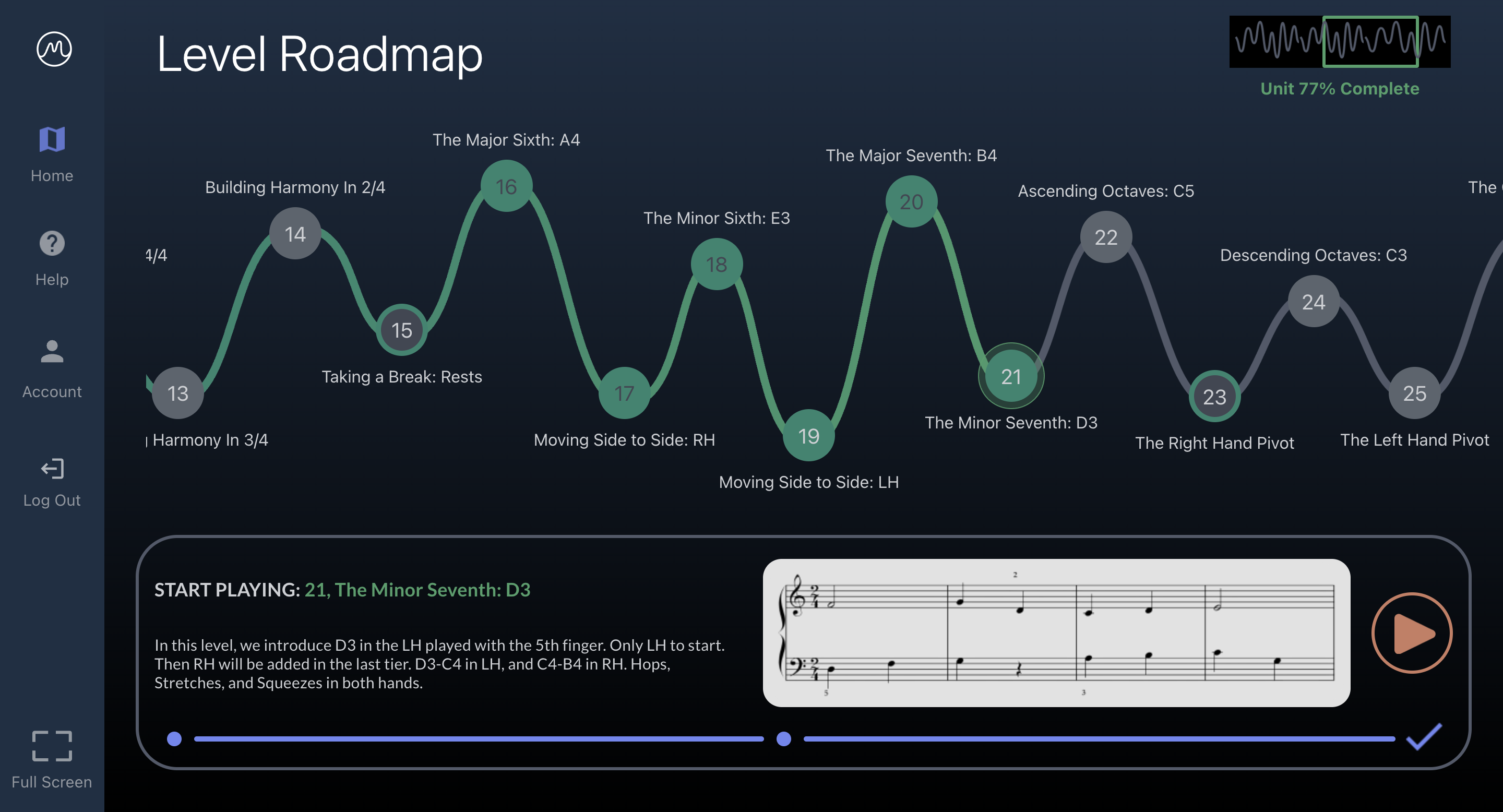
Evidence shows that short, structured practice sessions accelerate skill acquisition for beginners when combined with immediate feedback and clear progress tracking, an idea supported by research on microlearning and mastering skills in short time spans. By making practice approachable and rewarding, learners can steadily improve their sight reading and overall musicianship.
For practical guidance on integrating these principles into daily practice, see the MuseFlow blog for tips and example routines. By aligning piano practice with research-based learning strategies, beginners can build confidence, fluency, and long-term musical growth.

Finding a realistic way to start learning piano as an adult can feel overwhelming. Unlike children, most adults don’t have long blocks of free time or the flexibility to attend frequent in-person lessons. Work schedules, family responsibilities, and mental fatigue all compete for attention. What many adults need is not more motivation, but a clear, time-efficient structure that fits into daily life without becoming another source of pressure.
This 7-day beginner piano framework is designed around how adults actually learn: through short sessions, clear goals, and visible progress. It is not about rapid transformation or mastering complex pieces in a week. The purpose is to establish a sustainable practice routine that builds real skills and encourages consistency.

Adult learning research consistently shows that achievable goals and self-directed pacing improve persistence and long-term engagement. Rather than long, exhausting practice sessions, adults benefit more from brief periods of focused effort repeated consistently. This plan uses daily sessions of 15–20 minutes—short enough to fit into a busy schedule, but structured enough to support progress.
Each day introduces a single learning focus, reducing cognitive overload and making practice feel manageable rather than intimidating.
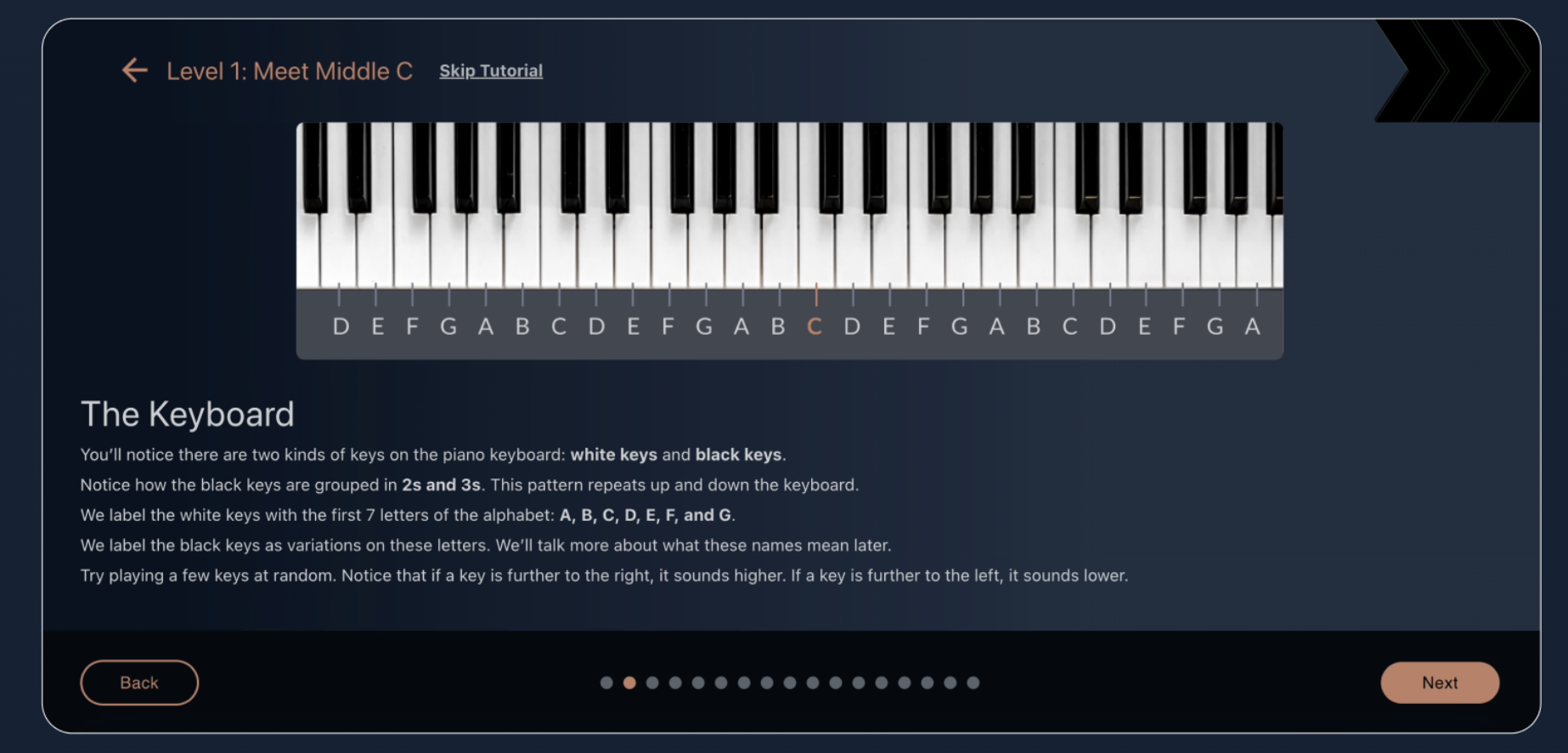
Goal: Become comfortable with the instrument and basic feedback.
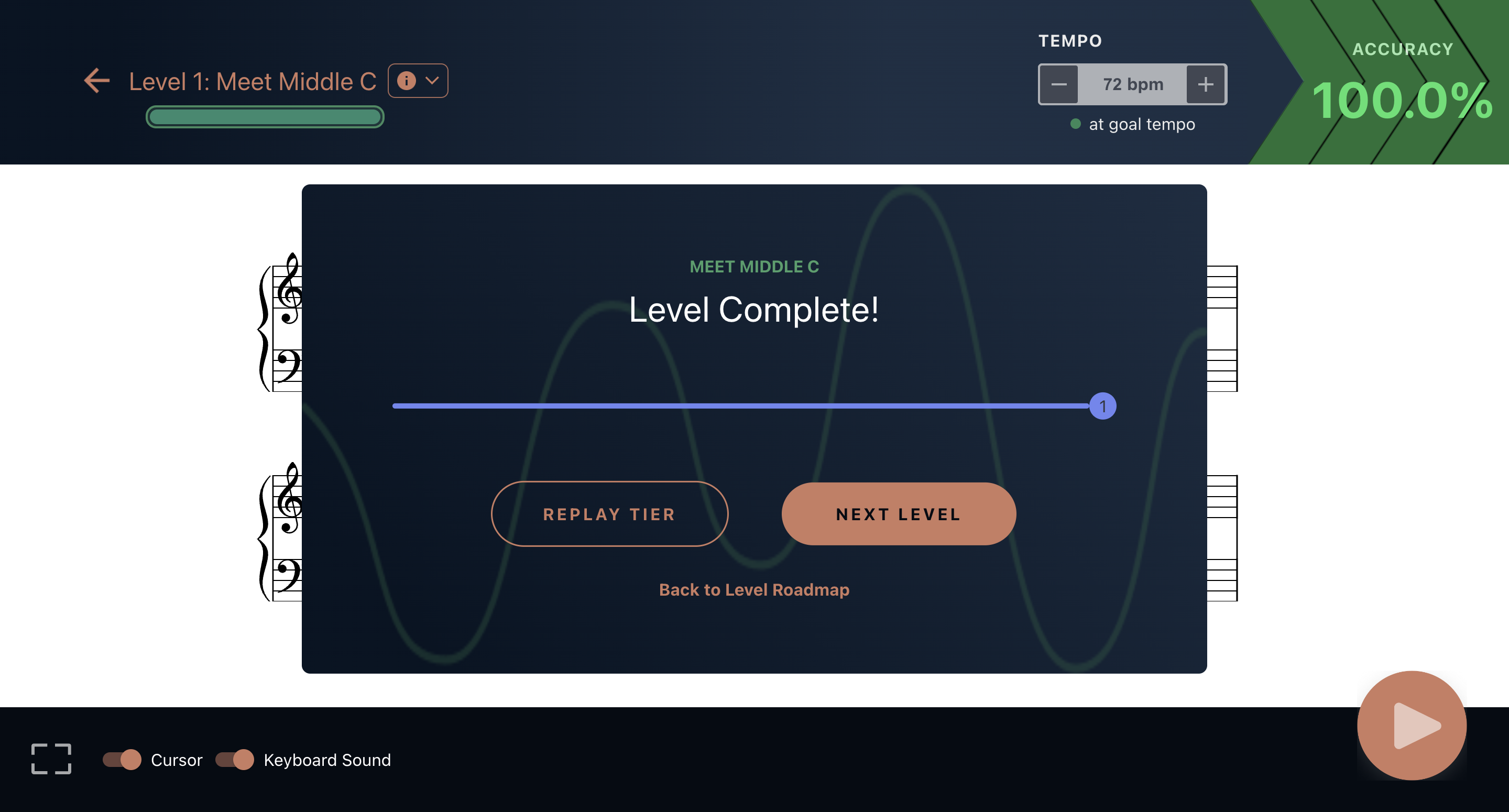
Action: Begin by familiarizing yourself with your keyboard layout and how feedback works during practice. Whether using a teacher, a learning app like MuseFlow, or another feedback method, the goal is simple exploration. Play individual notes, observe what feels natural, and focus on understanding how mistakes are identified.
Mindset: Curiosity. This is about orientation, not performance.
Goal: Strengthen the connection between written notes and the keyboard.
Action: Today’s focus is accuracy, not speed. Take time to identify notes on the staff and locate them on the keyboard. Pausing to think is expected. This deliberate process helps build the mental mapping that sight reading depends on.
Mindset: Patience. Correct notes matter more than fast notes.

Goal: Add timing awareness to your playing.
Action: Rhythm is what turns notes into music. Practice playing with a steady beat, even if mistakes happen. Learning to stay in time develops coordination and prepares you for real musical pieces.
Mindset: Precision. Feel the pulse rather than chasing perfection.
Goal: Integrate pitch and timing together.
Action: This is often the most challenging step for beginners. Start with simple material and aim for consistency rather than flawlessness. Research on sight-reading development shows that practicing pitch and rhythm together accelerates fluency compared to isolating skills for too long.
Mindset: Focus. Difficulty here is a sign of real learning.
Goal: Apply skills to recognizable pieces.
Action: Choose a simple song or exercise that resembles real music. The purpose is not mastery, but application. Playing musical material reinforces motivation and helps learners connect technical practice to expressive outcomes.
Mindset: Enjoyment. This is where effort starts to feel rewarding.
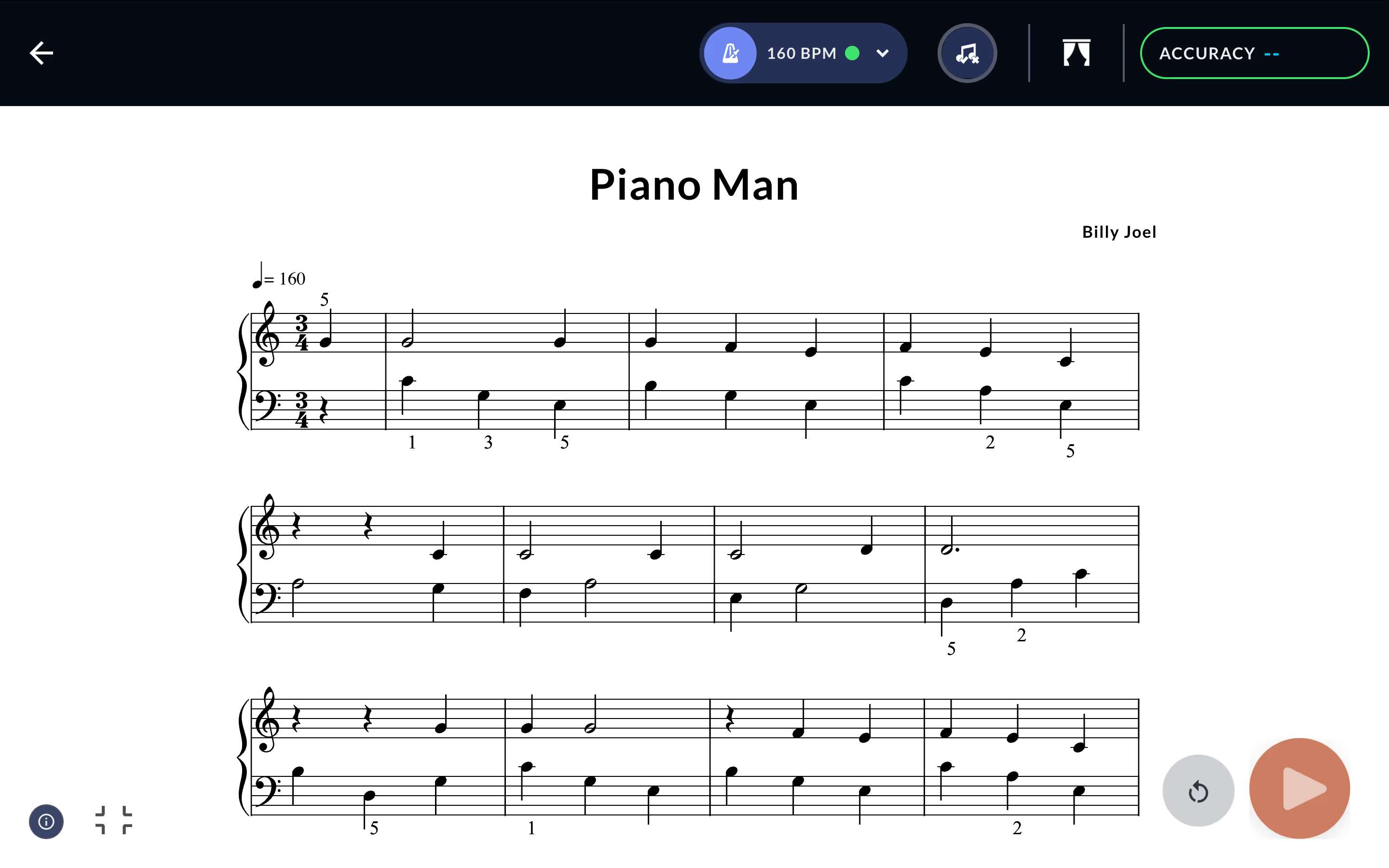
Goal: Work slightly beyond your comfort zone.
Action: Select material that introduces small challenges without becoming frustrating. Educational research on skill acquisition describes this balance as the “optimal learning zone,” where progress is strongest when difficulty is neither too easy nor overwhelming.
Mindset: Growth. Mistakes are part of improvement.
Goal: Consolidate progress and build confidence.
Action: Revisit earlier exercises and notice improvements in ease and accuracy. End the session by playing something you enjoy. Reflecting on progress reinforces motivation and supports habit formation.
Mindset: Recognition. Progress, not perfection.
This plan emphasizes principles shown to support adult learning success and enhance life:
Studies on adult education and self-directed learning indicate that visible progress and adaptive pacing significantly improve retention and motivation, especially when learners can adjust practice intensity to their own capacity.
After seven days, the goal is not completion, but momentum. A structured routine makes it easier to continue learning without relying on willpower alone. For adults who prefer guided practice with real-time feedback, platforms like MuseFlow can support this type of structured progression, but the learning principles themselves remain universal.
A consistent, well-designed plan—not excessive practice time—is what allows adult beginners to move forward with confidence.
Ready to start your week? Download MuseFlow and begin your adult beginner piano plan today. Your future musical self will thank you.
Sight reading is one of the most important skills for pianists. It distinguishes musicians who can only play memorized pieces from those who can interpret new sheet music on sight. Many learners wonder whether technology can accelerate this skill and how AI might fit into piano practice.
The short answer: certain technologies can support faster sight reading development, but not all “AI” tools are equally effective. Adaptive systems that provide structured exercises, real-time feedback, and progressive challenges can help learners build fluency efficiently. Platforms like MuseFlow illustrate how algorithmic approaches can address these needs without relying on marketing hype.

Traditional sight reading practice often runs into a common problem: learners exhaust available material. Students practice exercises repeatedly until they no longer read the music but instead memorize patterns. This limits skill transfer and slows progress.
Research on sight reading shows that varied, progressive practice is essential for developing fluency and automatic recognition. Technologies that generate new exercises for each practice session can provide this variety and prevent dependence on memorization.
When evaluating technology-assisted sight reading, certain principles consistently support learning:
Exposure to new music is crucial. Adaptive systems that provide exercises tailored to a learner’s current level help maintain challenge without frustration. Each exercise should build on prior knowledge while introducing new patterns to promote continuous learning.
Timely correction prevents the reinforcement of mistakes. Systems that give visual or auditory cues—such as highlighting incorrect notes or timing issues—allow learners to adjust in real time. Research indicates that immediate feedback strengthens neural encoding and accelerates skill acquisition.
Pace matters. Learners need materials that increase in difficulty systematically. Overwhelming challenges can frustrate beginners, while overly simple exercises fail to develop skill. Progressively structured learning supports sustained improvement and maintains motivation.
Consistent, focused practice outperforms sporadic, lengthy sessions. Tools that encourage daily engagement—through visual progress indicators, achievable goals, or brief achievements—help learners stick with a routine. Studies on microlearning and adult education show that short, repeated sessions with immediate feedback improve retention and skill development.
Some modern platforms, including MuseFlow, use algorithmic methods to combine these principles. Rather than simply presenting a fixed library of exercises, they generate non-repeating sequences, adapt difficulty in real time, and track progress. This approach promotes:
Importantly, the benefit comes from the learning principles—structured progression, varied material, and feedback—not from the label “AI” itself.

Consistent musical practice strengthens cognitive networks and enhances pattern recognition. Learners exposed to diverse exercises and immediate feedback develop sight reading skills faster than those relying solely on repetition of memorized pieces. Algorithmic generation can replicate this variety efficiently, allowing for scalable, individualized practice.
Technology can accelerate piano sight reading when it adheres to research-based principles:
Platforms like MuseFlow demonstrate how algorithmic approaches can implement these principles, but the key takeaway is that effective learning depends on consistent, structured, and feedback-driven practice. By applying these strategies, learners can develop sight reading fluency, musical independence, and broader cognitive benefits.
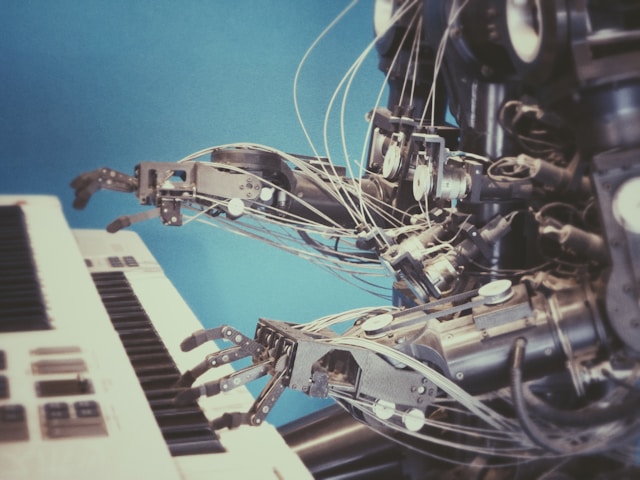
The rise of artificial intelligence has sparked curiosity about its potential in music education. Many learners ask: Can AI help you learn piano faster? The idea is appealing — adaptive systems that respond to your skill level, provide instant feedback, and accelerate progress. However, not all AI-assisted tools are equally effective. Understanding what actually drives improvement can help you separate marketing claims from genuine learning strategies.
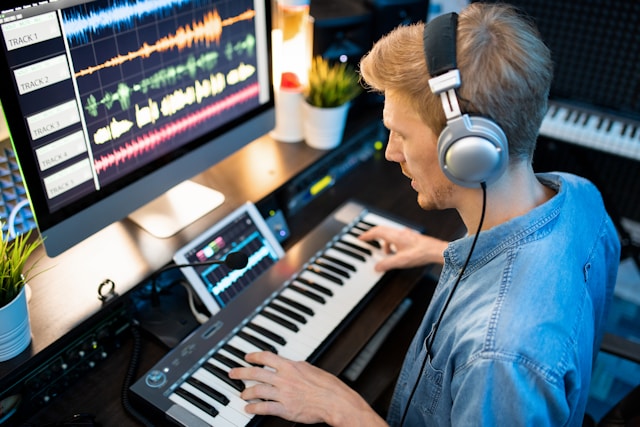
When people ask about AI in piano learning, they often refer to systems that:
Research on skill acquisition and adult learning consistently shows that consistent, structured practice combined with timely feedback leads to better outcomes than occasional, error-free practice alone. The same principles apply whether the system uses algorithms, AI, or traditional instruction methods.
Many so-called AI piano apps simply track whether you hit the right notes. While useful, this approach primarily supports memorization rather than transferable musical skills. Effective learning requires sight reading fluency — the ability to interpret and perform new music quickly. According to music education research, sight reading proficiency is the strongest predictor of long term musical success.
Fixed song libraries or repetitive exercises can inadvertently reinforce dependence on the software rather than independent skill development. In contrast, tools that generate non-repeating exercises and adapt in real-time encourage learners to read, interpret, and play music more flexibly.
Regardless of AI involvement, several educational principles are consistently linked to faster skill acquisition:

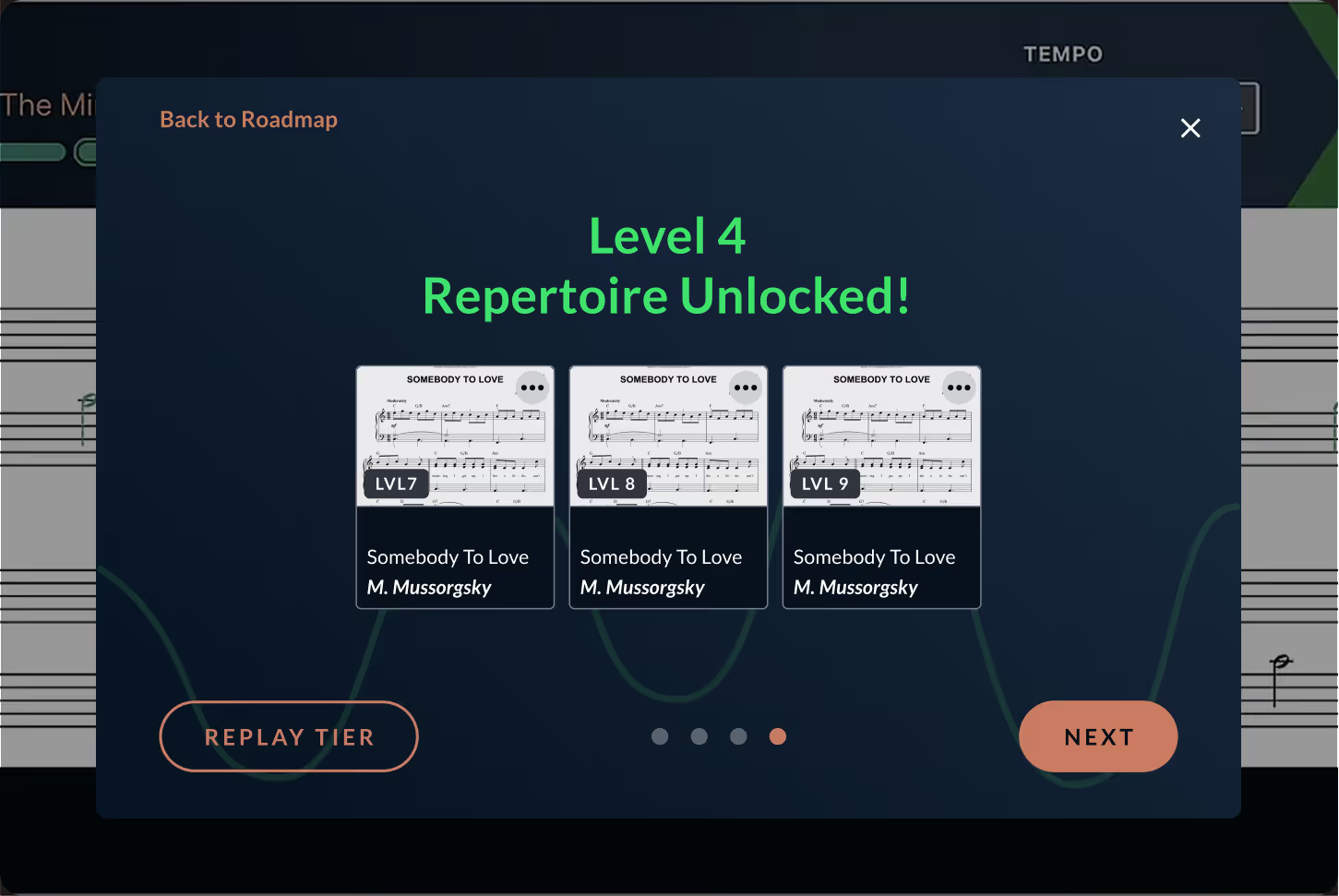
MuseFlow offers an approach aligned with these principles. Its real-time feedback system provides color-coded notes for instant correction, and its adaptive exercises generate new music sequences continuously, reinforcing sight reading skills rather than memorization. Users progress through levels and challenges that match their individual skill, keeping them in the optimal learning zone.
While this is one example, the underlying takeaway is that AI is not a magic shortcut. Success depends on consistent engagement, adaptive challenges, immediate feedback, and meaningful progression.
Ultimately, whether using AI, algorithms, or traditional methods, the goal is to develop transferable skills, maintain motivation, and reinforce consistent learning habits. Learners who focus on these core principles will see measurable progress, gain musical independence, and enjoy a more fulfilling piano practice experience.
Learning to play the piano is a timeless goal, but busy schedules and limited access to private lessons can make it challenging. With recent advances in digital music education, it’s now possible to structure practice at home in a way that accelerates learning without compromising technique or understanding.
The most effective approach combines short, focused practice sessions, adaptive material, and immediate feedback to ensure steady progress. Below, we explore seven key benefits of using technology-supported piano learning for beginners and experienced musicians alike.
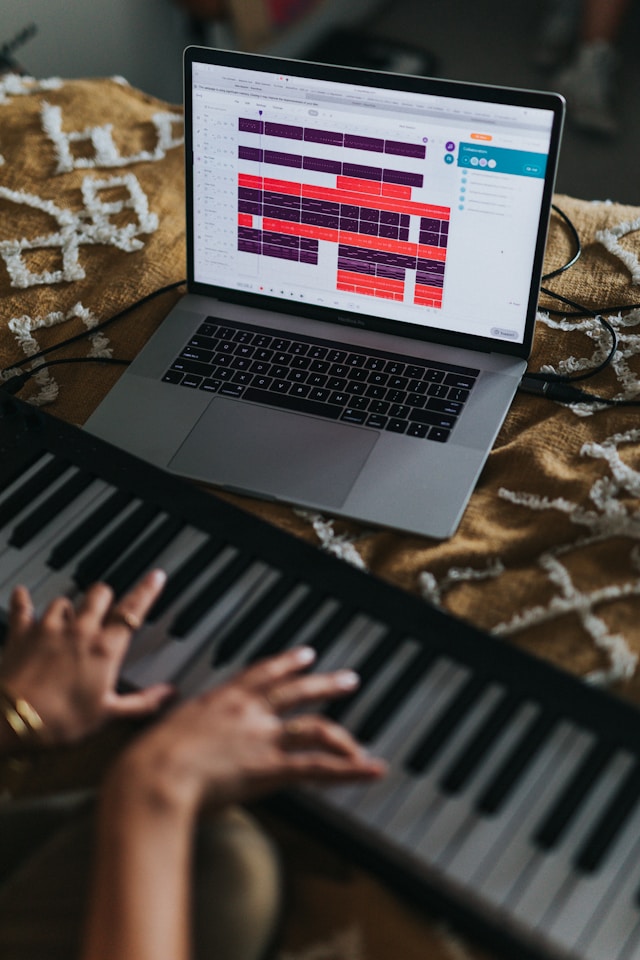
Traditional lessons often operate on slow feedback loops, where mistakes may go uncorrected for days. This can reinforce incorrect fingerings or rhythms and slow overall progress.
Modern piano learning tools provide real-time feedback, allowing learners to immediately identify and correct errors. Research on skill acquisition in music demonstrates that fast feedback loops improve retention, reduce ingrained mistakes, and enhance motor learning.
Spacing practice into shorter, regular sessions has been shown to improve retention and maintain focus. Practicing 10–20 minutes daily can be as effective as longer, less frequent sessions, particularly for beginners who are internalizing music-reading skills. For beginners and home learners, having the right keyboard can make consistent practice more productive — see our guide on:
Choosing the right equipment can also make practice more comfortable and effective; see our guide on
This approach leverages principles from deliberate practice and adult learning research, helping learners steadily build fluency without burnout.
Dividing music into smaller sections—phrases, measures, or thematic motifs—makes new pieces easier to digest. Beginners can isolate challenging parts and focus on them individually before integrating the full piece.
This method supports faster sight reading development and reduces cognitive overload, allowing learners to progress more confidently. Digital platforms often implement this structure automatically, but the principle can be applied manually in any practice setting.
Rhythm is a common challenge in sight reading. Using tools such as a metronome or subdividing beats can help learners internalize tempo and timing. Key techniques include:
Research indicates that structured rhythm practice improves both accuracy and confidence in reading new pieces.
Sustaining practice over weeks and months is often more important than individual session length. Gamified learning principles—such as tracking progress, setting small goals, or completing incremental challenges—can improve engagement.
While some platforms integrate these features, learners can also apply them independently by setting clear practice goals and rewarding progress. Engagement is closely linked to flow, where learners feel immersed and motivated, a concept supported by music psychology research and further explained in discussions about just‑in‑time learning and flow state in music education.
Home-based learning allows learners to practice at convenient times, fitting sessions into busy schedules. Flexibility supports consistent habits, which research shows is critical for long-term progress. By creating a routine that suits personal availability, learners can achieve more than rigid, weekly lesson schedules alone.
Digital solutions reduce reliance on multiple method books or in-person lessons, making music education more accessible and affordable. The focus should be on structured practice, adaptive material, and effective feedback, rather than the sheer quantity of resources. Evidence shows that structured, frequent practice with properly sequenced exercises delivers measurable improvement without expensive tools.
Learning piano at home is now more achievable than ever when practice is structured, engaging, and supported by immediate feedback. By combining short, focused sessions, rhythm training, chunking music, and maintaining consistent engagement, learners can accelerate sight reading and overall piano skills.
The principles outlined here—efficient practice, structured progression, and real-time feedback—are supported by research on adult learning and music pedagogy. While various digital tools can implement these strategies, the educational value comes from how these methods are applied consistently.
Learning piano at home or in a studio has always presented challenges. While students benefit from one-on-one instruction, traditional teaching methods often limit how efficiently technical skills can be reinforced, leaving teachers spending significant time correcting repetitive mistakes. Recent advances in digital tools, including gamified piano learning platforms, offer a complementary approach that allows teachers to focus on artistry while students build strong technical foundations.
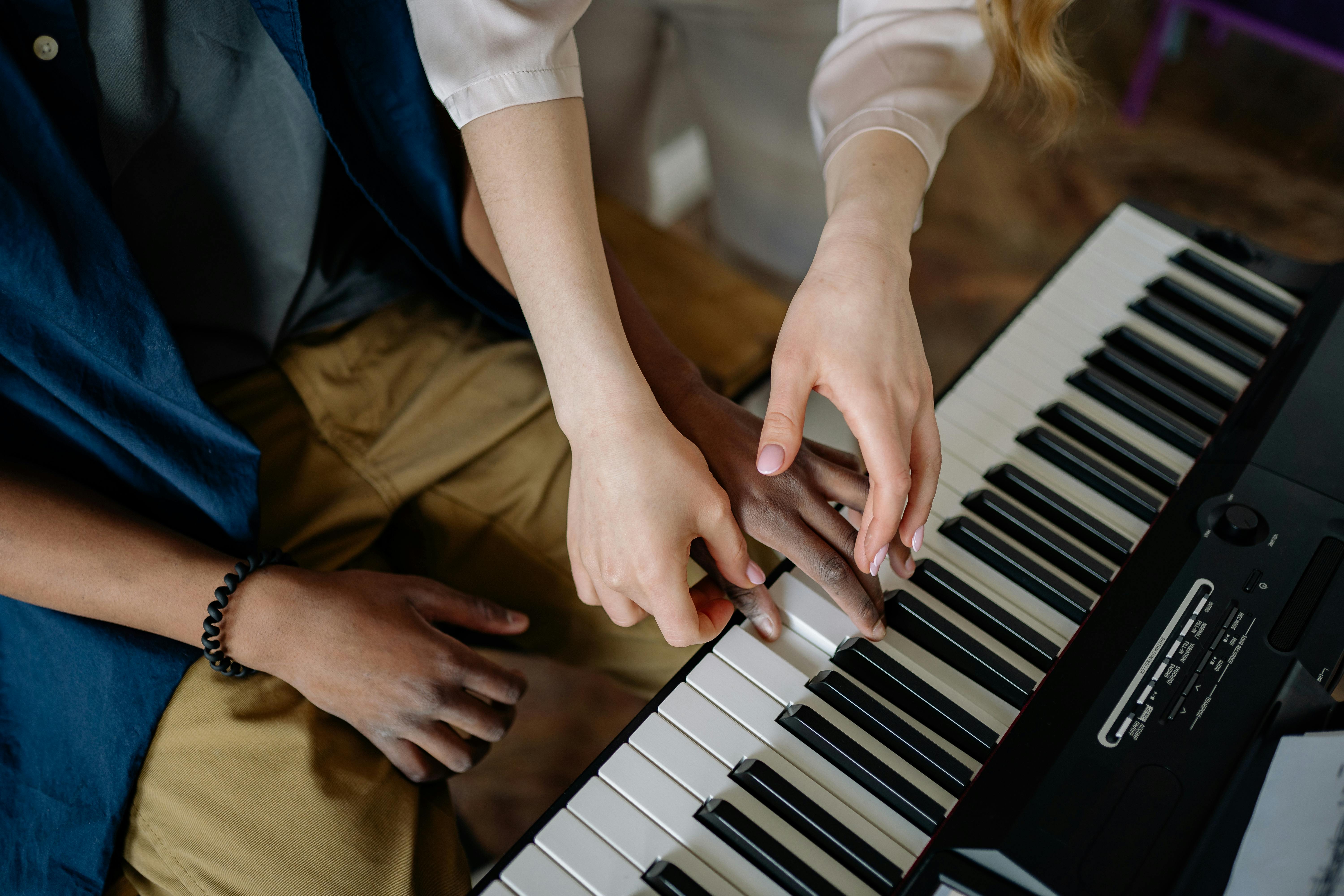
Even the most passionate piano teachers face structural obstacles in guiding students effectively:
Lesson time is often consumed by correcting note accuracy, rhythm, and finger positioning. While essential, these fundamentals can be practiced independently with structured exercises, freeing teachers to focus on interpretation and musical expression.
Weekly lessons may leave students practicing for days without guidance, allowing small errors to become habits. Delayed feedback can reduce motivation and slow progress, particularly for learners studying independently or remotely.
Every student learns differently—some thrive with repetition, others with variation. Traditional methods may struggle to accommodate these differences in real time, causing some students to feel rushed and others held back. Adaptive practice tools can help teachers personalize instruction while maintaining engagement.
Gamification in piano instruction is not intended to replace teachers. Instead, it provides consistent reinforcement of technical skills, allowing teachers to focus on areas that require human artistry: phrasing, dynamics, expression, and musical storytelling.
By integrating gamified practice alongside traditional instruction, students enter lessons with fundamental skills already reinforced. Beginners who want to improve note-reading quickly can also explore this guide to the easiest way to read piano notes for step‑by‑step strategies. For strategies on keeping piano practice engaging and avoiding boredom, see this guide on staying motivated while learning piano. Teachers can then prioritize mentorship, inspiration, and creative guidance, which fosters deeper engagement and more enjoyable learning experiences.
When applied thoughtfully, gamified piano lessons can change how lesson time is spent:
This structured support encourages students to enjoy practice and progress steadily while teachers spend their energy where it matters most.

Studies in music education and learning psychology support the benefits of immediate feedback and adaptive practice. Research consistently shows that short, focused sessions with immediate corrective input improve skill acquisition, retention, and motivation in learners of all ages. While individual results vary, gamified learning tools help supplement traditional lessons and enhance sight reading development, ensuring foundational skills are reinforced efficiently.
One example of this approach in practice is platforms that dynamically adjust exercises to the student’s skill level, helping prevent stagnation while maintaining engagement.
Effective piano education relies on balance between technology and human instruction:
This partnership creates a harmonious learning environment, enhancing both efficiency and enjoyment.
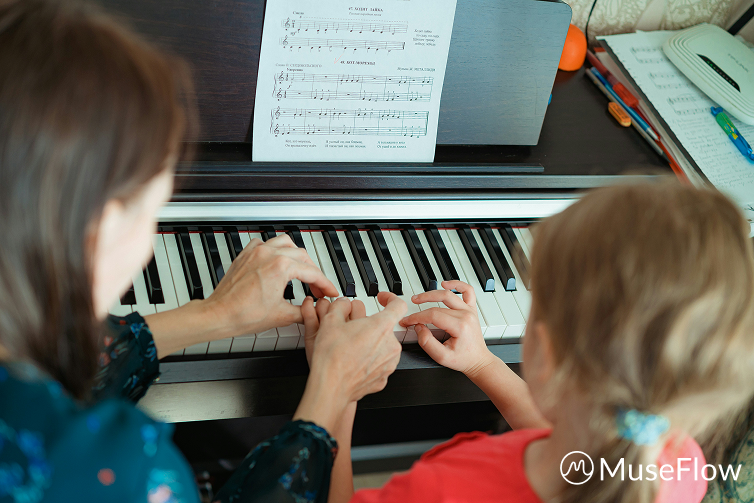
Integrating gamified practice into piano instruction helps learners develop independence, improves sight reading skills, and reduces frustration. Teachers can guide students to express creativity rather than simply correct mechanical errors, promoting long-term engagement and musical growth.
By reinforcing technical skills through adaptive digital tools, students arrive at lessons prepared to explore artistry, and teachers can devote time to nurturing interpretation, phrasing, and expressive performance.
Gamified piano lessons are most effective when used to support, not replace, traditional instruction. They provide structured reinforcement of fundamental skills, allow for personalized pacing, and help students develop independence while keeping practice engaging. Teachers benefit by spending more time on mentorship and creative guidance, fostering both skill and passion in their students.
The future of piano education lies in this balanced approach: combining immediate, structured digital support with human expertise to create motivated, confident, and musically expressive learners.
Many adults look for meaningful ways to develop new skills that fit into busy lives and offer more than short-term entertainment. Creative pursuits such as music, art, or language learning continue to attract interest because they combine personal growth with long-term satisfaction. Among these, piano learning stands out for its balance of mental engagement, creativity, and accessibility.
Unlike passive activities, learning to play the piano requires focused attention, coordinated movement, and memory working together in real time. Research examining the cognitive and neuroplastic effects of musical training in adults shows that active engagement with music can influence brain systems related to attention, memory, and motor coordination, even when learning begins later in life.

Advances in educational research and learning technology have also changed how people approach music education, making structured piano learning more approachable and sustainable for adults than in the past.

Learning piano today looks very different from a decade ago. Traditional lessons often relied on weekly sessions, delayed feedback, and long stretches of unguided practice between classes. While this approach worked for some learners, many adults struggled with uncertainty, slow progress, and declining motivation. Modern learning platforms have begun to address these challenges by combining structured instruction with immediate feedback, allowing learners to correct mistakes early and practice more effectively.
Scientific research supports the idea that active musical training influences brain function. Research on musical training and neuroplasticity in adults shows that learning an instrument can lead to structural and functional changes in brain networks associated with motor control, memory, and auditory processing, even later in life.
Equally important is how feedback is delivered during practice. Research in adult skill learning shows that timely feedback helps learners correct technique, reinforce accurate responses, and stay engaged during complex tasks. Many modern piano learning tools provide real-time note detection, visual guidance, and adaptive exercises that respond to performance. This allows learners to correct mistakes immediately rather than reinforcing incorrect habits over time. Early correction supports proper technique development and reduces frustration, especially for beginners without access to regular instruction.

As work becomes more digital and screen-heavy, many people are turning toward creative activities to restore balance in their daily lives. Piano practice is particularly engaging and reduces stress because it requires the coordination of movement, focused attention, memory, and auditory awareness simultaneously.
Research published in Behavioral Sciences suggests that engaging in music-related activities is associated with positive mood changes, reduced perceived stress, and increased life satisfaction among adults. While piano learning is not a medical treatment, consistent musical engagement has been shown to support emotional well-being in ways similar to other structured, skill-based activities.

Time constraints remain one of the biggest barriers for adult learners. Fixed lesson schedules, commuting, and rigid practice expectations often make consistency difficult. Digital learning environments have reduced these barriers by allowing people to practice when their energy and focus are highest—early mornings, late evenings, or short sessions between other commitments.
Adult learning research emphasizes that visible progress, clear goals, and adaptive pacing significantly improve motivation and retention. According to studies on self-directed learning, adults are more likely to persist when they can see measurable improvement and adjust their learning pace based on personal capacity. Modern piano learning platforms often integrate these principles into structured routines, helping learners maintain momentum without feeling overwhelmed.
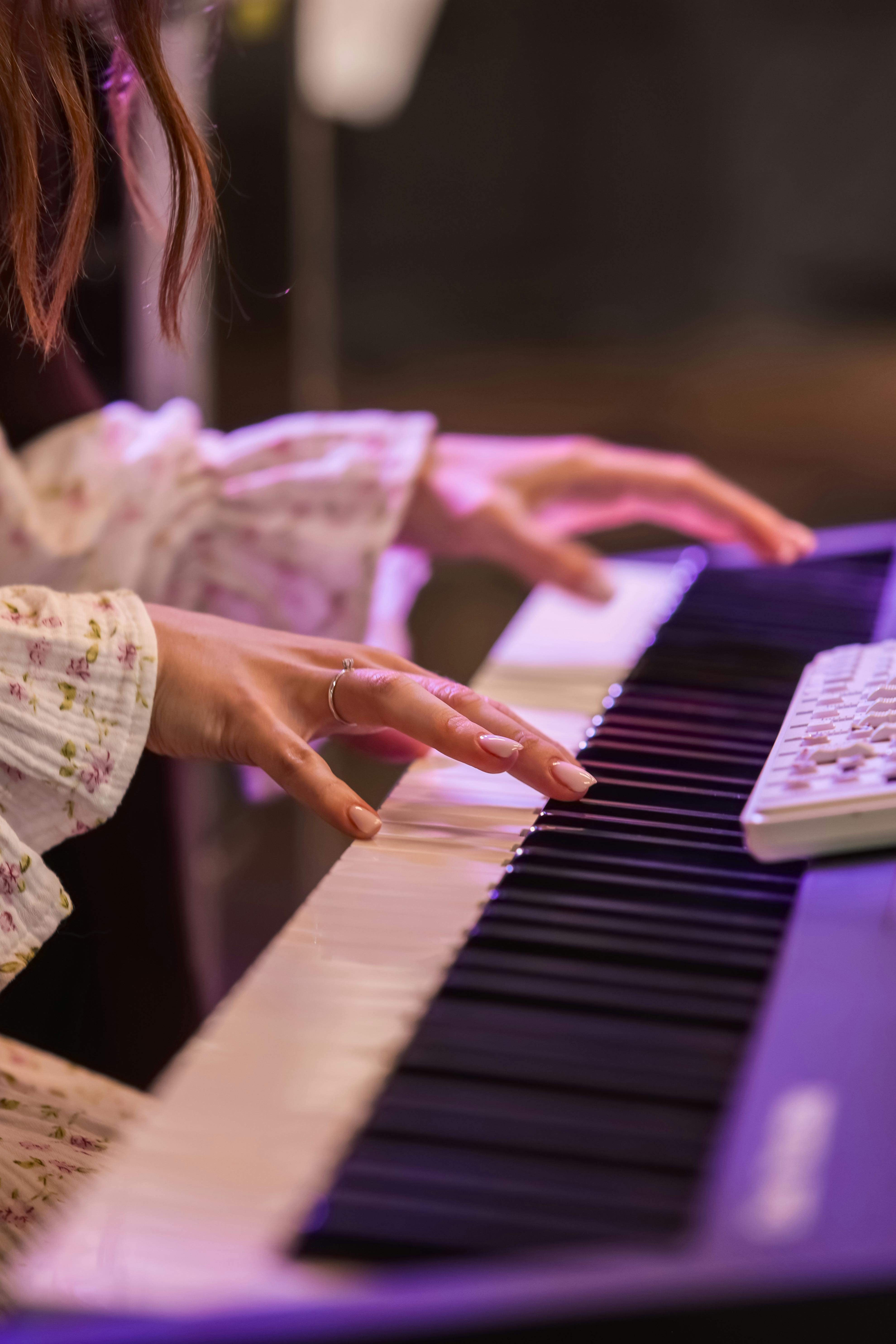
Starting piano no longer requires expensive acoustic instruments or dedicated practice spaces. Modern digital pianos are widely accessible, affordable, and capable of producing realistic sound and key response suitable for beginners and intermediate learners alike. Many models include weighted keys, headphone support, and compact designs that fit into small living spaces.
When paired with structured learning tools, digital pianos remove many of the financial and logistical barriers that once discouraged adults from starting with:
New learners can begin developing real musical skills without unnecessary pressure or upfront investment.
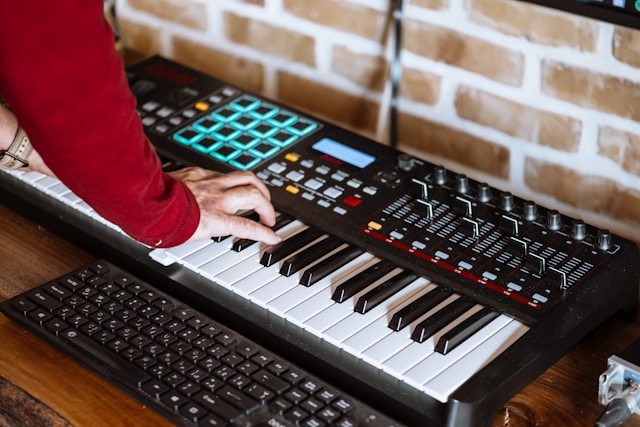
Learning piano is not about following a yearly trend; it is about building a skill that develops over time. As learners expand their repertoire and improve musical understanding, they also strengthen discipline, patience, and creative problem-solving skills that transfer beyond music into everyday life.
Consistency matters more than speed, and structured guidance can help sustain long-term engagement. For learners who prefer adaptive support without rigid schedules, platforms like MuseFlow offer guided progression and real-time feedback designed to encourage steady improvement. When learning tools align with established educational principles, learners are more likely to maintain practice habits and continue developing their skills over the long term.

Keep up to date on our progress as we continue to add new features!